Oct 17, 2026
How Do I Choose the Right M8 8 Pin Female Connector for My Equipment?
An M8 8 pin female connector can look like the right replacement on a purchasing list and still…

I see many projects slow down because the connector looks simple, but the wrong choice can stop testing, delay shipment, and create field failures.
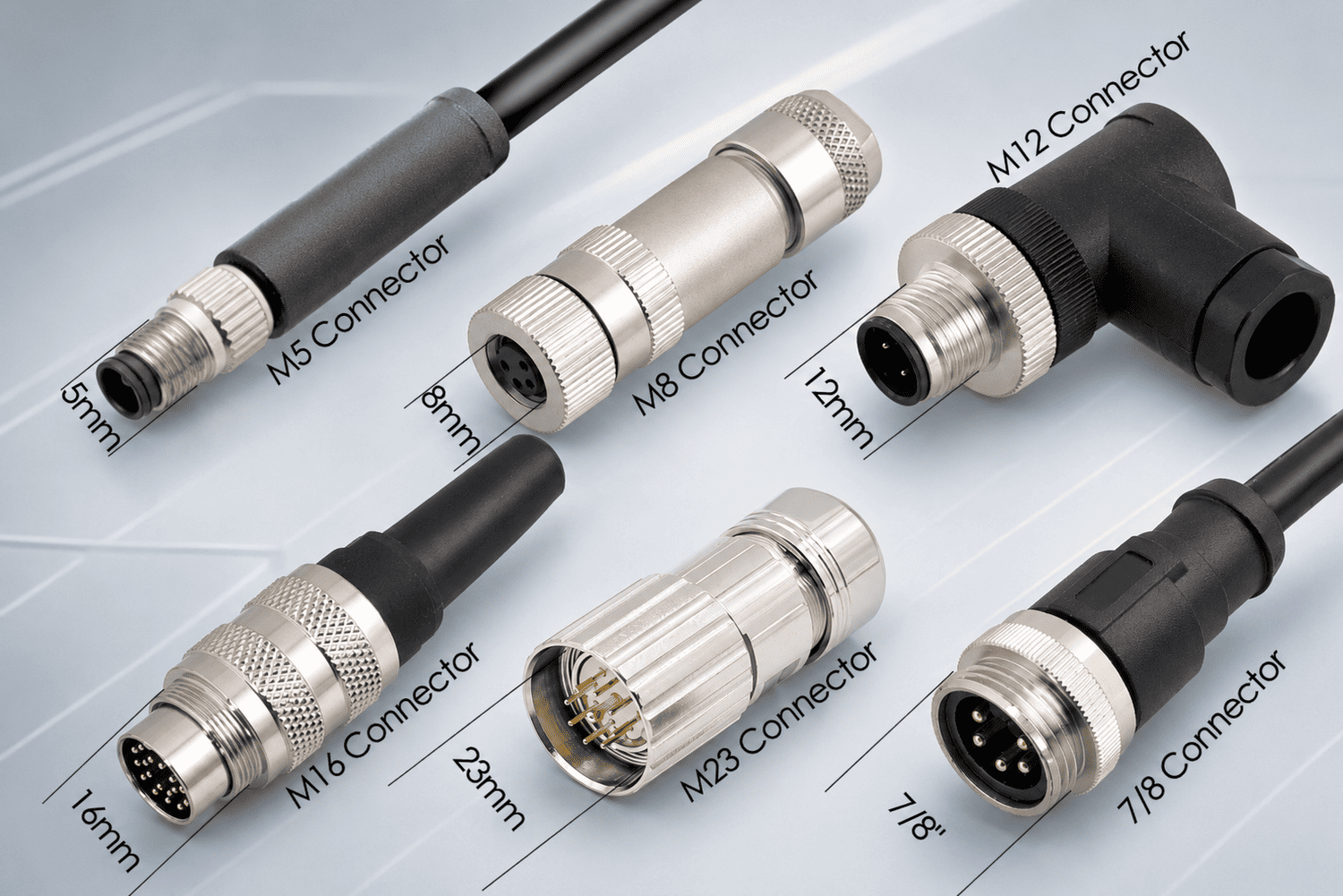
The main types of industrial waterproof connectors include M8, M12, M16, M23, waterproof RJ45, panel-mount connectors, and customized waterproof cable assemblies. I choose between them by checking interface size, coding, pin count, gender, mounting style, IP rating1, signal type, cable type, and working environment.
When I help a customer choose an industrial waterproof connector, I do not start with the outside shape only. I first ask where the connector will be used. I ask if it connects a sensor, a motor, an Ethernet port, a control cabinet, or an outdoor device. I also ask if the customer already has a PCB, a panel hole, a drawing, or a sample photo. These details make the selection much faster. If I only look at diameter or pin number, I may miss the coding, gender, shielding, cable jacket, or mounting direction. That small mistake can make two parts impossible to mate. So I treat waterproof connector selection as a project match, not a catalog choice. The more clearly I understand the real machine, the faster I can recommend the right connector.
I often see small machines fail at the sensor level because the connector is too large, too weak, or not matched to the sensor interface.
M8 waterproof connectors2 are mainly used for compact sensors, small actuators, signal transmission, and tight-space industrial automation equipment. I usually choose M8 connectors when the device needs a small interface, stable waterproof protection, and a limited number of contacts.
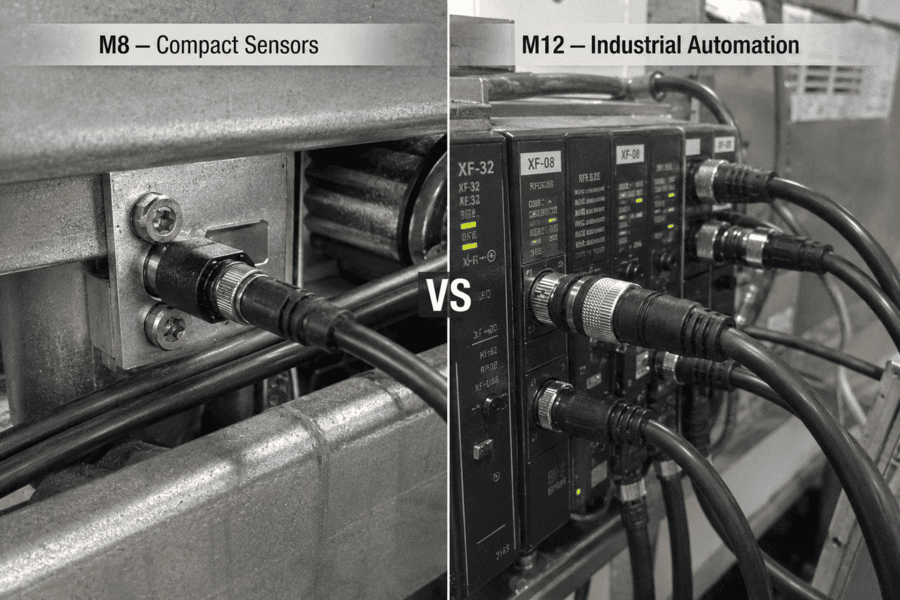
I usually treat the M8 connector as a compact sensor connector. It is common in factory automation, small detection devices, compact control boxes, and machine wiring with limited space. I often see customers use M8 connectors for proximity sensors, photoelectric sensors, pressure sensors, and small signal devices. The M8 size helps when the equipment panel has little space. It also helps when the cable needs to pass through a narrow machine area.
I do not choose M8 only because it is small. I also check the number of pins, coding, male or female side, cable direction, and IP rating. A common M8 connector may have 3, 4, 5, 6, or 8 pins. The choice depends on the sensor wiring and signal need. I also ask if the customer needs straight or right-angle cable output. This small point often affects installation inside a machine.
| Item I Check | Why I Check It | Common Choice |
|---|---|---|
| Pin count | I need to match the sensor wiring | 3 pin, 4 pin, 5 pin |
| Mounting style | I need to match the machine panel | Cable type or panel mount |
| Cable direction | I need to avoid bending stress | Straight or angled |
| Protection level | I need to stop water and dust entry | IP67 or similar |
| Cable jacket | I need to match the working site | PVC or PUR |
When a customer asks me for an M8 connector, I usually ask for a drawing, a photo, or the old part number. If the customer has a sensor datasheet, I can check the wiring definition faster. If the customer has a panel hole size, I can confirm the mounting type. If the customer wants a cable assembly, I also confirm cable length, jacket material, wire color, and wire end treatment.
I have seen cases where the customer only said “M8 4 pin waterproof connector,” but the real need was a molded cable assembly with a female connector and open wires. I have also seen another case where the customer needed a front-mount panel connector, but the first photo looked like a cable plug. These details change the product. So I always slow down at the beginning. It saves time later.
I often see customers choose M12 first because it is familiar, but the wrong coding or pin count can still block the whole connection.
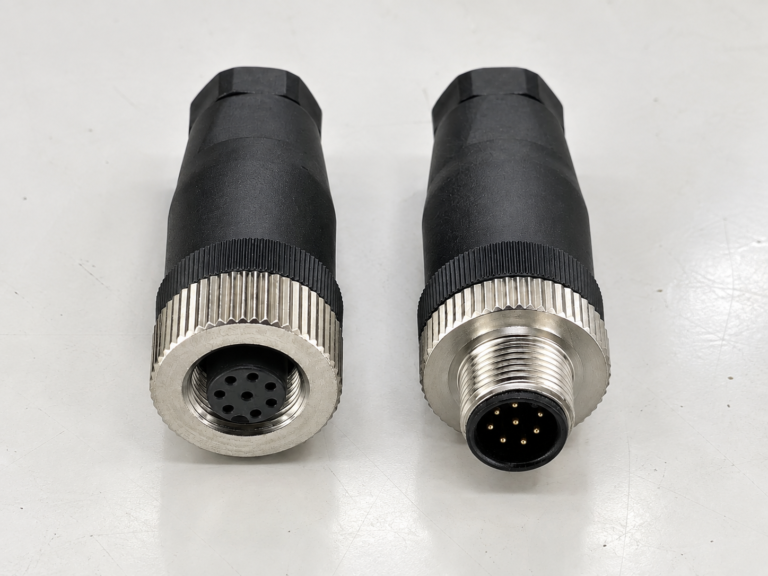
M12 waterproof connectors3 are widely used in industrial automation for sensors, actuators, field devices, I/O modules, and industrial Ethernet. I choose M12 when the project needs a strong standard interface, many coding options, reliable sealing, and stable signal or data transmission.

I see M12 connectors in many automation projects because they sit in a useful middle position. They are stronger than very small connectors. They are also not too large for normal field wiring. I often use M12 connectors for sensors, actuators, industrial network ports, distribution boxes, and machine panel interfaces. They are common in production lines, packaging machines, robots, test equipment, and outdoor control devices.
The key point is that M12 is not one single product. I need to confirm coding first. M12 connectors can use different coding variants such as A, B, D, L, and X code4. A-coded M12 connectors are often used for sensors and general signal. D-coded M12 connectors are often used for industrial Ethernet. X-coded M12 connectors are used for higher-speed data transmission. If I choose the wrong coding, the connector will not mate with the device. This is a safety feature, but it becomes a problem when the selection is wrong.
| M12 Type I Check | Common Use | What I Pay Attention To |
|---|---|---|
| A-coded | Sensors and general signal | Pin count and wiring definition |
| B-coded | Fieldbus or special signal | System standard |
| D-coded | Industrial Ethernet | 4-pin data connection |
| X-coded | High-speed Ethernet | Shielding and cable quality |
| L-coded or T-coded | Power connection | Current rating and cable size |
When I work on an M12 project, I ask the customer to confirm the device side first. I check if the equipment needs male or female. I check if the connector is front mount, rear mount, PCB mount, solder type, screw terminal type, or molded cable type. I also check if the cable should be shielded. This is important in industrial sites with motors, inverters, and power cables nearby.
I also confirm if the customer needs PVC or PUR cable. PVC is common and cost friendly. PUR outer jackets are often used in plant and mechanical engineering because they remain flexible, resist mechanical stress, and resist many oils and chemicals5. If the cable moves often, I will ask more questions. I need to know if it is used on a drag chain, robot arm, or moving sensor. The connector itself may be waterproof, but the cable can still fail if the jacket is wrong.
In my own process, I prefer to send a drawing and datasheet before sample production. The customer checks the dimensions, thread, coding, pin layout, and wiring. This step reduces risk before tooling, molding, or bulk assembly.
I see bigger machines run into trouble when small connectors are forced to carry more pins, more current, or a stronger mechanical load than they should.
M16 and M23 waterproof connectors are used when the project needs more contacts, higher current, stronger mechanical structure, or a larger equipment interface. M16 circular connectors are covered by IEC 61076-2-106 for industrial measurement and control applications6. I choose M16 and M23 connectors for panel connections, servo systems, power lines, control signals, and machine equipment with larger wiring needs.
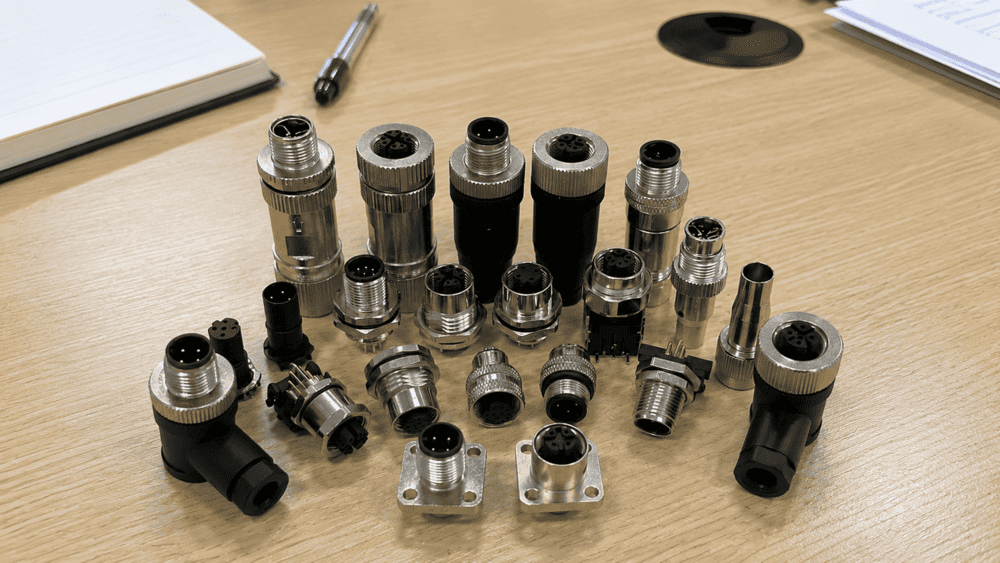
I usually think of M16 and M23 connectors as larger industrial circular connectors. I choose them when M8 or M12 cannot meet the pin count, current, or structure need. M16 connectors are often used for signal, control, and some power applications. M23 connectors are often used for high-current power transmission, signal wiring, servo motors, drives, and industrial control systems7.
These connectors are not selected by size alone. I need to know the rated current, voltage, pin layout, contact type, shell material, sealing level, and mounting method. I also check the panel space. A larger connector needs enough room for mounting and cable bending. If the equipment has a fixed panel hole, I must match the existing size. If the customer has a motor or drive system, I must confirm the mating connector standard.
| Connector Type | I Usually Use It For | Key Point I Confirm |
|---|---|---|
| M16 | Control signal, panel interface, medium wiring | Pin number and mounting thread |
| M23 signal | Servo feedback, encoder signal | Shielding and contact layout |
| M23 power | Motor power and higher current | Current rating and cable size |
| Panel-mount type | Machine housing and cabinet wall | Front mount or rear mount |
| Cable assembly type | Field wiring and machine connection | Cable length and tail structure |
When I handle M16 or M23 inquiries, I spend more time on technical confirmation. The cost is higher than small connectors. The risk is also higher if the connector does not match. A wrong pin layout can stop assembly. A wrong gender can make the cable unusable. A wrong mounting side can block installation on the panel.
I often ask the customer for a sample photo from several angles. I also ask for the old connector model if it is available. If the connector connects to a servo motor, encoder, or drive, I ask for the device brand and interface drawing. Some products look similar, but the keyway, locking structure, pin arrangement, and shielding structure may not match.
I also pay attention to cable assembly details. For larger connectors, customers often need special cable length, special jacket, wire numbering, shielding braid, heat shrink tube, or a specific tail direction. These details look small on paper, but they decide if the cable can be installed neatly inside the machine. I prefer to solve these points before sample production.
I see network problems happen when a normal RJ45 plug is used in a wet, dusty, or vibrating industrial site.
Waterproof RJ45 connectors are used for industrial Ethernet connections in harsh environments. Ethernet is defined under the IEEE 802.3 family of standards8, while IEC 60603-7 covers 8-way modular connector interface dimensions, mechanical, electrical, environmental characteristics, and tests9. I choose waterproof RJ45 connectors when data transmission must stay stable in outdoor equipment, control systems, industrial cameras, network modules, and machines that need dustproof and waterproof protection.
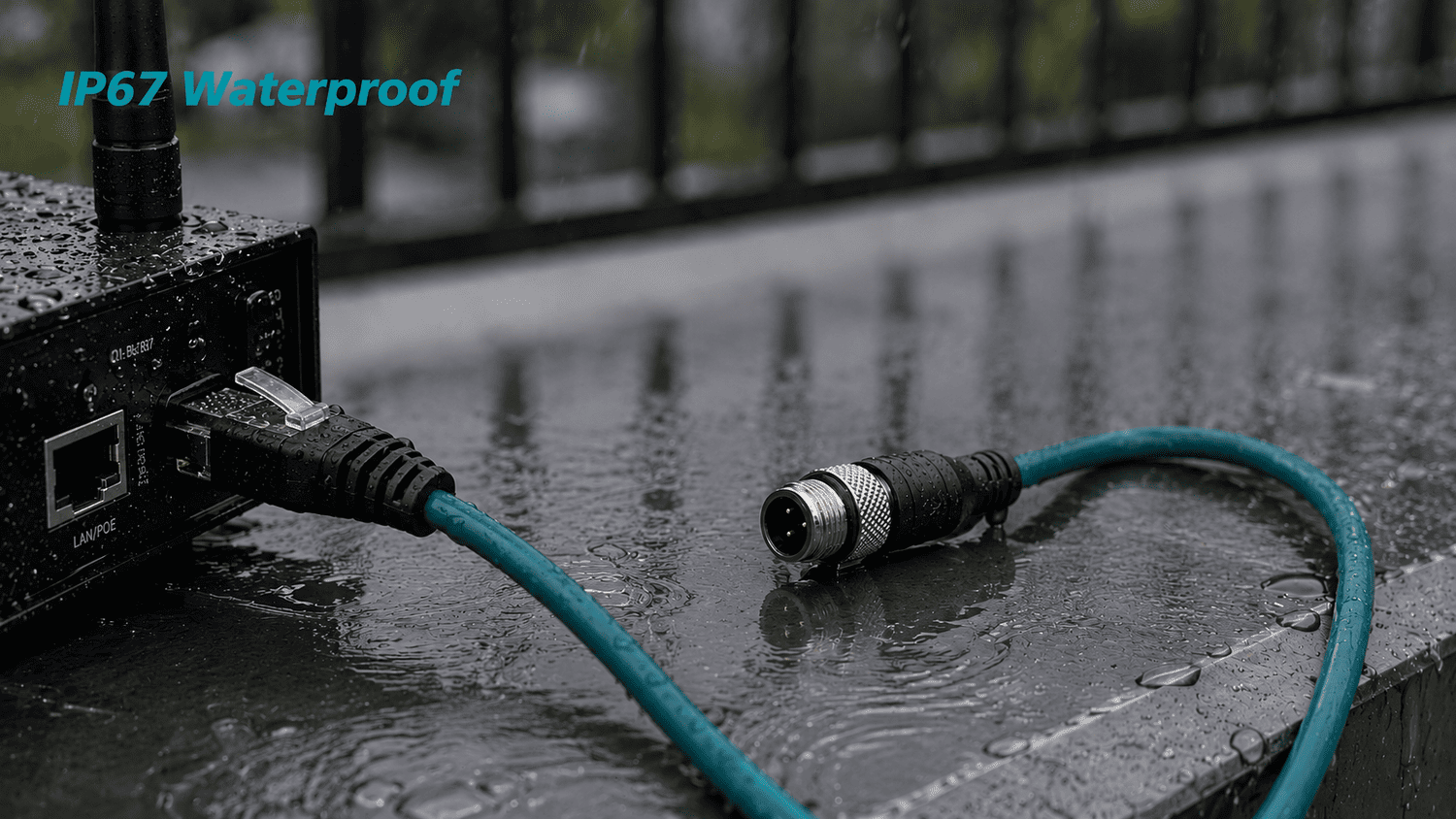
I often remind customers that an industrial RJ45 connection is different from an office network plug. A normal RJ45 plug may work in a clean room, but it may fail in a machine, outdoor cabinet, or dusty production area. A waterproof RJ45 connector adds a sealed housing, locking structure, and cable gland or molded protection. This helps protect the Ethernet connection from water, dust, and mechanical stress.
I use waterproof RJ45 connectors for industrial cameras, outdoor monitoring equipment, communication modules, control cabinets, LED equipment, and automation devices. The main job is to keep Ethernet data stable. I also check if the connection needs shielding. In industrial sites, electromagnetic noise can come from motors, drives, welding equipment, and power lines. If the system has interference risk, I will suggest shielded cable and shielded connector structure.
| Item I Confirm | Why It Matters | Common Question I Ask |
|---|---|---|
| Ethernet speed | I need to match data needs | Is it 100M or Gigabit? |
| Shielding | I need to reduce interference | Is the site near motors or drives? |
| Cable type | I need to match the network | Cat5e, Cat6, or higher? |
| Mounting method | I need to match the device shell | Panel mount or cable type? |
| IP rating | I need to protect the port | Is it indoor, outdoor, or washdown? |
When a customer asks for a waterproof RJ45 connector, I first ask where the network port is located. If it is on a device panel, I may suggest a panel-mount waterproof RJ45 socket. If it is used as a field cable, I may suggest a waterproof RJ45 cable assembly. If the product is used outdoors, I will ask about sunlight, rain, dust, and temperature. If it is used near moving equipment, I will ask about bending and pulling.
I also check the assembly method. Some customers need a field-installable RJ45 connector, so workers can assemble it on site. Some customers need a molded RJ45 cable assembly, so the sealing is more stable and the wiring is controlled in production. These two choices have different costs and different field convenience.
I have seen projects where the customer used a normal RJ45 patch cord inside a cabinet, and the port worked during indoor testing. Later, the product failed outdoors because moisture entered the connection. That is why I ask about the final use environment, not only the test environment.
I often see good connectors fail to install because the panel hole, mounting direction, or wiring tail does not match the cabinet structure.
Panel-mount waterproof connectors are used on machine housings, control cabinets, sensors, and equipment panels. I choose them when the device needs a fixed external interface and a protected internal connection to PCB, wires, or terminal blocks. A panel connector must be checked as part of the full machine interface, because industrial cabling often has to deal with routing, plug insertion, clipping, and space constraints10.
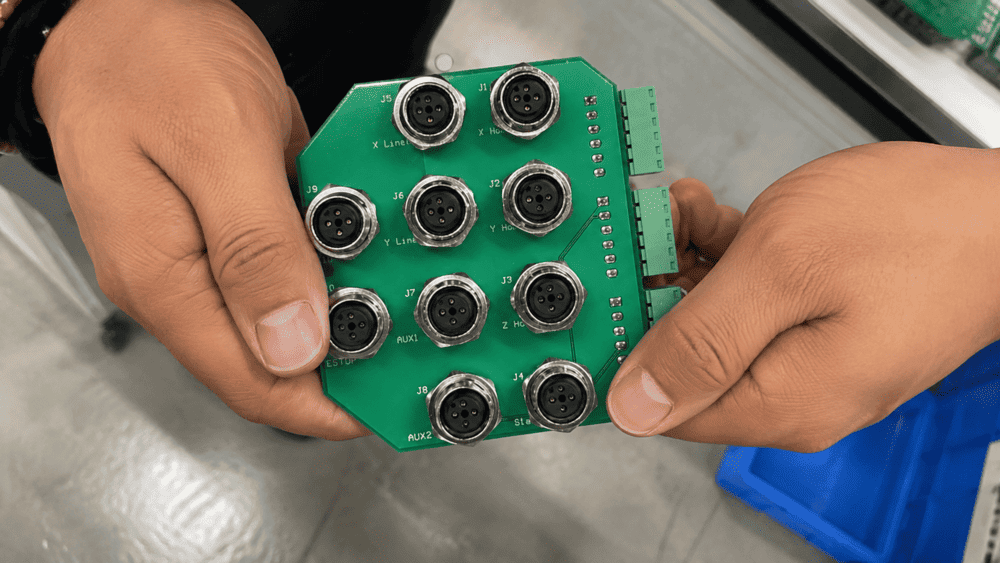
I use panel-mount waterproof connectors when the machine needs a clean external connection point. The outside may connect to a field cable. The inside may connect to a PCB, wires, terminal block, or interface module. This structure is common in control cabinets, machine panels, outdoor boxes, and automation devices.
The mounting style must match the equipment design. Some connectors are front-mounted. Some are rear-mounted. Some use nut locking. Some use flange mounting with screws. Some are PCB type. Some are solder wire type. If the mounting method is wrong, the connector may fit electrically but fail mechanically. I also need to check the panel thickness. A connector thread may be too short for a thick panel. A sealing ring may not compress well if the hole size is wrong.
| Panel Detail I Check | What Can Go Wrong | What I Ask From Customer |
|---|---|---|
| Panel cutout | Connector cannot be installed | Hole diameter or drawing |
| Panel thickness | Nut cannot lock well | Sheet thickness |
| Mounting side | Cable direction may be wrong | Front or rear mount |
| Internal tail | PCB or wire may not fit | PCB layout or wiring plan |
| Sealing area | Water may enter | Gasket position and surface |
When a customer has a control cabinet or machine panel, I prefer to receive a drawing before I recommend a connector. The drawing helps me check the thread, nut, gasket, panel cutout, and inner space. If the customer has only a sample photo, I can still make a first suggestion, but I will ask for key dimensions before sample order.
I also check the inside connection. Some customers need wires soldered to the connector. Some need PCB pins. Some need screw terminals. Some need a short cable tail connected to terminal blocks inside the cabinet. This is where our work sometimes connects with terminal blocks and interface modules. The waterproof connector protects the outside interface. The terminal block or module organizes the internal wiring.
I have learned that the connector choice must respect the whole cabinet structure. A perfect connector on the datasheet may still be wrong if the tail hits another component inside the cabinet. A right-angle connector may solve this. A longer cable tail may also solve it. So I treat the panel drawing as part of the connector selection, not as a later step.
I see many customers find the right connector series, but the standard cable length, color, pinout, or tail design still does not fit their machine.
A customized waterproof cable assembly is useful when the connector must match a specific machine layout, cable route, wiring definition, color rule, shielding need, or installation method. I choose customization when standard parts cannot fit the real project well enough. In real equipment, cable assemblies must often fit narrow routing paths, fixed connector positions, and installation tolerances, which is why industrial cabling in constrained environments is still a difficult engineering task10.
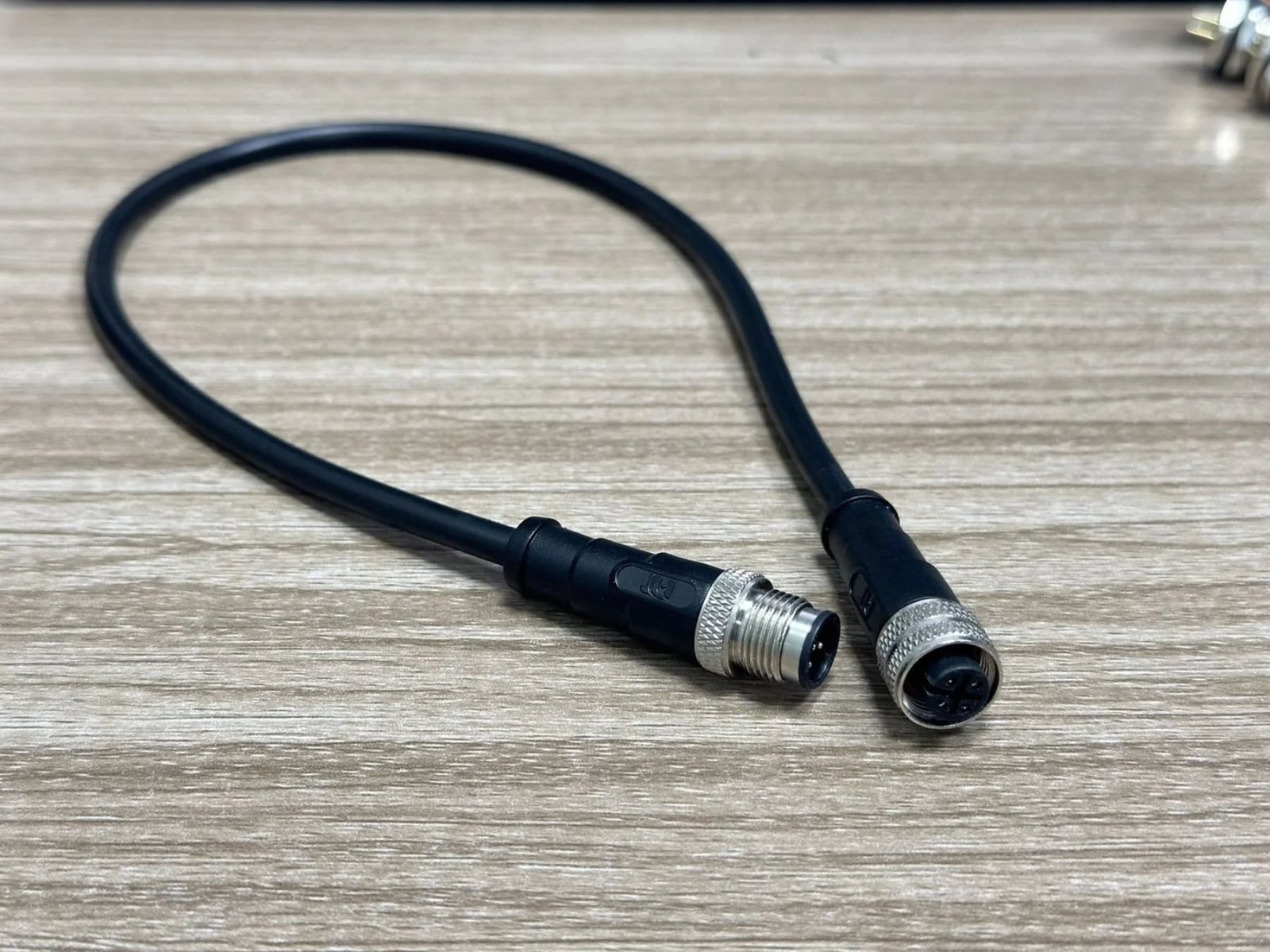
I often provide waterproof connectors as complete cable assemblies, not only as loose connector parts. This is common when the customer wants faster installation and stable quality. The connector can be M8, M12, M16, M23, waterproof RJ45, or another waterproof interface. The cable can be cut to a fixed length. The wire colors can follow the customer drawing. The tail can be open wire, stripped and tinned, crimped terminal, connector on the other end, or a special molded structure.
Customization is not only about cable length. It can include cable material, shielding, jacket color, wire gauge, bending direction, label, heat shrink tube, and packaging. I also check if the cable will be used indoors, outdoors, near oil, near moving parts, or near electrical noise. These conditions affect the final design.
| Custom Item | Why I Customize It | Example |
|---|---|---|
| Cable length | I need to match machine layout | 0.5 m, 1 m, 3 m, 5 m |
| Cable jacket | I need to match environment | PVC or PUR |
| Wire color | I need to match wiring standard | Brown, blue, black, white |
| Shielding | I need to reduce interference | Braided shield or foil shield |
| Tail treatment | I need to speed installation | Open wire, tinning, terminals |
| Connector direction | I need to avoid space conflict | Straight or right-angle |
My usual process is simple. The customer sends a part number, sample photo, drawing, or parameter list. I check the connector type, coding, pin count, gender, mounting method, cable type, and working environment. I then recommend a matching connector or cable assembly. After that, I send the datasheet, dimension drawing, and technical details for confirmation.
When the customer confirms the structure and parameters, I can prepare samples. If the sample needs changes, the changes are often about cable length, cable jacket, wire color, wiring definition, shielding structure, tail structure, or mounting style. These changes are normal. I see sample testing as a way to reduce later mass production risk.
I also ask customers to confirm the mating side. This point is very important. A male connector on one drawing may mean the connector contacts, but some customers describe gender by the equipment side. To avoid confusion, I use drawings and pin diagrams. I do not rely only on words like male, female, plug, or socket. Clear confirmation saves time for both sides.
I see the most expensive mistake happen when buyers choose by appearance, diameter, or pin count only, and ignore the real working conditions.
I choose the right industrial waterproof connector by checking the application, connector series, coding, pin count, gender, mounting method, IP rating, signal or power type, cable material, shielding need, panel structure, and sample testing plan. For sensor and IO-Link applications, the wiring definition is especially important because IO-Link systems commonly use M12 connectors with defined pin assignments such as 24 V, 0 V, and C/Q communication11.
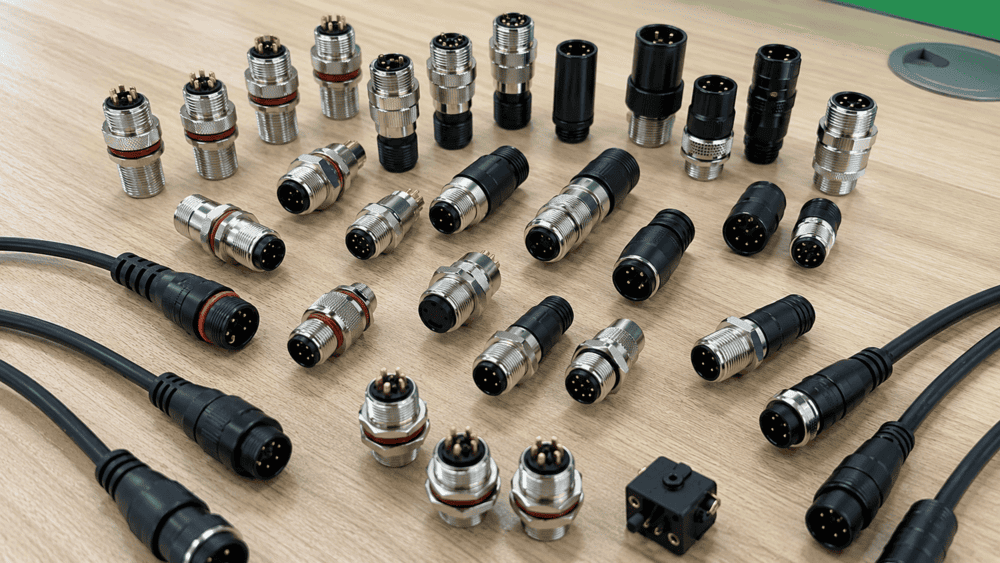
When I start a connector selection, I do not ask for a complete perfect specification at once. I know many customers are still checking their drawings or old samples. So I begin with the most useful questions. I ask what equipment the connector is used on. I ask if it is for a sensor, Ethernet, power, motor, panel, or outdoor device. I ask if the customer has a mating connector already. I ask if there is a fixed panel hole or PCB layout. These answers quickly narrow the connector type.
After that, I check technical details. I confirm M8, M12, M16, M23, waterproof RJ45, or another series. I confirm coding, pin count, gender, and mounting method. I check whether the connection is for signal, data, or power. I check the IP rating and the working environment. I also ask about cable material and shielding.
| Step | What I Check | Why I Check It |
|---|---|---|
| 1 | Application | I need to know the real use |
| 2 | Connector series | I need to choose M8, M12, M16, M23, or RJ45 |
| 3 | Coding and pin count | I need to ensure mating and wiring |
| 4 | Gender and mounting | I need to match the device structure |
| 5 | IP rating | I need to protect against water and dust |
| 6 | Cable and shielding | I need to match environment and signal stability |
| 7 | Drawing confirmation | I need to reduce sample risk |
I can quote faster when the customer sends clear information. A model number is useful. A photo is useful. A drawing is better. A wiring diagram is very helpful. A sample is best when the old product has no clear marking. With these details, I can reduce back-and-forth questions and recommend a more accurate product.
I also know that not every customer has all data ready. In that case, I guide the customer step by step. If the customer only knows the equipment type, I suggest common connector types first. If the customer has a PCB drawing, I check the pin layout and mounting style. If the customer has an outdoor product, I check the waterproof level and cable jacket. If the customer has an industrial Ethernet port, I check RJ45 or M12 D-coded or X-coded options.
The main lesson from my daily work is simple. Industrial waterproof connectors are not freely interchangeable parts. Each size, coding, pin count, gender, and mounting style has a clear purpose. When I respect these rules, the sample stage becomes smoother. The final machine test also becomes safer.
I choose industrial waterproof connectors by matching the real equipment, not by appearance, so the project can test faster and run more reliably.
"Ingress Protection (IP) ratings", https://www.iec.ch/ip-ratings. IEC explains that IEC 60529 rates and grades the resistance of electrical and electronic device enclosures against intrusion from dust and liquids. Evidence role: definition; source type: standards organization. Supports: IP rating should be checked when choosing waterproof industrial connectors. Scope note: A connector’s actual waterproof performance still depends on correct mating, gasket compression, cable gland sealing, and installation conditions. ↩
"IEC 61076-2-104:2026", https://webstore.iec.ch/en/publication/88273. IEC 61076-2-104 describes 3-way to 12-way circular connectors with M8 screw-locking or nominal 8 mm snap-locking for connection of automation devices, signal transmission, and power transmission. Evidence role: standard reference; source type: standards organization. Supports: M8 connectors as compact circular connectors used in automation devices. Scope note: Actual voltage, current, coding, sealing, and pin configurations vary by manufacturer and product series. ↩
"IEC 61076-2-101:2012", https://webstore.iec.ch/en/publication/4418. IEC 61076-2-101 describes M12 circular connectors typically used for industrial process measurement and control, including fixed and free connectors with screw-locking. Evidence role: standard reference; source type: standards organization. Supports: M12 connectors as standardized industrial circular connectors. Scope note: The exact edition and detailed ratings should be verified against the current IEC standard and the selected product datasheet. ↩
"M12 Connectors", https://www.molex.com/en-us/products/connectors/industrial-connectors/m12-connectors. Molex describes M12 connectors as rugged IP67-rated industrial connectors for signal, data, and power transmission, with coding variants such as A, B, C, D, L, and X code. Evidence role: application reference; source type: major connector manufacturer. Supports: M12 is not one single product and coding must be confirmed before selection. Scope note: Product availability and ratings depend on the specific supplier and series. ↩
"Oil-resistant - Chemical properties", https://www.lapp.com/en_US/us/products/properties-technologies/chemical-properties/oil-resistant/e/061001. LAPP explains that PU/PUR outer jackets offer high oil resistance, notch resistance, flexibility in continuous use, and resistance to high mechanical stress. Evidence role: material property support; source type: major cable manufacturer. Supports: PUR cable jackets are often selected for oil, mechanical stress, and movement resistance. Scope note: Performance depends on the exact PUR compound, cable construction, and application environment. ↩
"IEC 61076-2-106:2011", https://webstore.iec.ch/en/publication/4423. IEC 61076-2-106 describes M16 x 0.75 circular connectors with screw-locking and IP40 or IP65/67 protection degrees, typically used for industrial process measurement and control. Evidence role: standard reference; source type: standards organization. Supports: M16 as a larger industrial circular connector family. Scope note: Specific pin count, contact size, rating, and mounting structure must be checked from the selected product datasheet. ↩
"M23 Connectors for Harsh Environments", https://amphenolltw.com/news-events/m23-connectors-for-harsh-environments.html. Amphenol LTW describes M23 connectors as circular metric connectors used for high-current power transmission, signal wiring, servo motors, drives, and industrial control systems in harsh environments. Evidence role: application reference; source type: major connector manufacturer. Supports: M23 connectors are often used in larger industrial systems requiring power, signal, servo, or drive connections. Scope note: M23 connector layouts and ratings vary by supplier, series, and application. ↩
"IEEE 802.3-2022", https://standards.ieee.org/ieee/802.3/10422/. IEEE 802.3 defines Ethernet local area, access, and metropolitan area networks. Evidence role: standard reference; source type: standards organization. Supports: Waterproof RJ45 connectors are used in industrial Ethernet applications where stable data transmission is required. Scope note: Ethernet performance also depends on cable category, shielding, installation quality, and device port design. ↩
"IEC 60603-7:2020", https://webstore.iec.ch/en/publication/64373. IEC 60603-7 covers 8-way unshielded free and fixed connectors and specifies common dimensions, mechanical, electrical, environmental characteristics, and tests for the IEC 60603-7 connector family. Evidence role: standard reference; source type: standards organization. Supports: RJ45-style modular connector interfaces are standardized separately from waterproof housings. Scope note: Waterproof RJ45 assemblies add sealing housings, glands, locking structures, or molded protection beyond the basic modular connector interface. ↩
"Industrial Cabling in Constrained Environments: a Practical Approach and Current Challenges", https://arxiv.org/abs/2404.10829. This paper discusses industrial cabling tasks such as cable handling, routing, clipping, and plug insertion in constrained spaces. Evidence role: engineering context; source type: research paper. Supports: cable length, routing, connector direction, and installation space are real engineering constraints in cable assembly and panel connector selection. Scope note: The paper is not specific to M8/M12 waterproof connectors, but it supports the broader point that industrial cabling and plug insertion must account for space and routing constraints. ↩
"IO-Link System Description", https://io-link.com/fileadmin/user_upload/Downloads/About_IO-Link/IO-Link_System_Description_eng_2018.pdf. The IO-Link Community explains IO-Link point-to-point connections and shows typical pin assignment diagrams for IO-Link devices and ports, including M12 connector arrangements. Evidence role: protocol/application reference; source type: industry association. Supports: wiring definition matters for sensor and IO-Link connector selection, not only connector shape. Scope note: Specific IO-Link port class, current rating, and device wiring should always be confirmed against the device datasheet. ↩
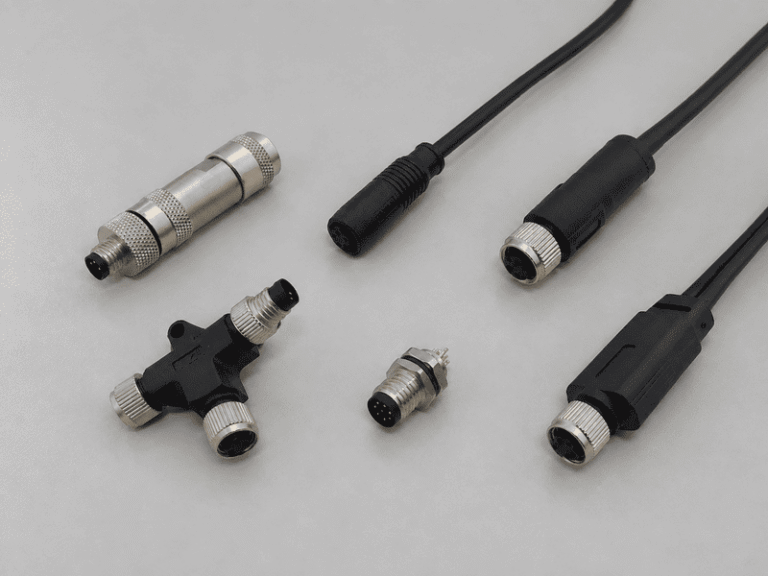
An M8 8 pin female connector can look like the right replacement on a purchasing list and still…
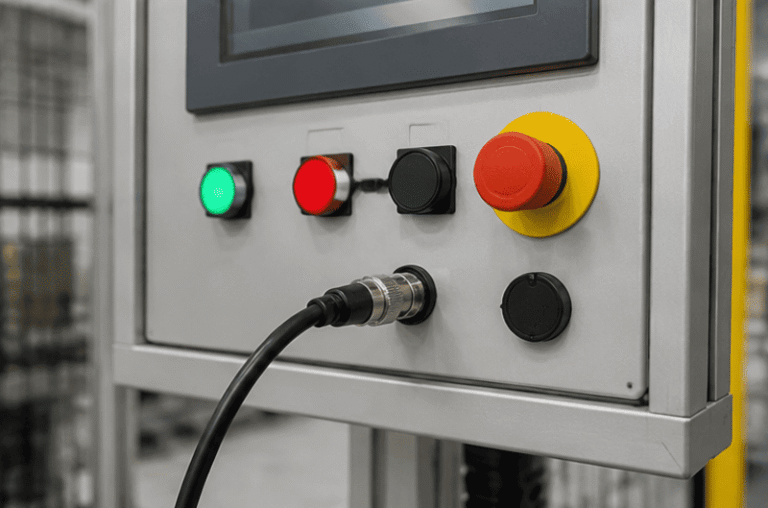
An M12 male connector 5-pin B-coded may look like a straightforward line item, but its name does not…
M12 connectors can carry different voltage ratings, so a buyer cannot choose one safely from the connector size…
NITAI manufactures terminal blocks, M8/M12 waterproof connectors and industrial distribution modules for global OEMs, distributors and automation customers.
Leave a Reply