Oct 17, 2026
How Do I Choose the Right M8 8 Pin Female Connector for My Equipment?
An M8 8 pin female connector can look like the right replacement on a purchasing list and still…

Are you tired of replacing brittle cables on your machines? Many engineers choose PVC because it is cheap, but it often fails under pressure. Let’s look at the risks.
You should avoid PVC when your application involves constant movement, harsh chemicals, or extreme temperatures. While PVC works for simple, fixed indoor wiring, it often cracks and fails in demanding industrial environments where mechanical stress and oil exposure are present.
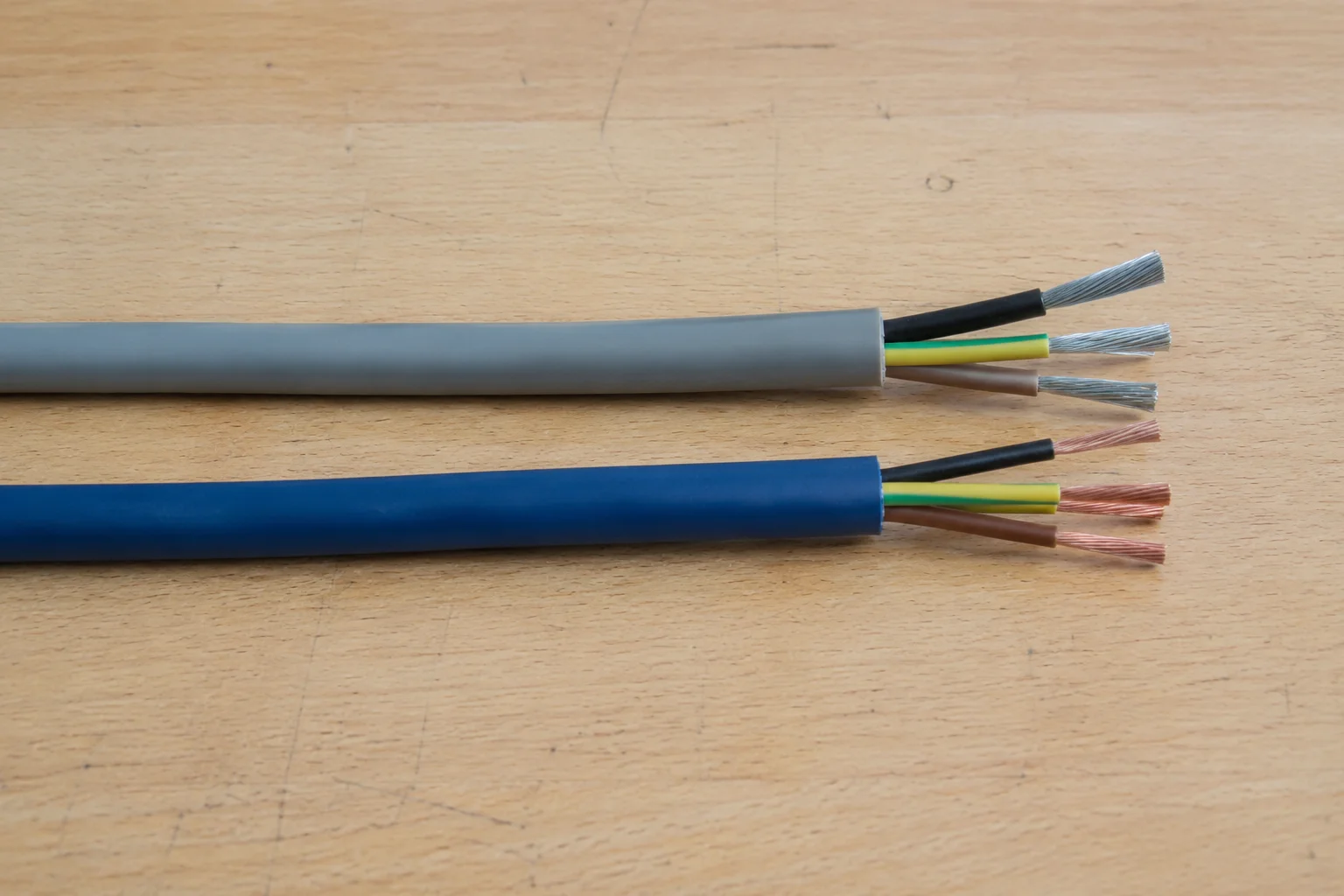
I have spent years helping customers choose the right materials for their connectivity needs. I see many buyers focus only on the initial price. This is a common mistake. I want to share how to think about material selection so you can avoid costly machine downtime later on.
Do you worry that your machine cables will crack after only a few months of service? Constant machine movement makes cheap materials fail quickly. You need a better plan.
PVC fails in industrial settings because it lacks long-term flexibility1. It is not designed to survive continuous bending, repeated motion, or exposure to aggressive industrial oils and coolants2. Over time, these conditions cause the plastic to harden, crack, and eventually lead to complete electrical failure.
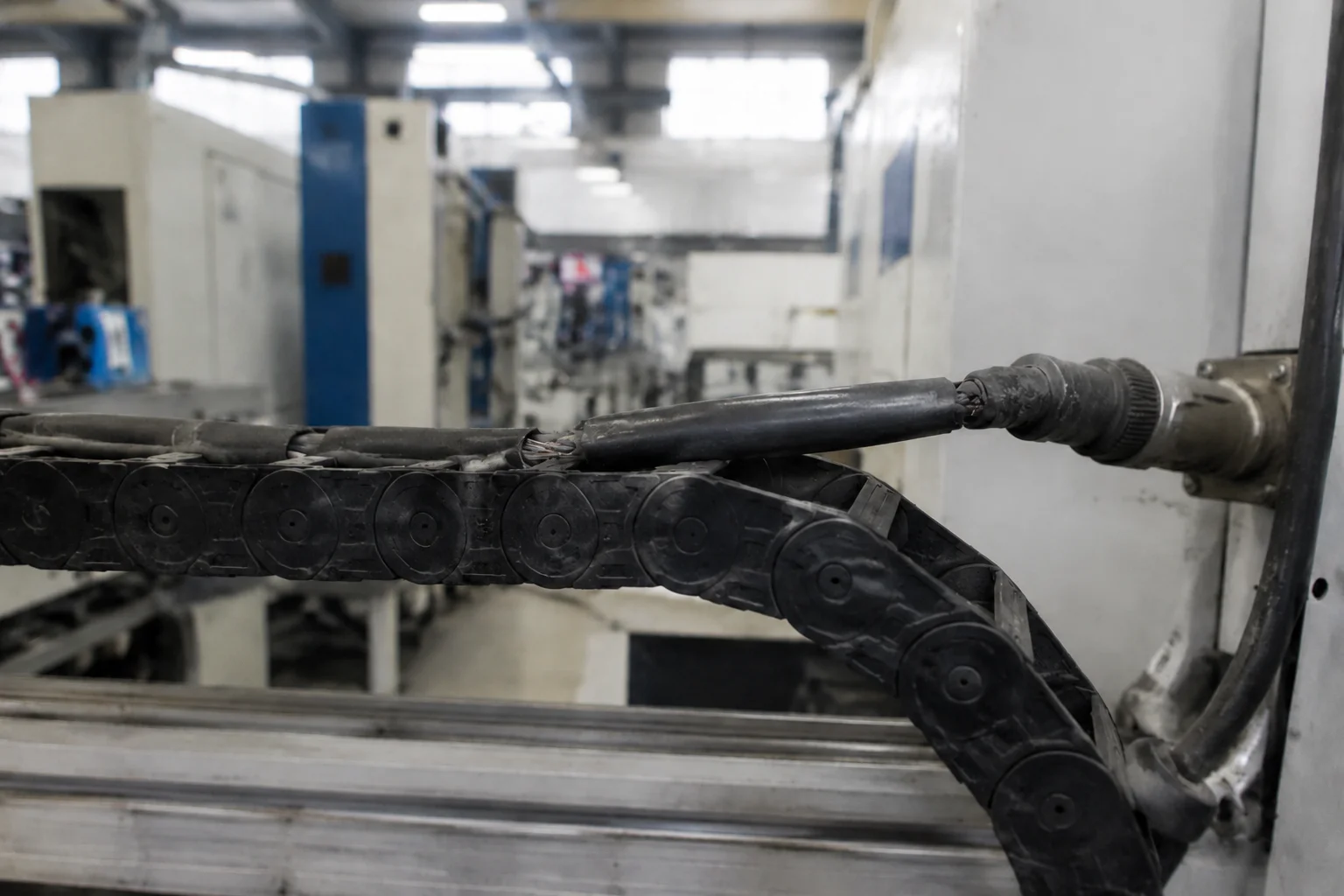
In my experience with custom cable assembly inquiries, I often see PVC cables used in the wrong spots. PVC is essentially a rigid plastic3. It does not handle the "flex life" requirements of a drag chain or a robotic arm4. When you put PVC in a moving cable track, the inner structure begins to fatigue.
To understand why this happens, look at how materials handle stress:
| Feature | PVC Behavior | Alternative (e.g., PUR/TPE) |
|---|---|---|
| Flex Life | Poor for dynamic motion | High for continuous motion |
| Oil Resistance | Low (can swell or degrade) | High (protects internal wires) |
| [Cold Temperature | Becomes brittle](https://www.appstate.edu/~clementsjs/polymerproperties/plastics_low_temp.pdf)%%%FOOTNOTE_REF_5%%% | Remains flexible |
| Cost | Very low | Higher |
You must weigh these factors before you decide. If your cable sits inside a stationary control cabinet, PVC is fine. If the cable moves with the machine, you are taking a risk. You have to balance the low purchase price against the high cost of a machine breakdown.
Are you searching for a single material that solves every wiring problem for your factory? Many people assume one plastic is better than all others. This is not true.
There is no single "perfect" replacement for PVC. Materials like PUR, TPE, and silicone offer superior performance in specific areas like oil resistance or flexibility, but they are not universal solutions. You must choose the material based on the specific environmental demands of your machine.
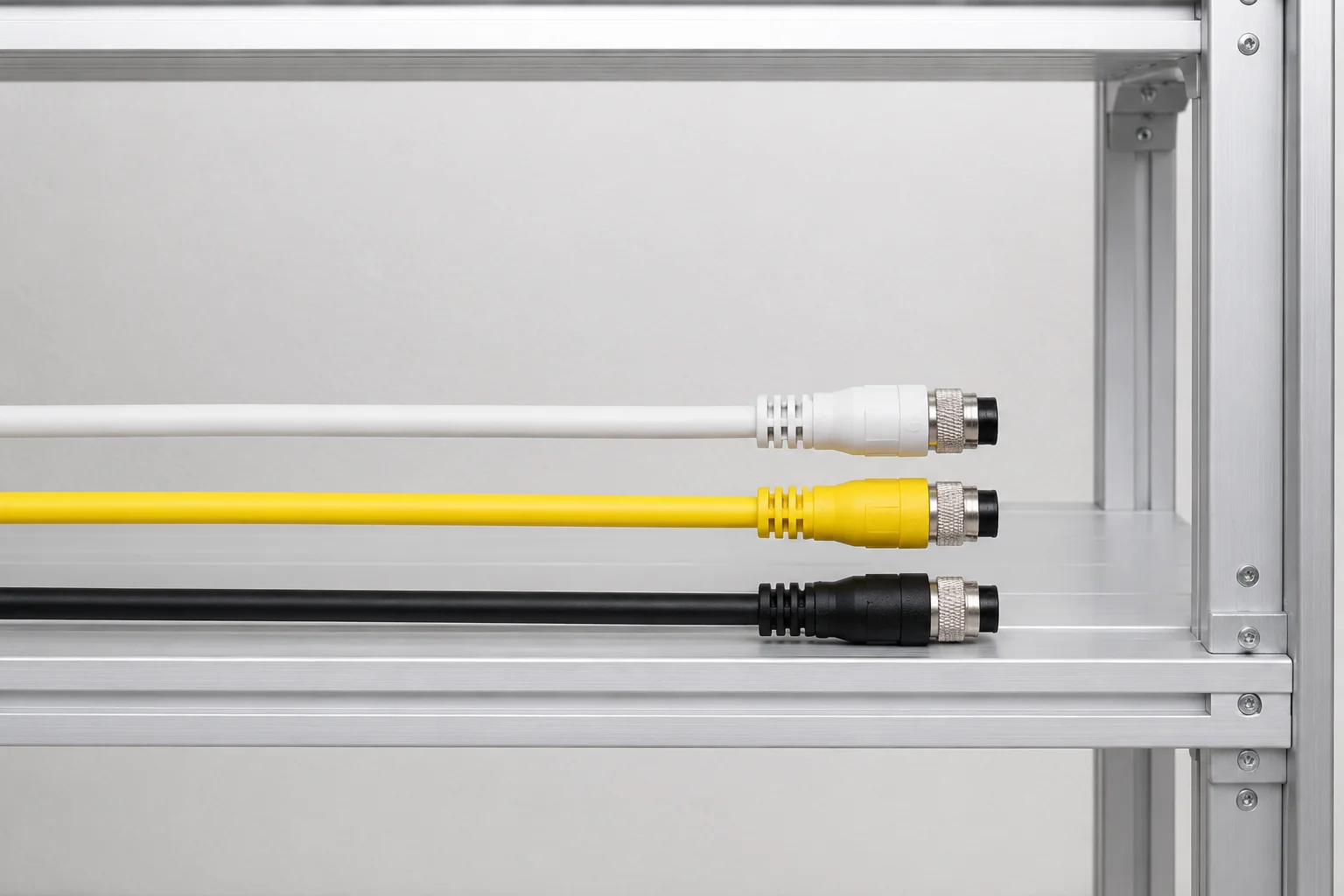
When I talk to machine builders, I tell them that material choice is a calculation of risk. If you use Polyurethane (PUR), you gain excellent abrasion resistance and oil immunity6. However, PUR can be harder to strip during installation and often carries a higher price tag. If you choose Silicone, you get great temperature resistance, but you lose the mechanical toughness7 you get from other plastics.
It is helpful to ask yourself these questions during the design phase:
By asking these questions, you stop looking for a "miracle material" and start looking for the "right fit." If you choose based on the environment rather than the price, you will have a much more reliable machine.
Are you struggling to prove that your chosen cable will last for the life of your equipment? Choosing the wrong material can lead to unhappy customers and warranty claims.
You can verify your choice by checking the manufacturer’s technical data sheets against your application’s specific requirements. Look for bend radius ratings, chemical compatibility tables, and temperature ranges. Testing prototypes in your actual operating conditions is the only way to be certain of long-term success.
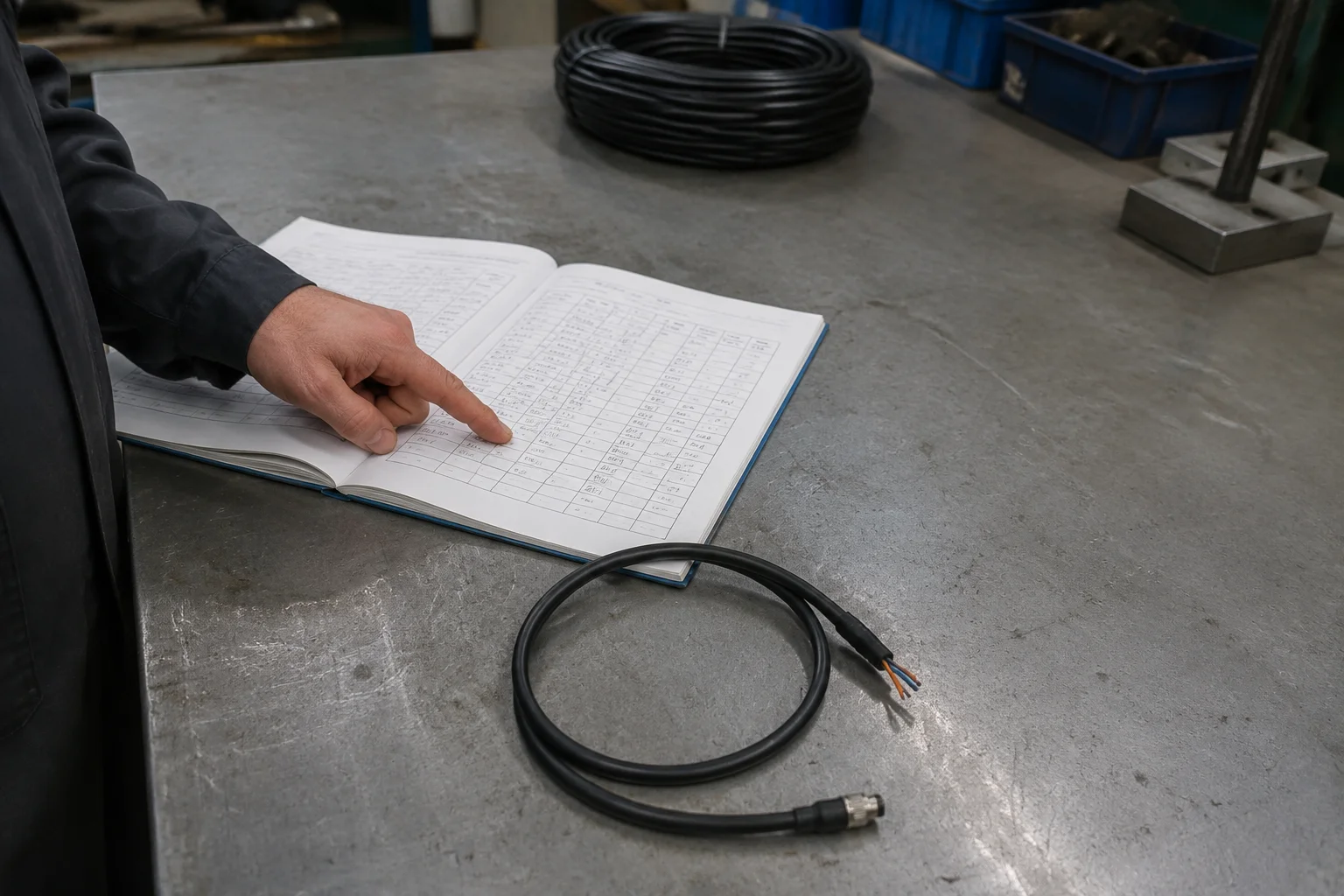
I have seen many projects succeed because the team took the time to define the environment clearly. They did not just guess that a material would work. They looked at the technical data. For example, if a machine operates in an outdoor environment, you must check for UV resistance. PVC can degrade under direct sunlight9, while other materials are stabilized to handle it.
Furthermore, always think about your end user. If your machine goes to a facility with very strict chemical cleaning processes, you must ensure the jacket material will not dissolve. I always encourage our clients to request samples for testing10. Do not rely on a brochure alone. Put the material in your machine and see how it performs under real stress. This small step saves you from big headaches when you have a thousand machines out in the field.
Avoid PVC when motion, heat, or chemicals are present. Base your material choice on application risks rather than initial price to ensure long-term machine reliability and customer satisfaction.
"Fracture in polymers - Wikipedia", https://en.wikipedia.org/wiki/Fracture_in_polymers. The flex fatigue of PVC cable jackets is attributed to plasticizer loss and polymer chain stiffening under cyclic mechanical stress, reducing the material's ability to sustain dynamic bending applications; see polymer engineering literature on PVC compounding and fatigue behavior. Evidence role: mechanism; source type: paper. Supports: PVC's molecular structure and plasticizer content govern its flexibility, and repeated mechanical stress causes plasticizer migration and embrittlement over time. Scope note: General polymer science sources may not address cable-specific flex-life cycle counts directly, making direct quantitative comparison to alternative materials contextual rather than definitive. ↩
"[PDF] Chemical Resistance and Chemical Applications for CPVC Pipe and ...", https://www.nrc.gov/docs/ML1820/ML18207A604.pdf. Chemical resistance data for PVC indicate susceptibility to swelling and softening upon prolonged contact with hydrocarbon-based industrial oils and certain coolant formulations, compromising jacket integrity in machining environments. Evidence role: mechanism; source type: research. Supports: PVC exhibits limited resistance to aliphatic and aromatic hydrocarbons found in industrial cutting oils and coolants, leading to swelling and loss of mechanical integrity. Scope note: Resistance varies significantly with PVC compound formulation and plasticizer type; a single source may not capture the full range of commercial PVC cable jacket compositions. ↩
"Polyvinyl chloride - Wikipedia", https://en.wikipedia.org/wiki/Polyvinyl_chloride. Polyvinyl chloride in its unplasticized form (uPVC) is a rigid thermoplastic; flexible grades are produced by incorporating plasticizers such as phthalates or adipates, with flexibility increasing proportionally to plasticizer content (see, e.g., the Wikipedia article on polyvinyl chloride or equivalent polymer science references). Evidence role: definition; source type: encyclopedia. Supports: In its base form, PVC is a rigid thermoplastic; flexibility is achieved only through the addition of plasticizers, and the degree of flexibility is directly proportional to plasticizer concentration. Scope note: The article's context implies flexible/plasticized PVC used in cable jackets, so the 'rigid' characterization is a simplification that a citation should clarify rather than fully confirm. ↩
"How To Choose Drag Chain Cable?-Aein Cable", https://www.aein-wirecable.com/articles/howtoc.html. Industry guidance from cable carrier manufacturers and standards bodies specifies that cables in continuous-flex applications such as drag chains must be rated for dynamic bending, with flex-life cycle requirements often exceeding 10 million cycles—performance levels not achievable with standard PVC jacket compounds. Evidence role: expert_consensus; source type: institution. Supports: Cables installed in drag chains and robotic arms are subject to millions of flex cycles and require materials specifically rated for dynamic motion applications, which standard PVC does not meet. Scope note: Specific cycle count thresholds vary by application and manufacturer; this note reflects general industry practice rather than a single universally adopted standard. ↩
"[PDF] Low Temperature Properties of Polymers", https://www.appstate.edu/~clementsjs/polymerproperties/plastics_low_temp.pdf. The low-temperature flexibility of plasticized PVC is limited by plasticizer viscosity increase and proximity to the polymer's glass transition region; standard cable-grade PVC compounds are typically rated to approximately −15 °C to −20 °C, below which embrittlement and cracking risk increase substantially. Evidence role: mechanism; source type: paper. Supports: Plasticized PVC loses flexibility and becomes brittle at low temperatures due to plasticizer stiffening and approach to the glass transition temperature, with standard grades typically rated only to approximately −15 °C to −20 °C. Scope note: The exact low-temperature limit varies with plasticizer type and loading; cold-weather PVC formulations exist that extend this range, so the claim applies to standard rather than all PVC grades. ↩
"Cable Jacket Material Guide: PVC vs. PUR vs. TPE | MISUMI", https://us.misumi-ec.com/blog/cable-jacket-material/. Thermoplastic polyurethane elastomers are documented in materials engineering literature to provide superior abrasion resistance and hydrocarbon oil resistance relative to plasticized PVC, making them a common choice for dynamic cable jacket applications. Evidence role: general_support; source type: research. Supports: Thermoplastic polyurethane (TPU/PUR) exhibits significantly higher abrasion resistance and better resistance to hydrocarbon oils compared to standard PVC compounds. Scope note: Performance comparisons depend on the specific grades of PUR and PVC being compared; generalized rankings may not apply to all commercial formulations. ↩
"PVC vs TPE vs Silicone Cable Jacket Comparison | OurPCB", https://cableharnessassembly.com/resources/blog/pvc-vs-tpe-vs-silicone-cable. Silicone rubber is characterized by a broad service temperature range (typically −60 °C to +200 °C) but has inherently lower tensile and tear strength than thermoplastic polyurethane, a trade-off documented in elastomer materials science literature. Evidence role: mechanism; source type: paper. Supports: Silicone elastomers maintain flexibility across a wide temperature range but exhibit lower tensile strength and tear resistance compared to polyurethane and other thermoplastic elastomers. Scope note: Mechanical property values vary across silicone grades and reinforcement levels; the generalization may not apply to high-consistency or fiber-reinforced silicone compounds. ↩
"Responsibly Managing EU RoHS Compliance for Easier Market ...", https://www.ul.com/insights/responsibly-managing-eu-rohs-compliance-easier-market-access. Cable jacket material selection in industrial applications is governed by regional regulatory frameworks including the EU RoHS Directive (2011/65/EU) restricting hazardous substances, the REACH regulation (EC No 1907/2006), and performance standards such as IEC 60228 and UL 508, all of which may influence permissible material choices. Evidence role: historical_context; source type: government. Supports: Industrial cable materials are subject to regional regulatory frameworks such as the EU's RoHS Directive, REACH regulation, and standards from bodies such as IEC and UL, which constrain material choices. Scope note: Applicable standards vary by end-use application, market region, and machine category; this note identifies relevant frameworks rather than exhaustively specifying requirements for all scenarios. ↩
"[PDF] Comparing Weathering Effects of Ultraviolet and Xenon Arc ...", https://ideaexchange.uakron.edu/cgi/viewcontent.cgi?article=3073&context=honors_research_projects. UV-induced dehydrochlorination and chain scission in unstabilized PVC result in surface embrittlement and cracking upon prolonged outdoor exposure, a well-documented degradation pathway in polymer weathering literature. Evidence role: mechanism; source type: paper. Supports: PVC undergoes photodegradation under UV radiation, causing discoloration, embrittlement, and loss of mechanical properties unless UV stabilizers are compounded into the material. Scope note: The degree of degradation depends heavily on the specific UV stabilizer package used in a given PVC formulation; unstabilized and stabilized grades behave differently. ↩
"Navigating the Challenges of Custom Cable Assembly Prototyping", https://blog.epectec.com/navigating-the-challenges-of-custom-cable-assembly-prototyping. Engineering validation frameworks, including those referenced in IEC and ISO standards for cable and wire testing, recommend subjecting prototype assemblies to simulated operational stresses—including thermal cycling, chemical immersion, and mechanical flex testing—before committing to full production, as data sheet ratings alone may not capture application-specific interaction effects. Evidence role: expert_consensus; source type: institution. Supports: Engineering validation standards recommend environmental and mechanical prototype testing to confirm material suitability before production deployment. Scope note: This note reflects general engineering validation practice; specific test protocols depend on the applicable product standard and industry sector, and no single universal protocol governs all cable material qualification. ↩
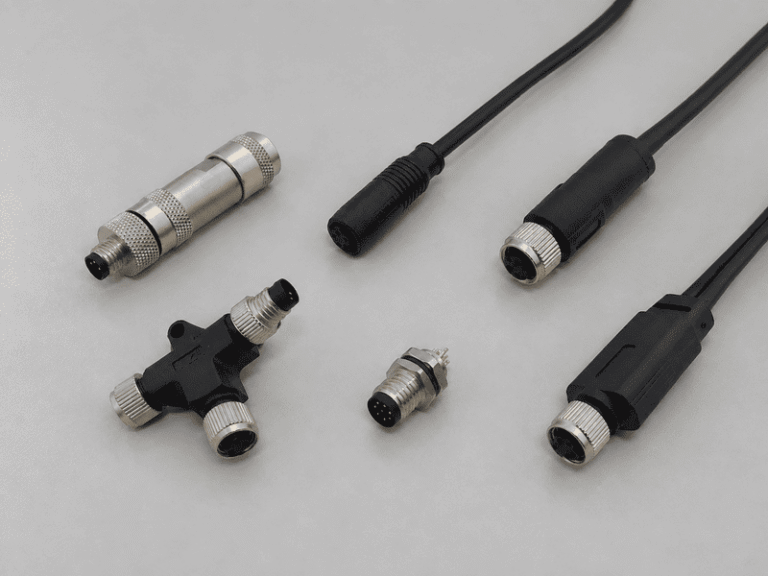
An M8 8 pin female connector can look like the right replacement on a purchasing list and still…
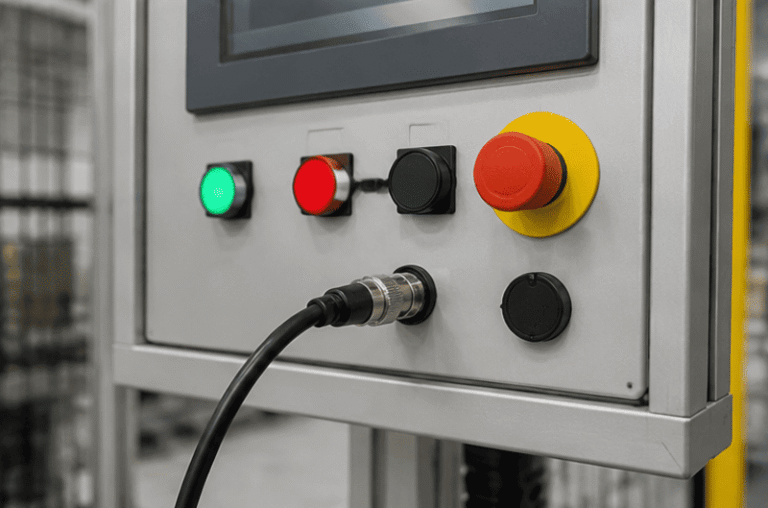
An M12 male connector 5-pin B-coded may look like a straightforward line item, but its name does not…
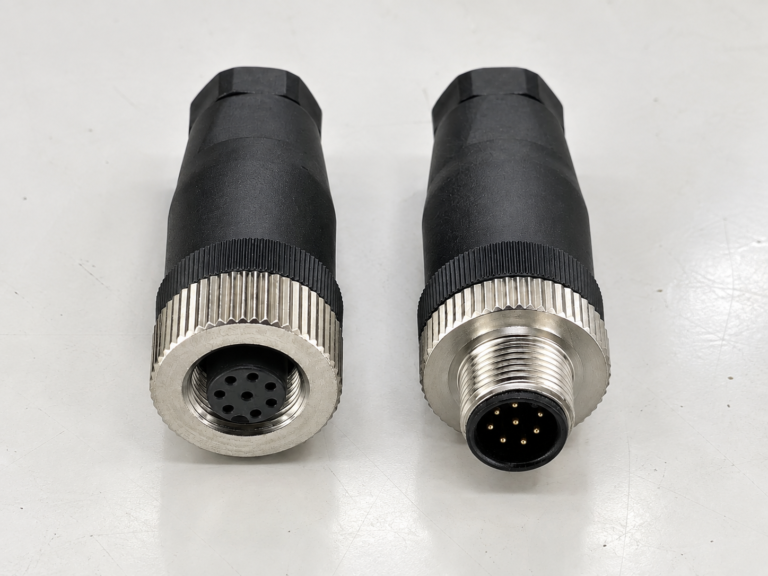
M12 connectors can carry different voltage ratings, so a buyer cannot choose one safely from the connector size…
NITAI manufactures terminal blocks, M8/M12 waterproof connectors and industrial distribution modules for global OEMs, distributors and automation customers.
Leave a Reply