Oct 17, 2026
How Do I Choose the Right M8 8 Pin Female Connector for My Equipment?
An **M8 8 pin female connector** can look like the right replacement on a purchasing list and still…

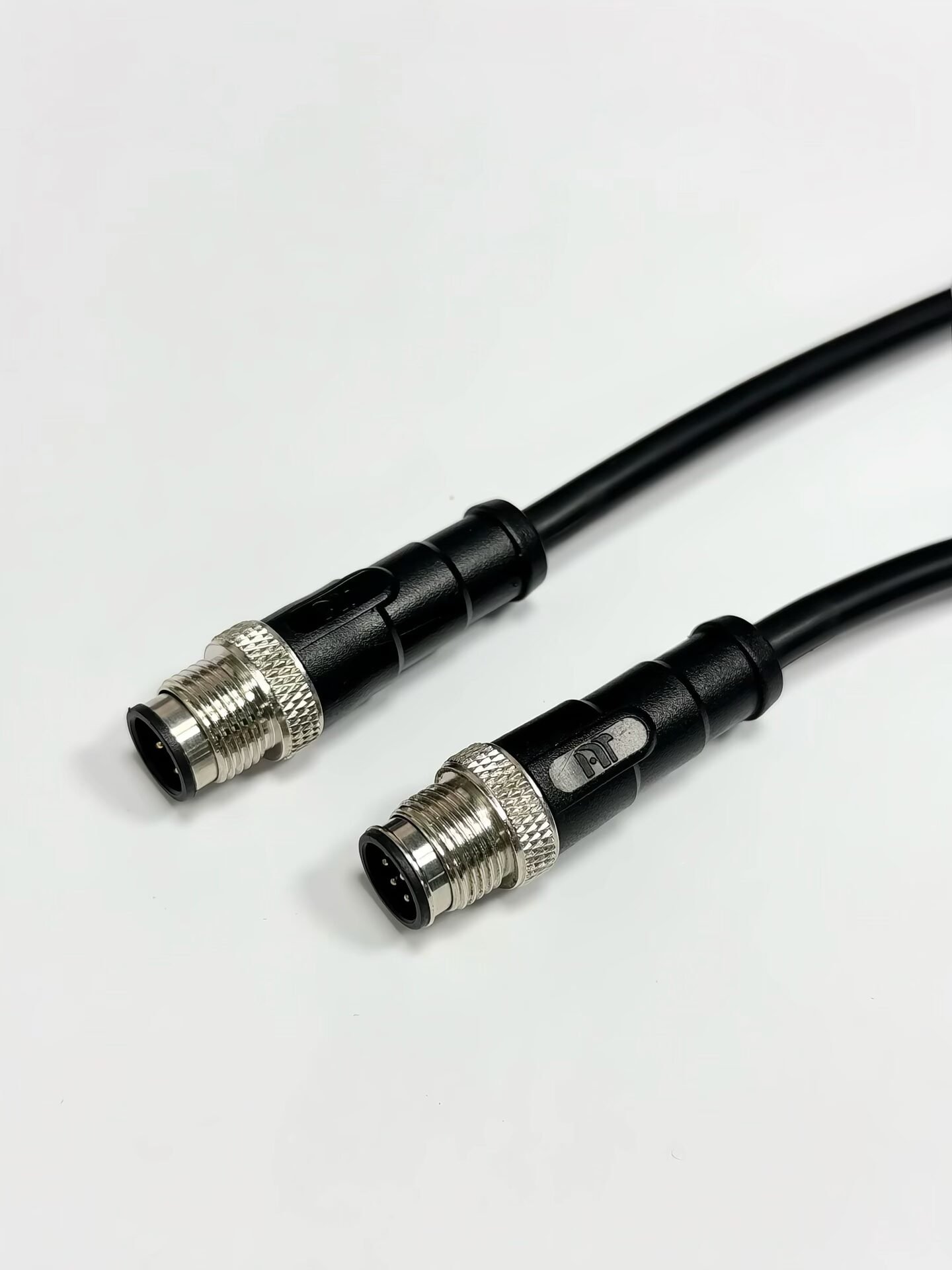
You’ve picked the right M12 coding and pin count. But the cable jacket material — PVC or PUR — is just as critical. Pick the wrong one, and you’ll be replacing cracked, swollen, or brittle cables within months. Here’s a straightforward comparison based on real industrial environments.
| Your environment | Go with |
|---|---|
| Oil, coolant, cutting fluid present | PUR |
| Cable chains, constant bending | PUR |
| Welding area, hot spatter risk | PUR |
| Outdoor installation, UV exposure | PUR |
| Clean, dry, indoor, fixed routing | PVC works well |
| Budget is tight and environment is mild | PVC |
Now let’s go deeper into what actually happens to each material on the factory floor.
PVC is not a bad material. But put it in the wrong place, and failure is predictable:
If any of these conditions apply, the cost saved by choosing PVC will be lost several times over in downtime and replacement labor.
PUR — polyurethane — is the default jacket material for sensor cables in serious industrial environments. Here’s why machine builders prefer it:
PVC performs reliably for years when used within its limits:
In these conditions, PVC is the economical option. If your project needs several hundred sensor cables in a clean assembly environment, the cost difference adds up meaningfully.
PUR cables cost more than PVC equivalents. The raw material is pricier, and extrusion is more demanding. For custom cable assemblies — non-standard lengths, custom pinouts, special colors — PUR typically comes with a higher minimum order quantity.
The reason is supply chain: PUR compound batches are larger than PVC. If you need a small quantity of custom PUR cables, the manufacturer may need to quote based on material availability and MOQ feasibility. PVC is more forgiving for small custom runs.
Always confirm MOQ upfront when requesting custom configurations.
| Material | Use case | Notes |
|---|---|---|
| PVC | General indoor, fixed | Economical, widely available |
| PUR | Oil, flex, outdoor | Industry standard for harsh environments |
| TPU | Similar to PUR | Some formulations offer better hydrolysis resistance |
| LSZH | Enclosed public spaces, tunnels, marine | Required by specific building and marine codes |
| Silicone | Extreme high temperature | Expensive, lower mechanical strength |
For standard factory automation, PVC and PUR cover almost every application. If you need TPU, LSZH, or silicone, discuss feasibility, lead time, and MOQ with the manufacturer before committing to a design.
When requesting a quote for M12 sensor cables, provide these details to get an accurate quotation:
Not sure which material fits your application? Send the manufacturer a description of your environment. A competent supplier will recommend the right jacket — and tell you if it affects MOQ or lead time.
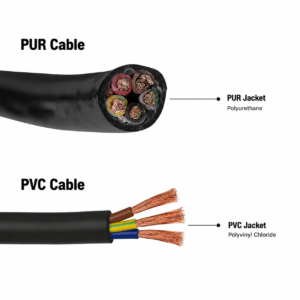
NITAI manufactures M12 connector cable assemblies with both PVC and PUR jacket options. Standard lengths: 0.5m, 1m, 2m, 3m, 5m, 10m. Custom lengths, colors, and pin assignments are supported — MOQ confirmed during quotation.
We supply:
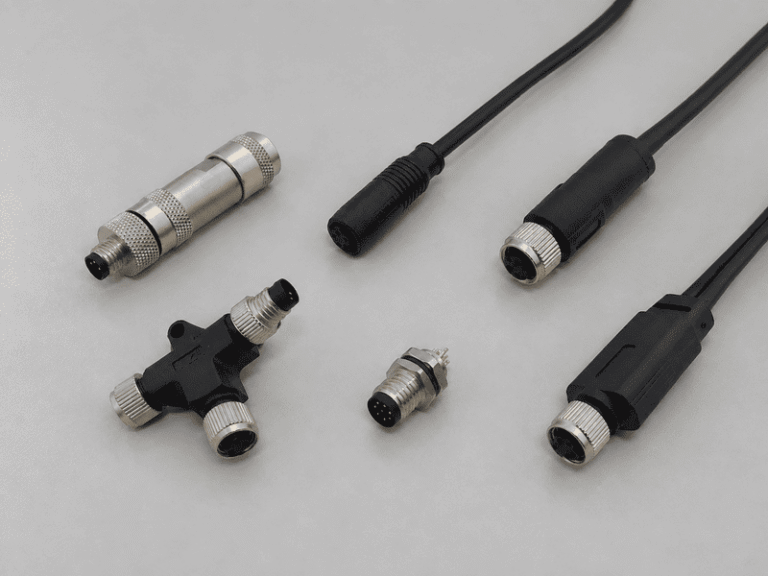
An **M8 8 pin female connector** can look like the right replacement on a purchasing list and still…
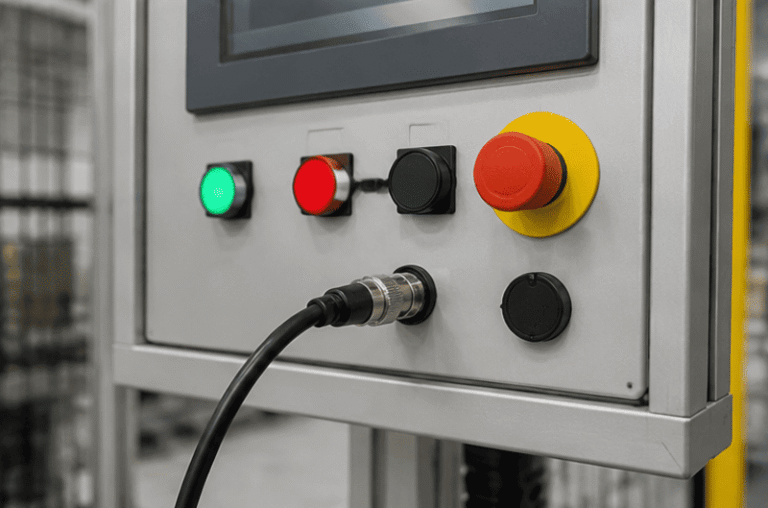
An **M12 male connector 5-pin B-coded** may look like a straightforward line item, but its name does not…
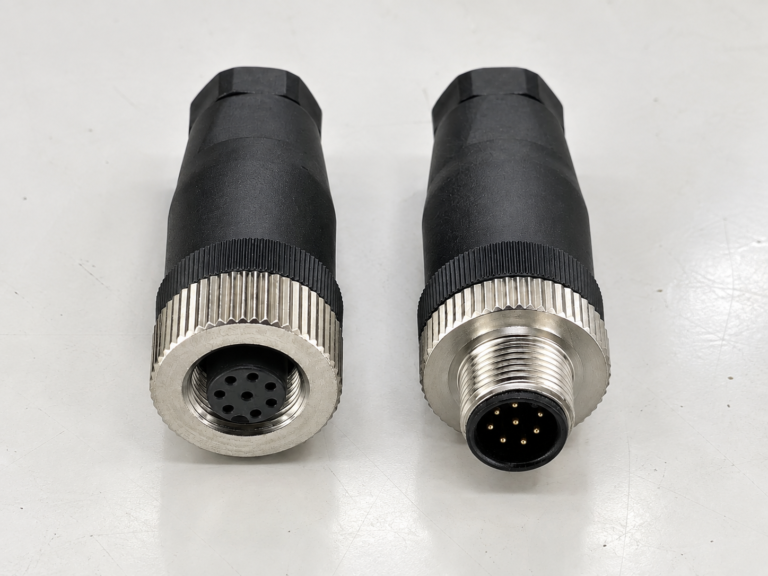
M12 connectors can carry different voltage ratings, so a buyer cannot choose one safely from the connector size…
NITAI manufactures terminal blocks, M8/M12 waterproof connectors and industrial distribution modules for global OEMs, distributors and automation customers.
[…] M12-specific jacket selection, see our PVC vs PUR M12 sensor cable guide. You can also review our custom M12 connector cable […]