Oct 17, 2026
How Do I Choose the Right M8 8 Pin Female Connector for My Equipment?
An M8 8 pin female connector can look like the right replacement on a purchasing list and still…

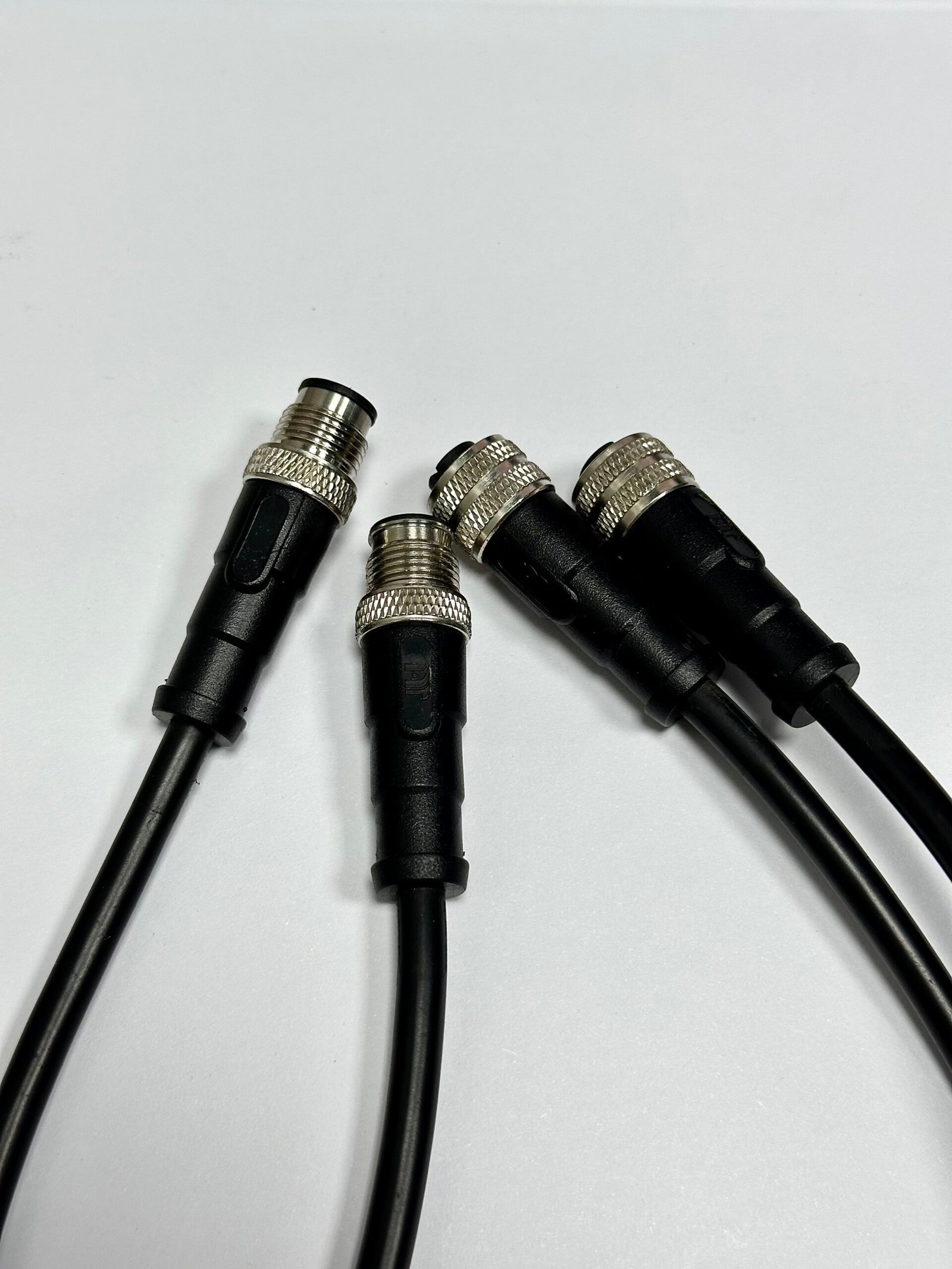
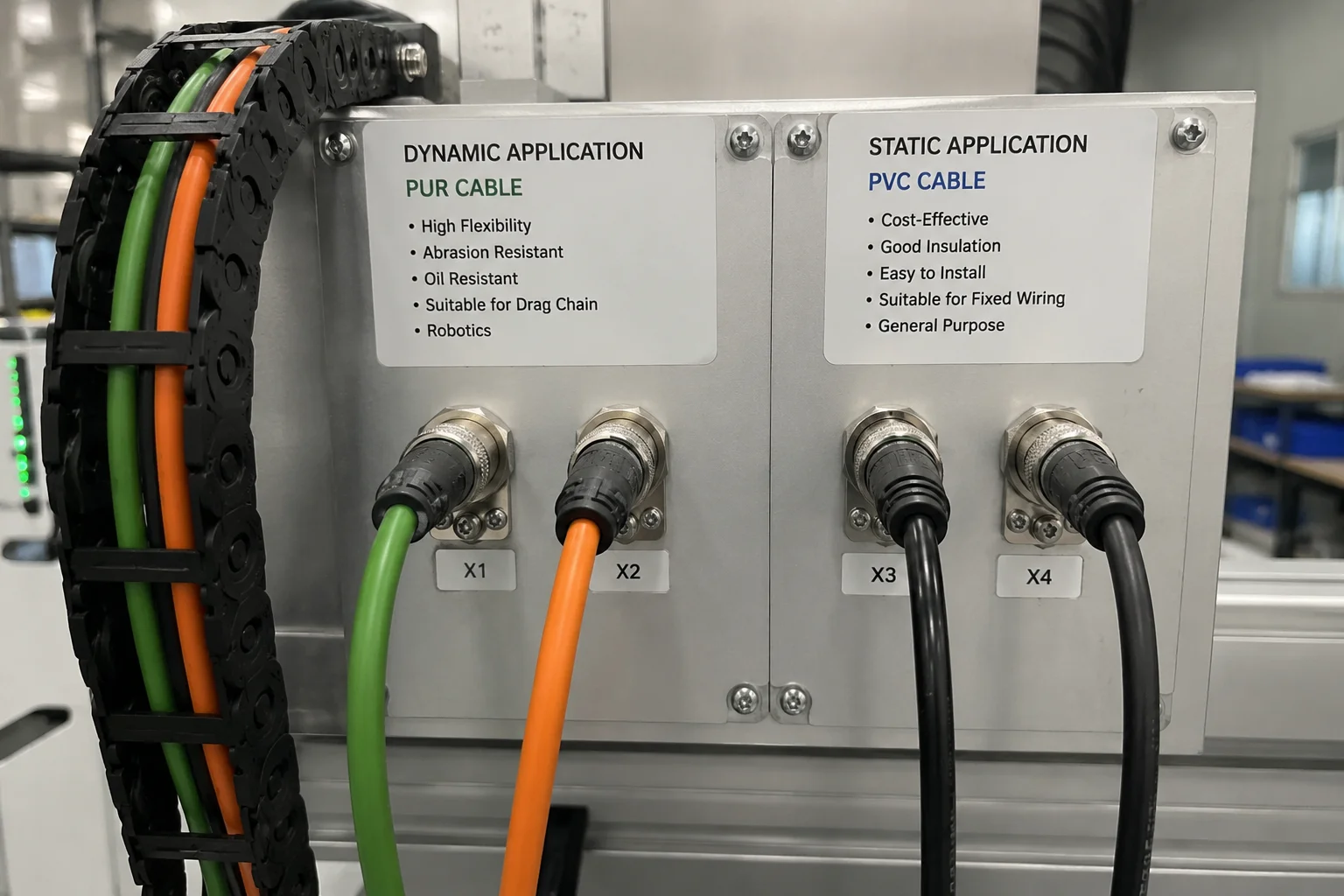
PUR and PVC are both widely used cable jacket materials, but they are suited to different working conditions. PUR is usually the better option for repeated movement, abrasion, oil exposure, and demanding industrial environments, while PVC is normally the more economical choice for fixed or low-movement installations.
However, jacket material alone does not determine cable life, flexibility, outdoor suitability, or waterproof performance. The complete cable design, connector sealing, bend radius, installation method, and material formulation must also match the application.
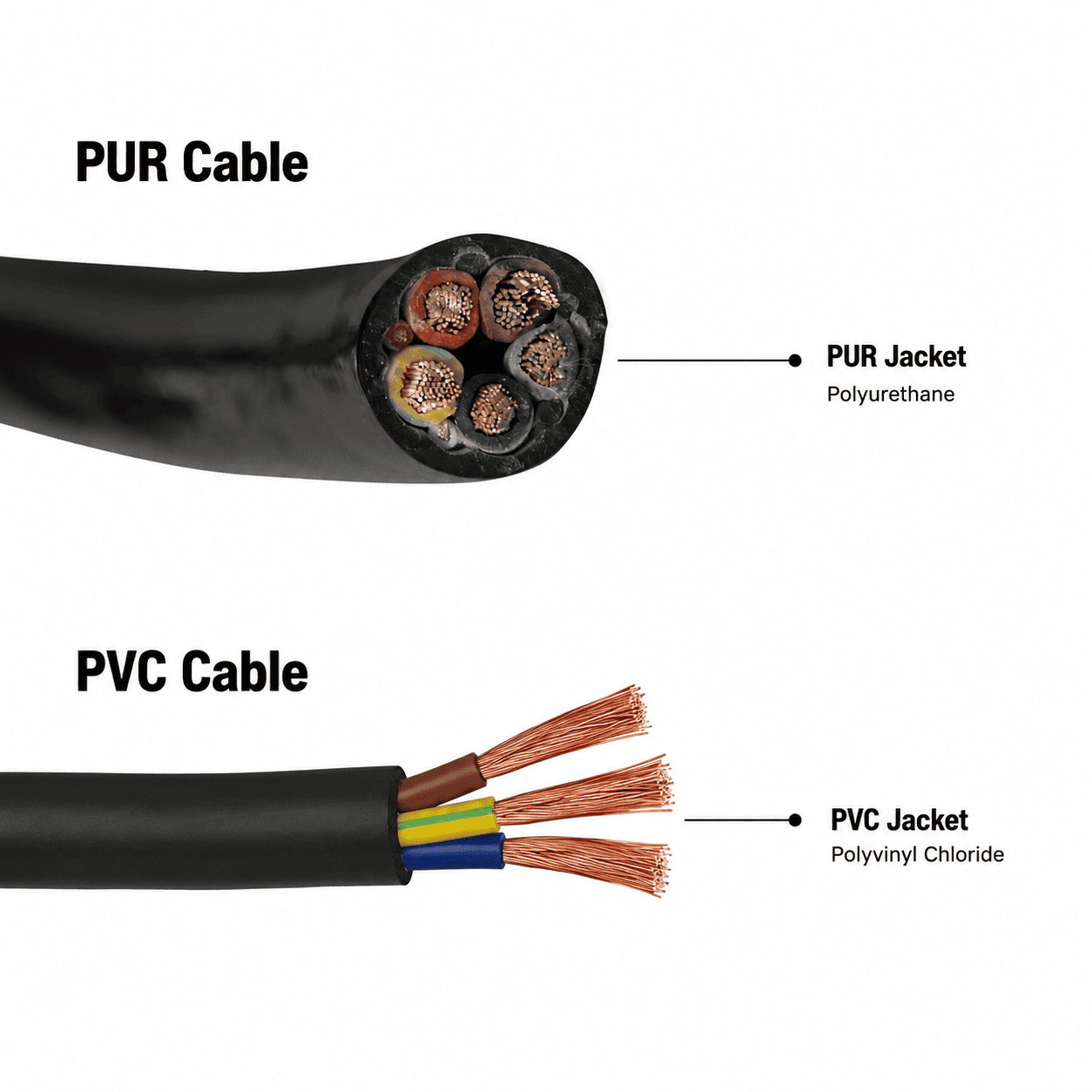
| Comparison Point | PUR Cable | PVC Cable |
|---|---|---|
| Typical cost | Higher | Lower and more economical |
| Repeated movement | Usually better for continuous-flex and dynamic applications when the complete cable is flex-rated | Usually better for fixed or low-movement installations unless specifically designed for continuous flexing |
| Abrasion resistance | Commonly very good, but performance depends on the compound | Adequate to good for many static applications; specific compounds may perform differently |
| Oil resistance | Usually better for industrial oils, lubricants, and greases | Standard PVC often has limited oil resistance, although oil-resistant PVC compounds are available |
| Tear and notch resistance | Generally strong | Normally lower than industrial PUR compounds |
| Low-temperature flexibility | Often better, depending on the PUR grade | More dependent on plasticizer and formulation |
| Flame performance | Must be verified from the cable specification | Many PVC compounds offer useful flame-retardant performance, but the finished cable rating must still be checked |
| Halogen-free | Some PUR cables are halogen-free, but this must be specified | Standard PVC contains chlorine and is not halogen-free |
| Waterproof capability | Can be used in an IP67 or IP68 cable assembly | Can also be used in an IP67 or IP68 cable assembly |
| Best fit | Drag chains, robotics, moving machine parts, oil exposure, high mechanical wear | Control cabinets, fixed sensors, stationary equipment, general industrial wiring |
The table is a practical starting point, not a substitute for the cable datasheet. PUR and PVC are material families, and different compounds can have very different properties. BASF, for example, lists high wear resistance, tear resistance, low-temperature flexibility, and resistance to oils and greases among the typical properties of cable-relevant thermoplastic polyurethane grades.1
PUR means polyurethane. In industrial cable terminology, it normally refers to a cable with a polyurethane-based outer jacket, often a thermoplastic polyurethane, or TPU, compound.
The outer jacket protects the conductors, insulation, shielding, and fillers from mechanical and environmental damage. PUR is frequently selected when the cable must tolerate:
PUR jackets are widely used in plant engineering and mechanical engineering because suitable compounds can remain flexible under mechanical stress and provide strong resistance to oils and many industrial chemicals.2
This is one of the most important points we explain to customers.
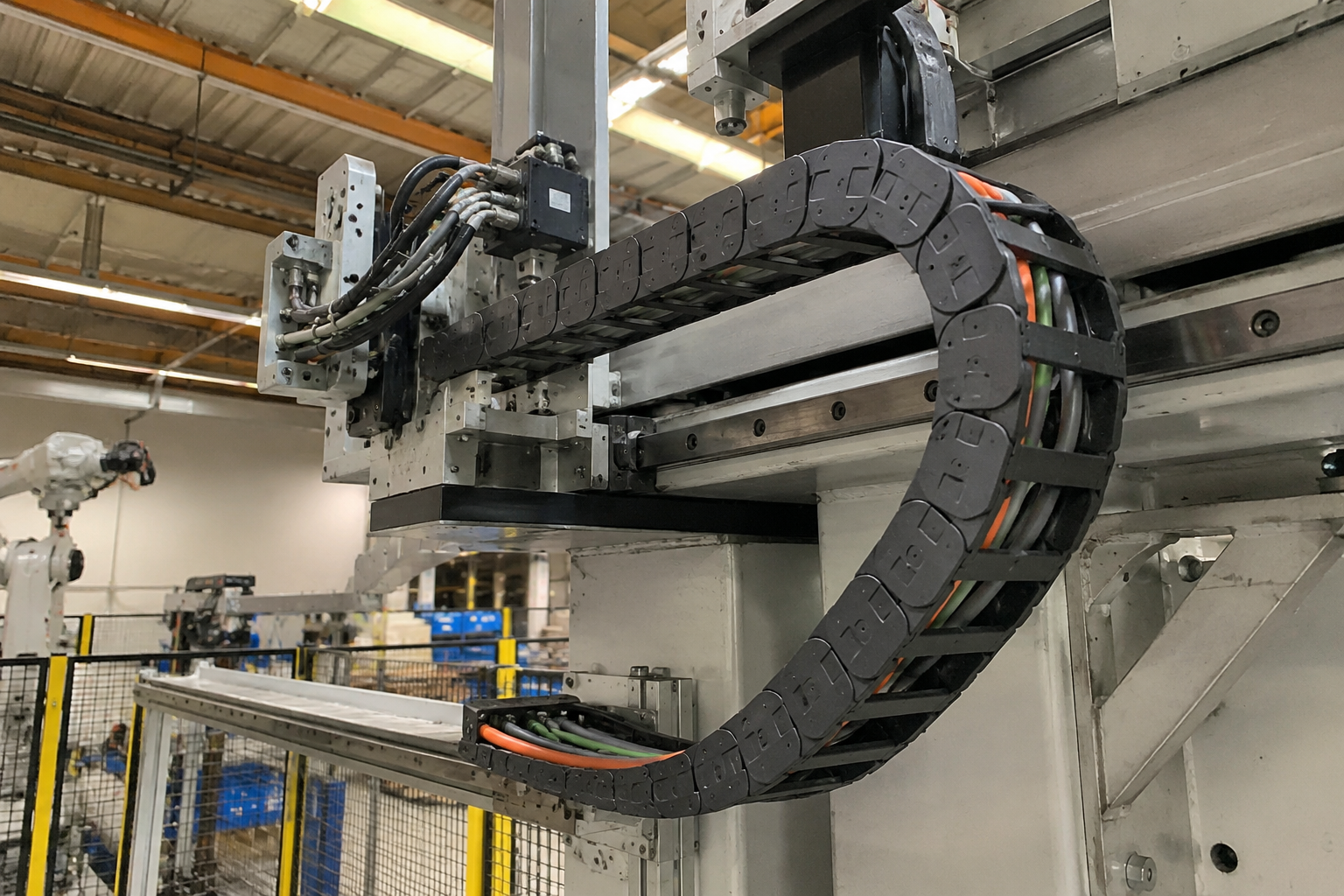
A PUR jacket can improve mechanical and environmental performance, but it does not automatically make a cable suitable for millions of bending cycles. A true continuous-flex or drag-chain cable must be designed as a complete system.
Its service life may depend on:
Cable manufacturers offer PVC, PUR, and TPE products for moving applications, which shows why jacket material alone is not enough to define flex life.3 If a project has a required number of cycles, the complete cable must have an appropriate flex rating and should be tested under representative operating conditions.
PVC means polyvinyl chloride. It is one of the most widely used materials for cable insulation and outer jackets because it can be formulated for reliable electrical insulation, convenient processing, and economical production.
For many industrial projects, PVC is not a lower-quality choice. It is the correct choice when the cable:
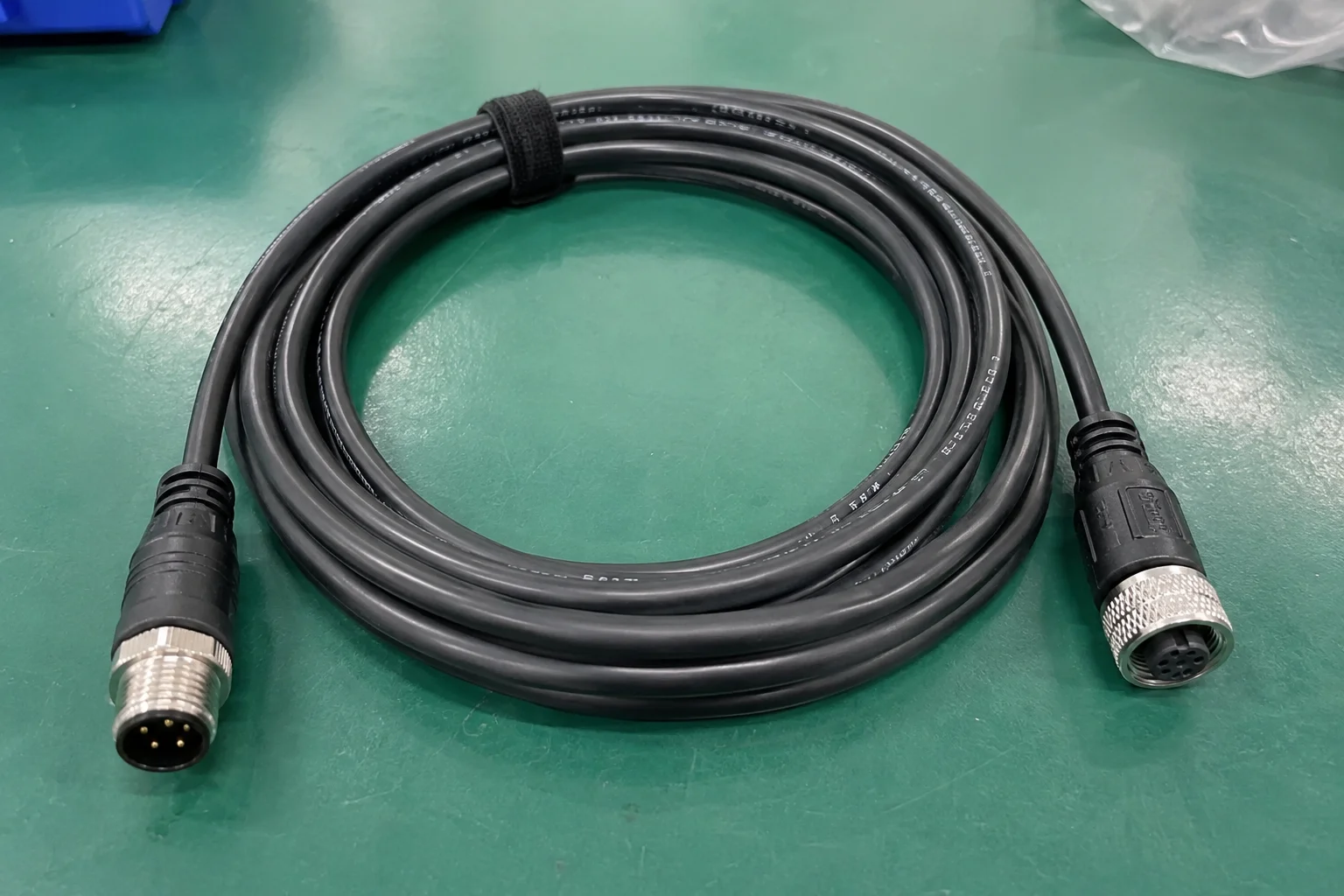
PVC compounds are widely available and generally easier to process for standard cable production. In a project involving hundreds or thousands of cable assemblies, the material difference can have a meaningful effect on the total purchase cost.
At NITAI, we do not recommend PUR automatically when a standard PVC cable can reliably meet the requirement. For a fixed sensor connection inside normal factory equipment, paying for a high-performance PUR jacket may not provide a practical benefit.
PVC properties also vary by formulation. Some compounds are optimized for oil resistance, flame performance, flexibility, or temperature. This is why a generic statement such as "PVC is not oil-resistant" or "all PVC cables are flame-retardant" is not accurate. The selected cable specification must be checked.4
PUR is commonly chosen for dynamic applications because suitable PUR compounds can retain flexibility while resisting mechanical damage. Typical applications include robot arms, pick-and-place systems, moving sensors, automated handling equipment, and drag chains.
PVC is normally more suitable for fixed installations or limited movement. A standard PVC sensor cable may perform reliably for years when it is routed correctly and left in place. It may fail earlier when it is used in continuous motion without being designed and tested for that duty.
The practical question is not simply:
Is PUR more flexible than PVC?
The better questions are:
PUR is often preferred where a cable rubs against machine parts, moves inside a cable carrier, or may be dragged across an industrial surface. Suitable PUR compounds generally provide strong resistance to abrasion, tearing, and notch propagation.
However, material formulation matters. It is not technically safe to assume that every PUR compound will outperform every PVC compound in every abrasion test. The actual cable construction and test method should be considered when abrasion resistance is critical.
For ordinary fixed wiring, PVC normally provides sufficient mechanical protection at a lower cost.
In machine tools, metalworking equipment, automotive production, and factory automation, cables may contact:
PUR is usually the safer starting point for these environments. LAPP notes that PU outer jackets are commonly selected for their oil resistance, notch resistance, and ability to tolerate mechanical stress.2
PVC can still be used when the selected compound has the required oil rating and the type, concentration, temperature, and duration of exposure are known. Chemical compatibility should be checked against the cable manufacturer's data rather than assumed from the jacket name.
PUR often provides better low-temperature flexibility than standard PVC, but temperature limits vary significantly between cable designs.
Neither "PUR" nor "PVC" automatically means that a cable is suitable for outdoor use. An outdoor cable may also need:
A black jacket does not by itself prove UV resistance. The required outdoor rating must be included in the cable specification.
PVC is commonly selected when economical insulation and useful flame performance are needed. However, standard PVC contains chlorine and is not a low-smoke zero-halogen material.
PUR cables may be available in halogen-free and flame-retardant versions, but these properties are not guaranteed by the word "PUR." They must be verified from the finished cable datasheet and certification.
Cable fire performance is established through defined tests. IEC 60332-1-2, for example, specifies a vertical flame-propagation test for a single insulated wire or cable.5 For projects with fire, smoke, halogen, railway, marine, or building-code requirements, the required test standard should be stated during selection.
PUR cable is not automatically waterproof, and PVC cable is not automatically unsuitable for waterproof applications.
An IP rating applies to the protection provided by the completed enclosure or connection system. IEC 60529 defines the classification of protection against dust and water ingress.6
For an industrial connector cable assembly, the actual protection level can depend on:
This means a correctly designed PVC cable assembly can achieve IP67, just as a PUR cable assembly can. Changing the jacket from PVC to PUR does not repair an unsuitable connector seal.
For M12 products, the quoted IP rating should be confirmed for the selected connector model and normally applies when the connector is correctly assembled and fully mated.
PUR often provides a longer service life in applications involving movement, oil, or mechanical wear. In a fixed and clean installation, however, PVC may already provide the required lifetime.
We avoid giving customers a universal statement such as:
PUR lasts five times longer than PVC.
There is no reliable universal multiplier. Cable life depends on the complete construction and the operating conditions. Energy-chain cables are tested as complete products under defined bending radii, travel, and cycle conditions.7
If downtime is expensive, sample testing under the real bend radius, speed, oil exposure, and installation method is more useful than comparing jacket names alone.
PUR cable normally costs more than an equivalent PVC cable because of raw-material cost, processing, cable construction, order quantity, and specification requirements.
There is no fixed PUR-to-PVC price ratio. The final difference can also depend on:
The lowest unit price is not always the lowest total cost. PUR may be more economical over the equipment life if it prevents repeated cable failure in a moving system. Conversely, PVC may be the better commercial decision when the installation is fixed and does not need PUR's additional properties.
From the inquiries we review at NITAI, we normally consider PVC first when:
A common example is a fixed M12 sensor cable installed between a stationary sensor and a control system. If the cable route is protected and the connector assembly provides the required sealing, PVC can be a practical and cost-effective solution.
We do not describe this as "recommending the cheapest cable." We are matching the cable to a workload that does not require a more expensive material.
We are more likely to recommend PUR when the customer clearly identifies one or more of these conditions:
In these situations, the higher price of PUR is easier to justify because the material is being used to solve a real mechanical or environmental problem.
For continuous motion, we still confirm whether the complete cable is rated for the required movement. A PUR jacket without the correct conductor and core construction is not a substitute for a true high-flex cable.
When a customer asks us to quote a cable assembly, we do not choose the jacket from one word in the inquiry. We normally ask:
If the equipment is fixed and the environment is normal, we may quote PVC because it can meet the requirement at a lower cost. If the cable will bend repeatedly, move in a drag chain, rub against equipment, or remain exposed to oil, we are more likely to recommend PUR.
For some projects, the most useful approach is to quote both options and explain the difference. The customer can then compare initial cost with the actual operating risk.
We also recommend sample confirmation before volume production. A sample may reveal details that a specification sheet does not show clearly, such as:
After the sample is installed, the customer may approve it directly or request a small adjustment before mass production. This communication is an important part of supplying a cable assembly that matches the equipment instead of only matching a written material name.
For M12-specific jacket selection, see our PVC vs PUR M12 sensor cable guide. You can also review our custom M12 connector cable capabilities.
| Application Condition | Recommended Starting Point | What to Confirm |
|---|---|---|
| Fixed indoor sensor cable | PVC | Connector type, IP rating, length, wiring |
| Fixed cable inside control equipment | PVC | Temperature, voltage, flame requirement |
| Occasional maintenance movement | PVC or PUR | Bend radius and movement frequency |
| Continuous bending | Flex-rated PUR cable | Cycle requirement, bend radius, speed |
| Drag-chain installation | Certified continuous-flex cable, often PUR | Travel, acceleration, torsion, chain layout |
| Oil or coolant exposure | PUR or rated oil-resistant cable | Fluid type, concentration, temperature |
| High abrasion | PUR or specially tested jacket | Contact surface and abrasion test |
| Outdoor installation | UV-rated cable in the required material | UV, ozone, water, temperature cycling |
| IP67 connector cable | PVC or PUR | Complete connector sealing and mated condition |
| Cost-sensitive fixed project | PVC | Confirm that no dynamic or chemical requirement is being overlooked |
A commercial M12 cable is a useful example of why both material and complete cable design matter: manufacturers may offer PVC and PUR options with different resistance and movement characteristics under the same connector family.8
Not in every application. PUR is usually better for repeated movement, oil exposure, abrasion, and demanding mechanical conditions. PVC is often the better-value choice for fixed or low-movement installations.
PUR material can resist moisture, but a PUR jacket alone does not define an IP rating. Waterproof performance depends on the complete cable and connector assembly, including seals, overmolding, cable entry, assembly quality, and proper mating.
Yes. A properly designed and assembled PVC connector cable can reach IP67 if the complete connection system is rated and installed for that level of protection.
No. Drag-chain suitability depends on the complete cable construction and its tested bend radius, travel, speed, and cycle performance. The word "PUR" only identifies the jacket material family.
PUR is usually more oil-resistant than standard PVC, but both materials are available in different formulations. The actual oil, temperature, concentration, and exposure time should be checked against the cable specification.
PVC is normally cheaper. The actual price difference depends on the cable dimensions, conductor construction, shielding, certification, customization, quantity, and supplier material availability.
No. Many PUR cable products are available with halogen-free constructions, but this must be confirmed from the complete cable specification. Jacket material alone does not prove compliance.
Yes. Shielding is a separate construction choice. PUR and PVC cable assemblies can both be supplied in shielded or unshielded versions when the connector and cable design support it.
The main difference between PUR and PVC cable is not that one material is universally better. The difference is where each material provides the best balance of reliability and cost.
Choose PVC when the cable is fixed, the environment is normal, and the project needs an economical and dependable solution.
Choose PUR when the application involves repeated movement, drag chains, oil, abrasion, or greater mechanical stress, and confirm that the complete cable construction is suitable for the required duty.
For waterproof connector cables, select the jacket together with the connector structure, sealing system, wiring, shielding, and installation conditions. Both PVC and PUR cable assemblies can meet IP67 when the complete product is correctly designed and assembled.
If you are not sure which material matches your equipment, send NITAI your application details. We can review the movement, environment, connector type, cable specification, and budget before recommending PVC, PUR, or another cable construction.
BASF, [Elastollan Material Properties](https://www.basf.com/dam/jcr%3Ab36f0d83-b60b-35d8-8dab-35f7f0795b37/basf/www/kr/documents/ko/product/Elastollan_Material%20Properties.pdf). The guide describes typical TPU properties including abrasion resistance, tear resistance, low-temperature flexibility, and resistance to oils and greases. Actual performance depends on the selected grade. ↩
LAPP, [Oil-Resistant Cable Materials](https://www.lapp.com/en_US/us/products/properties-technologies/chemical-properties/oil-resistant/e/061001). LAPP explains why PU outer jackets are frequently selected for oil exposure, mechanical stress, and plant and mechanical engineering. ↩
igus, [PVC, PUR, and TPE Cable Jacket Materials](https://www.igus.com/cables/unharnessed-cables-cable-jacketing). The resource compares jacket-material selection for cables exposed to mechanical stress, temperature, chemicals, and moving applications. ↩
LAPP, [Protecting Cables from Oil Damage](https://www.lapp.com/en_US/us/service/download-area/whitepaper/protecting-cables-from-oil-damage/e/001312). The technical resource notes that PVC formulations can be optimized for different properties, including oil resistance, flame performance, and flexibility. ↩
International Electrotechnical Commission, [IEC 60332-1-2:2025](https://webstore.iec.ch/en/publication/80873). This standard specifies a procedure for testing vertical flame propagation on a single insulated wire or cable. ↩
International Electrotechnical Commission, [Ingress Protection Ratings](https://iec.ch/ip-ratings). IEC 60529 classifies the protection provided by enclosures against the ingress of dust and liquids. ↩
igus, [Chainflex Network, Ethernet, Fieldbus, and Fibre-Optic Cables](https://www.igus.com/cables/page-17285). The product information illustrates how complete cables are tested for defined bending radii and repeated movement in energy-chain applications. ↩
LAPP, [EPIC M12A Male Straight Molded Cable](https://www.lapp.com/en_CA/ca/epic-m12a-male-straight-molded-cable/p/7433501516). This M12 cable example describes different resistance and movement characteristics for PVC and PUR jacket options. ↩
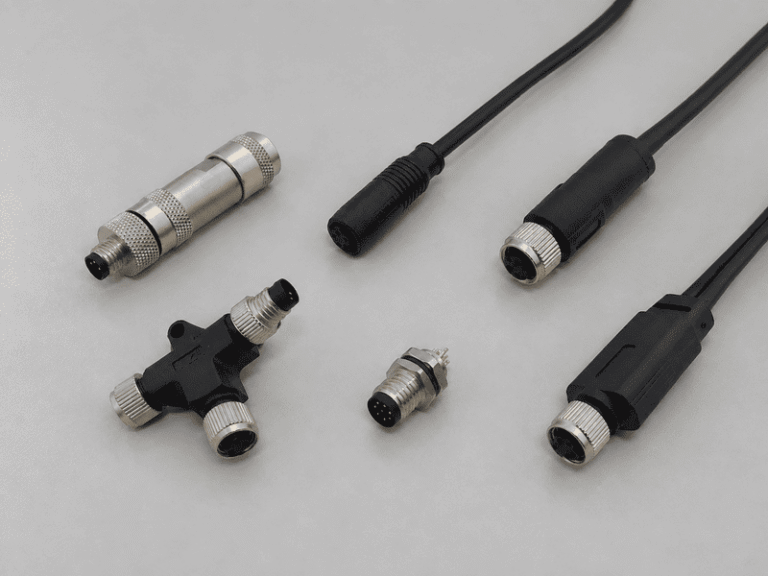
An M8 8 pin female connector can look like the right replacement on a purchasing list and still…
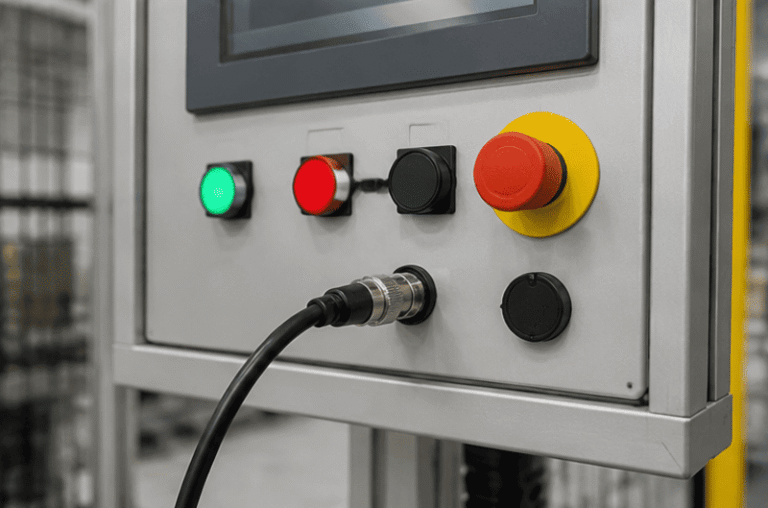
An M12 male connector 5-pin B-coded may look like a straightforward line item, but its name does not…
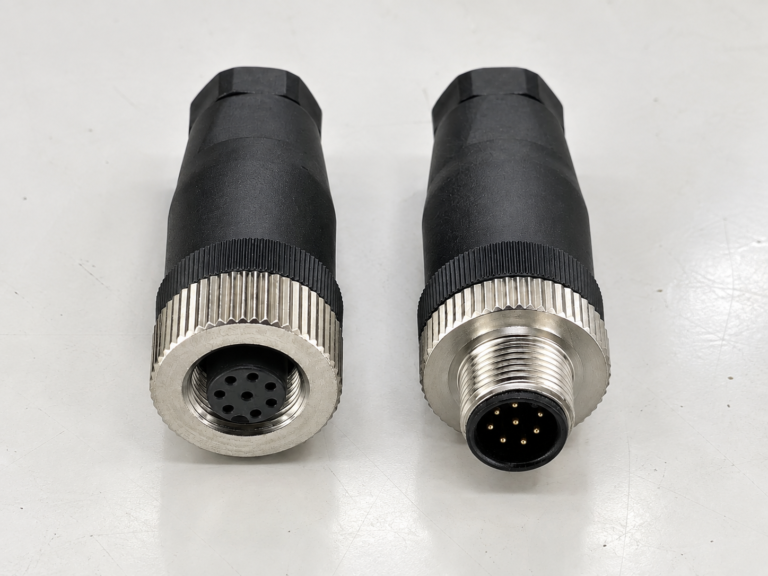
M12 connectors can carry different voltage ratings, so a buyer cannot choose one safely from the connector size…
NITAI manufactures terminal blocks, M8/M12 waterproof connectors and industrial distribution modules for global OEMs, distributors and automation customers.
Leave a Reply