Oct 17, 2026
How Do I Choose the Right M8 8 Pin Female Connector for My Equipment?
An M8 8 pin female connector can look like the right replacement on a purchasing list and still…

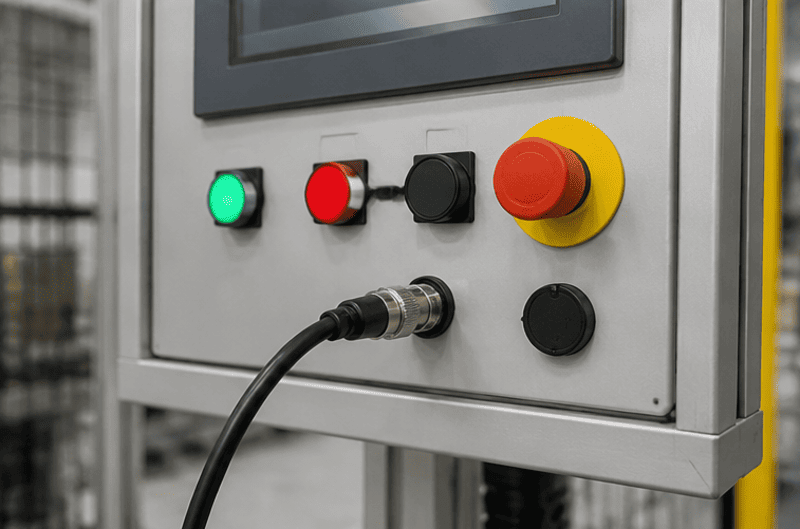
An M12 male connector 5-pin B-coded may look like a straightforward line item, but its name does not tell a buyer whether it will mate with an existing socket or work with a device. A mistaken order can delay a cable assembly or equipment build. I start selection with the mating drawing and electrical documentation, then check the cable and operating conditions.
An M12 male connector 5-pin B-coded is a circular connector with an M12 mating interface, male contacts, five contact positions, and a B-coded mating geometry. Those identifiers help narrow the choice, but they do not confirm a suitable replacement. Buyers should verify the mating connector’s coding and gender, the device’s pin assignments, and the required cable and environmental specifications.
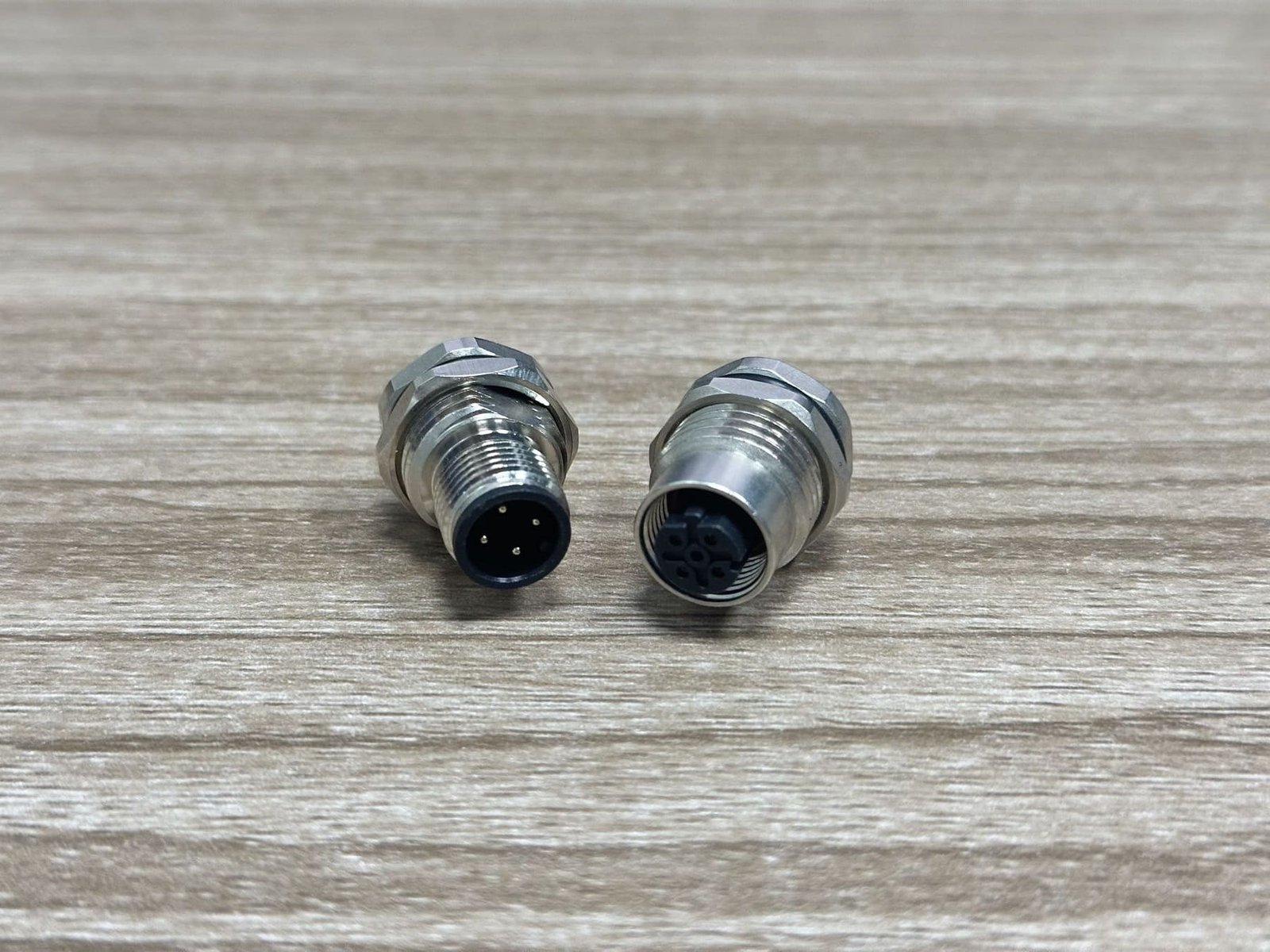
That distinction matters most when a purchase request says only “five-pin M12.” In inquiries I handle at NITAI, the useful next step is often a short set of clarification questions. Each answer rules out a different kind of mismatch before a buyer requests a quote or approves a substitute.
A product name gives buyers a starting point, but similar names can hide important differences. If a team treats every part of the name as a complete specification, it may overlook the mating interface or the device wiring. I break the name into four identifiers before reviewing any proposed part number.
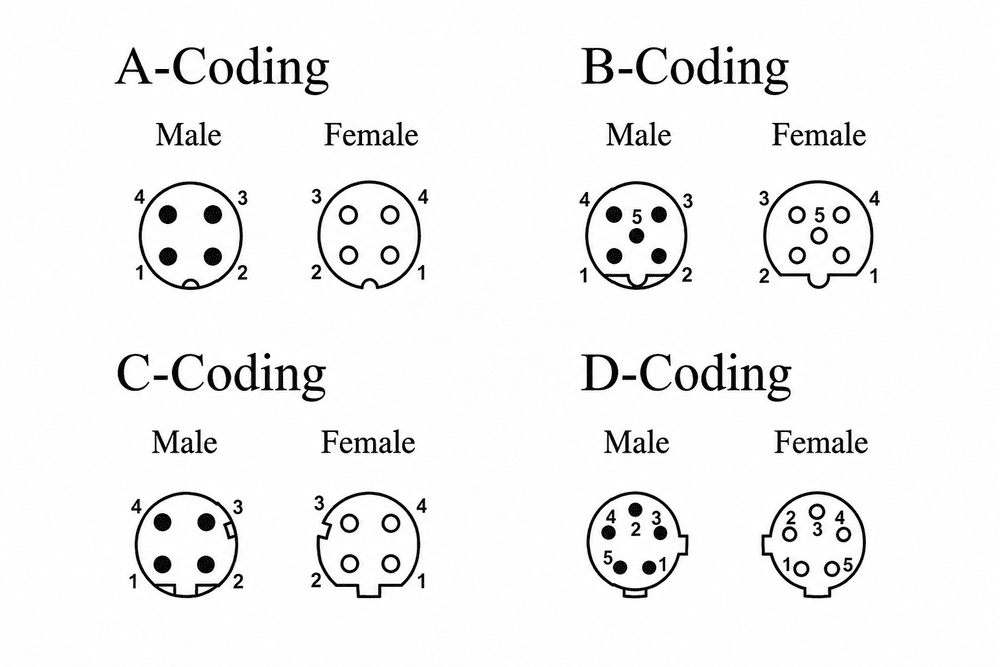
“M12” identifies the connector family and mating size; “male” identifies the mating contact gender; “five-pin” states the number of contact positions; and “B-coded” identifies a particular mating geometry.1 Together, these terms describe the basic interface. They do not, by themselves, specify the pin functions, cable construction, termination style, or suitability for an operating environment.
| Identifier | What I use it to check | What it does not establish |
|---|---|---|
| M12 | The intended circular mating-interface family | That two M12 parts share the same coding |
| Male | The mating contact gender | Whether the contacts connect to the required wires or terminals |
| Five-pin | The number of contact positions | That positions have the same electrical functions on two devices |
| B-coded | The keyed mating geometry | A universal pin assignment or device protocol |
The distinction between size and coding is especially useful in purchasing reviews. Two connectors can both be described as M12 and five-pin while having different keyed interfaces. A matching contact count does not override a coding mismatch.2 Likewise, “male” tells me about the mating contacts, but I still need to inspect the proposed part’s drawing to understand its full mechanical arrangement.
I also ask buyers to identify which side of the connection they are describing. A photograph of a device port, a cable-end connector, and a catalogue part can show different viewing angles. That makes casual comparisons unreliable. I prefer a manufacturer drawing with a stated mating-face view, supported by clear photos when a drawing is unavailable.
My purchasing rule: I use the name to narrow the search. I use the mating drawings to check whether the shortlisted connector is physically compatible.
This process remains necessary even when a buyer has ordered a similar connector before. A new equipment revision or a different supplier part number can change what the team needs to verify. The product name is helpful, but the exact proposed model and the device-side specification carry the decision.
A buyer may need a substitute because of lead time, price, or a discontinued part. The phrase “another five-pin M12” sounds close enough to invite a quick approval. I resist that shortcut because the first failure can happen before anyone powers the device: the new connector may not mate with the installed port.
A five-pin B-coded M12 male connector can replace another five-pin M12 part only after the buyer confirms that the mating connector has the compatible coding and gender, and that the proposed part meets the remaining application requirements. Sharing the M12 size and five contact positions is not enough to establish physical or electrical interchangeability.3
In one anonymized type of inquiry I have handled at NITAI, an equipment buyer asks whether one five-pin M12 connector can replace another. My first clarification questions are practical: What is the existing part number? What connector is on the device? Can the buyer share a mating-face photo or drawing for each side? Those questions establish the comparison; I do not treat the inquiry alone as proof that a substitute was approved or installed.
I ask the team to check the following items before it treats two parts as mechanically equivalent:
Photos are useful, but they have limits. A front view can help reveal the contact pattern and keying. A side view can help show how a connector sits near an enclosure or adjacent ports. Yet an unclear image or an unstated viewing direction can lead to a mistaken comparison. When drawings and photos conflict, I ask for clarification from the equipment maker or the original connector supplier.
I also separate “will it plug in?” from “is it an approved replacement?” A mating check answers the first question. It does not address wiring, cable construction, installation conditions, or the buyer’s qualification process. For an application-specific substitution, I recommend that the responsible equipment or electrical engineer evaluate the proposed part against the device documentation before procurement releases the order.
A connector can mate cleanly and still be wrong for the device. That risk is easy to miss when a purchasing request lists only coding and contact count. I therefore ask for the electrical information after the mating check, especially when the buyer wants a prewired cable assembly or a substitute for an existing lead.
I verify pinout by comparing the device manufacturer’s connector drawing or wiring instructions with the proposed connector or cable-assembly drawing. I check the viewing direction, contact numbering, required signals, and wire-to-contact assignments. I do not infer universal pin functions or a protocol from the words “five-pin” or “B-coded.”4
For a replacement review, I ask the buyer for the device-side pin assignment and the proposed assembly’s wiring information. If the buyer is sourcing a field-wireable connector, I ask how the installer plans to terminate it. If the buyer is sourcing an overmolded cable, I ask for the wire-to-contact map supplied with that assembly.
The comparison should answer four questions:
This review is particularly important when two suppliers use different presentation styles. A connector drawing may show numbered contacts, while a cable drawing may also list conductor colors. The buyer needs a clear link between those pieces of information. Conductor color alone is not a reliable substitute for a documented contact assignment.
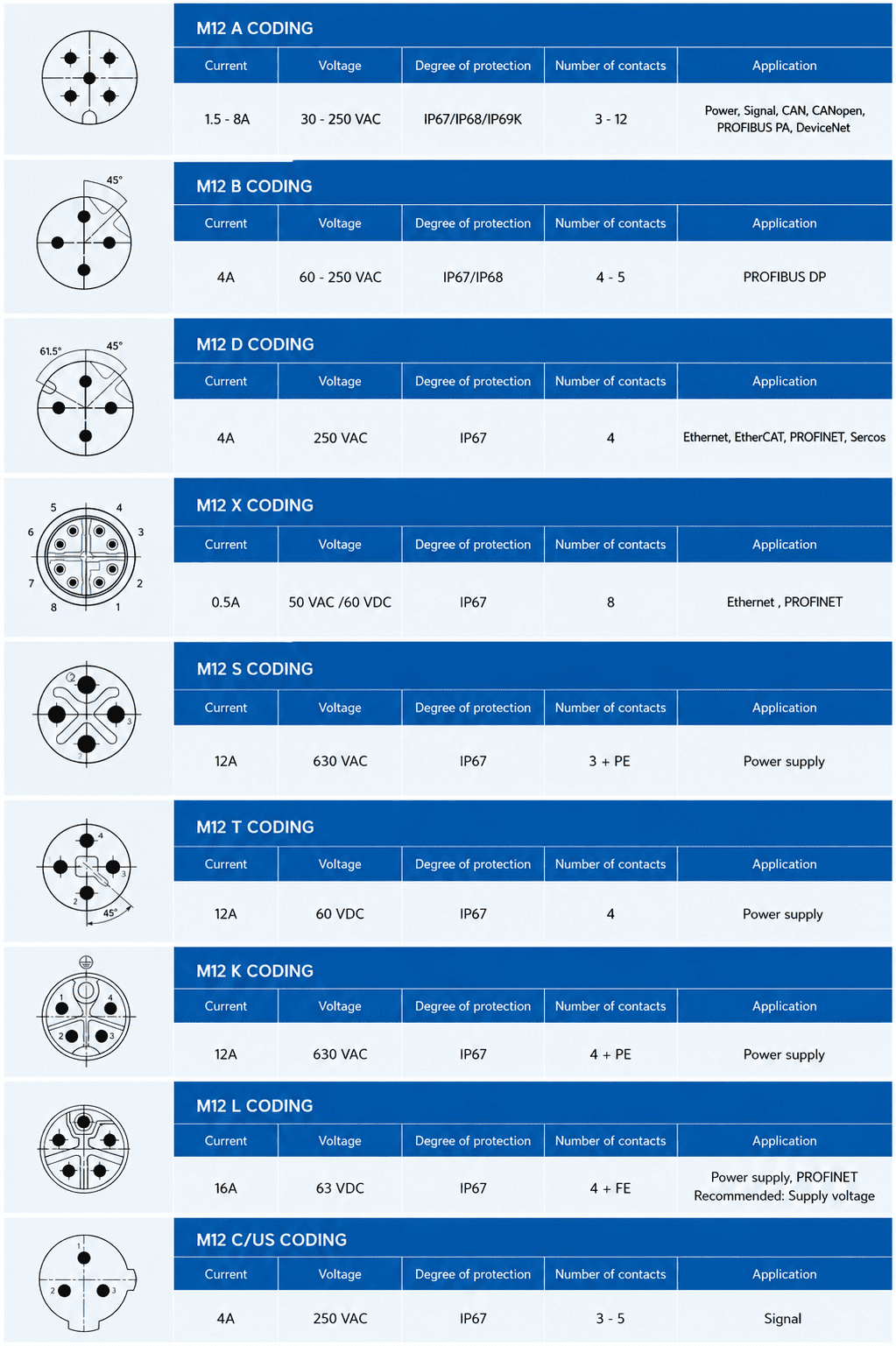
I avoid describing B-coding as though it assigns one electrical function to every five-pin B-coded product. The coding helps identify the mating geometry. The connected equipment determines what its contacts are intended to do. If the device documentation is missing, I ask for the equipment model and a drawing or written clarification from its manufacturer. That may slow a quote, but it prevents a purchasing description from being mistaken for an electrical specification.
Once the connector appears to mate and the pin assignments are documented, a buyer still has to specify the assembly being purchased. An otherwise suitable connector can arrive with the wrong cable or termination for the build. I close that gap before requesting a final quotation, particularly for custom cable assemblies.
For an M12 male connector 5-pin B-coded assembly, I confirm the cable specification, cable length, termination method, and required wire-to-contact map. I also confirm whether the buyer needs a loose connector, a field-wireable option, or a finished cable assembly. The chosen supplier should document the exact configuration it will quote and deliver.
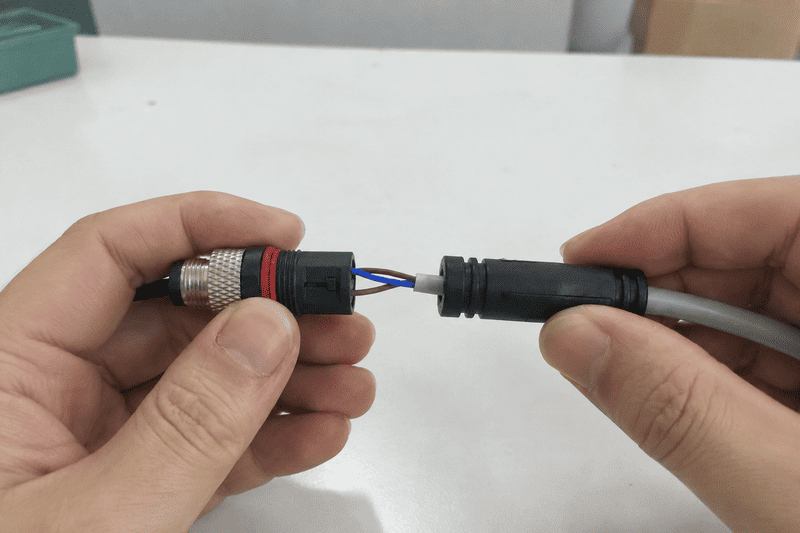
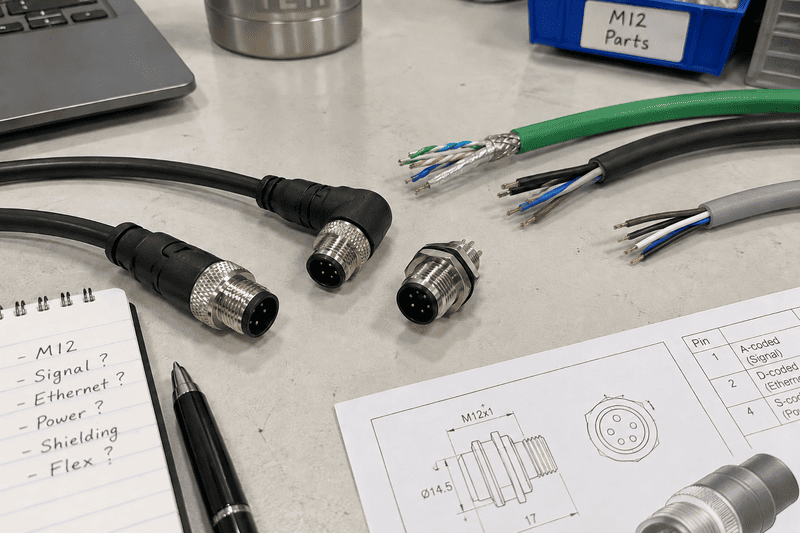
I ask for the cable details that affect the equipment build. Depending on the project, those details can include conductor count and size, shielding requirements, jacket material, cable diameter, length, and the connector required at the other end. I do not assume that a catalogue photo represents the cable a buyer will receive.
Termination needs the same attention. A buyer may want a connector for on-site wiring, a factory-assembled cable with flying leads, or a cable with connectors at both ends. Each option changes what the supplier must specify and what the receiving team can inspect. For a finished assembly, I ask that the quote or drawing state the contact-to-conductor assignments and the length measurement convention.
| Purchase question | Why I ask it |
|---|---|
| Does the buyer need a connector or a finished cable assembly? | The answer defines the delivered item and the work remaining at installation. |
| What cable construction does the equipment require? | The answer guides the supplier’s cable selection and documentation. |
| How must the far end terminate? | The answer prevents an otherwise correct M12 end from arriving in an unusable assembly. |
| What drawing will govern production? | The answer gives purchasing, manufacturing, and receiving teams one configuration to review. |
At NITAI, I can discuss custom industrial cable assemblies and request engineering information for an OEM or ODM project. I still treat a requested configuration as unconfirmed until the exact drawing, materials, and production details have been reviewed. A sample can help a buyer check fit and assembly details before volume purchasing, but the buyer’s qualified team should decide what application-specific evaluation is required.
A quote can appear complete because it includes a part name, unit price, and lead time. Those fields do not show whether the quoted model meets the installation conditions or matches the reviewed drawing. I use the final quote review to connect the technical decision with what the supplier will actually produce.
Before approving a quote for an M12 male connector 5-pin B-coded, I confirm the exact model or assembly drawing, mating and wiring requirements, cable and termination details, operating conditions, and required quality documents. I also check sample availability, MOQ, lead time, and how the supplier will control any later substitution or design change.
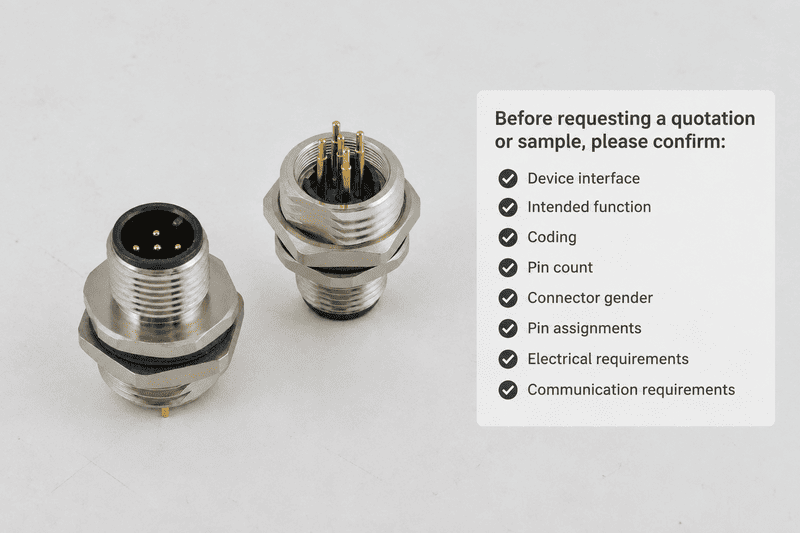
The operating environment can affect which specific model is appropriate.5 I ask where the connection will be installed and whether the buyer has documented requirements for temperature, moisture exposure, chemicals, vibration, or cable movement. I then ask for the specific product datasheet rather than applying a rating from another item in the same connector family. Any ingress-protection claim or other performance rating should be checked against that model’s documentation and the stated installation conditions.6
I take the same approach to certificates and compliance statements. A buyer can request the documents needed by its purchasing or regulatory process, then verify that each document applies to the quoted product and current specification. A supplier’s general company materials do not automatically establish the status of every connector or custom assembly it sells.7
For a repeat order, I also ask how the supplier identifies the approved configuration. A part number, drawing revision, cable description, and agreed wiring map give both sides a reference. If a material or component changes later, the buyer needs a way to review that change before a replacement enters production.8
My final clarification list for a buyer is short enough to use in an inquiry:
I use those answers to support supplier selection. The responsible equipment team should make the final application-specific approval, especially when a proposed connector replaces an established part.
No. I first compare coding and mating gender because the same M12 size and contact count do not guarantee a physical match. I then compare the device pin assignment, cable construction, and installation requirements. A proposed replacement needs approval against the actual equipment documentation, not just a matching name.
No. I use B-coding to check the mating interface, not to assign universal signals to the contacts. I ask for the device manufacturer’s pinout and the proposed connector or cable-assembly drawing. The responsible engineer should resolve any differences before a buyer approves the part.
A clear mating-face photograph can help me screen coding, gender, and contact layout. I still ask for drawings or part numbers when possible because viewing angle and image quality can cause confusion. A photograph also cannot establish the device’s electrical pin assignment or all installation requirements.
I recommend sending the existing part number, the mating connector drawing or photos, the device pinout, and the required cable and termination details. I also ask for operating conditions and expected quantities. Those items allow a supplier to propose a defined part for the equipment team to evaluate.
An M12 male connector 5-pin B-coded is defined by more than its short catalogue name. I check its mating interface first, then compare the device pinout, cable specification, termination, and operating conditions. That sequence helps buyers avoid ordering a part that cannot mate or does not match the documented electrical requirements. If your team is evaluating a new connector or substitute, send NITAI the existing part details and device drawings. I can help identify a proposed configuration and the documents your team needs to review.
"IEC metric screw sized connectors", https://en.wikipedia.org/wiki/IEC_metric_screw_sized_connectors. The M12 connector specification distinguishes contact arrangements and coded mating interfaces; those designations describe interface features, not a complete cable-assembly specification. Evidence role: definition; source type: institution. Supports: An M12 connector standard or institutional technical reference defines the mating interface, contact arrangements, and coding terminology.. ↩
"IEC metric screw sized connectors", https://en.wikipedia.org/wiki/IEC_metric_screw_sized_connectors. M12 coding defines keyed mating arrangements, so equal contact counts alone do not establish that two connector halves can mate. Evidence role: mechanism; source type: institution. Supports: M12 coding uses distinct keyed mating interfaces that must be compatible on both sides.. ↩
"I/O channel interface", https://nvlpubs.nist.gov/nistpubs/Legacy/FIPS/fipspub60-1.pdf. Connector specifications address keyed mating arrangements and electrical characteristics separately from contact count; these additional requirements must be checked for a proposed substitution. Evidence role: general_support; source type: institution. Supports: Connector compatibility depends on additional mechanical and electrical specifications beyond size and contact count.. Scope note: General connector specifications cannot certify interchangeability between the two unspecified parts in the article. ↩
"M12 Connectors | Types, Coding, Pins & Cables", https://www.binder-usa.com/us-en/news/m12-connectors-complete-guide-to-our-most-prominent-series?srsltid=AU7gw4VmhcNGaGxPpDh026qvGVG1PT-3V51j1YvmS3JAbWdlmtX6LIBS. M12 coding identifies a mating arrangement; determining the function of each contact requires the relevant equipment or application specification. Evidence role: definition; source type: institution. Supports: M12 coding describes a mating interface, while contact functions must be established from the applicable equipment or protocol documentation.. Scope note: A particular protocol standard may prescribe a pinout for its own application, but that does not make the pinout universal to all five-contact B-coded devices. ↩
"IEC 60512 Testing: Ensuring Reliable Electrical Connectors", https://www.envitestlab.com/blog/understanding-iec-60512-testing-ensuring-reliability-of-electrical-electronic-connectors/. Connector test standards include environmental and mechanical stress assessments, supporting consideration of service conditions when selecting a model. Evidence role: general_support; source type: institution. Supports: Connector evaluation encompasses environmental stresses such as temperature and vibration.. Scope note: A test standard does not establish that any specific quoted connector passes the tests required for this installation. ↩
"IP code", https://en.wikipedia.org/wiki/IP_code. IEC 60529 defines IP classifications for specified degrees of protection; a classification should be read alongside the product’s stated configuration and conditions of use. Evidence role: definition; source type: institution. Supports: The IP Code classifies specified degrees of protection against access, solids, and water under defined conditions.. Scope note: The classification standard alone does not verify an IP rating for the proposed connector model. ↩
"ISO - Certification", https://www.iso.org/certification.html. Management-system certification concerns an organization’s processes and does not, by itself, certify each connector or custom assembly it supplies. Evidence role: definition; source type: institution. Supports: A management-system certification addresses the organization’s system rather than certifying each individual product.. Scope note: This distinction concerns management-system credentials; product-specific declarations must be assessed under their own applicable requirements. ↩
"6.5 Configuration Management", https://www.nasa.gov/reference/6-5-configuration-management/. Configuration-management guidance describes documenting an approved configuration and evaluating changes against that baseline; this supports a review process for later component substitutions. Evidence role: general_support; source type: government. Supports: Configuration-management guidance calls for identifying approved baselines and controlling subsequent changes.. Scope note: The guidance supplies a general control principle, not a mandatory approval procedure for this buyer or connector. ↩
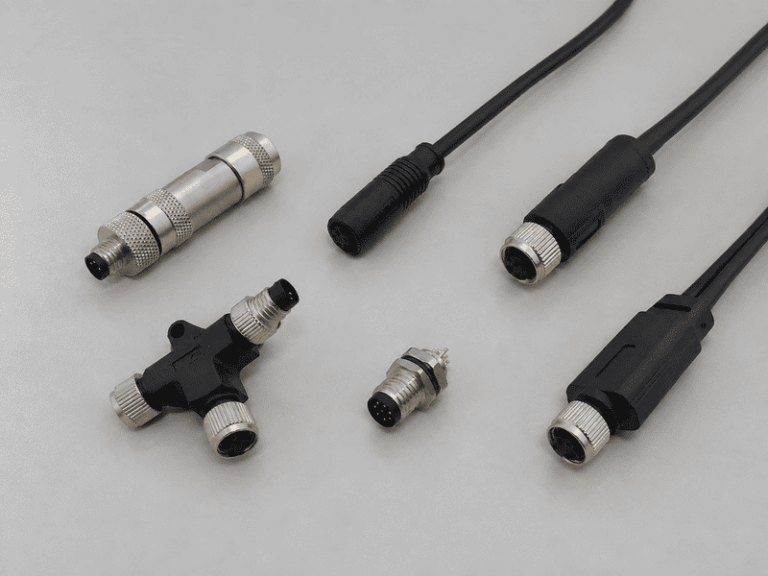
An M8 8 pin female connector can look like the right replacement on a purchasing list and still…
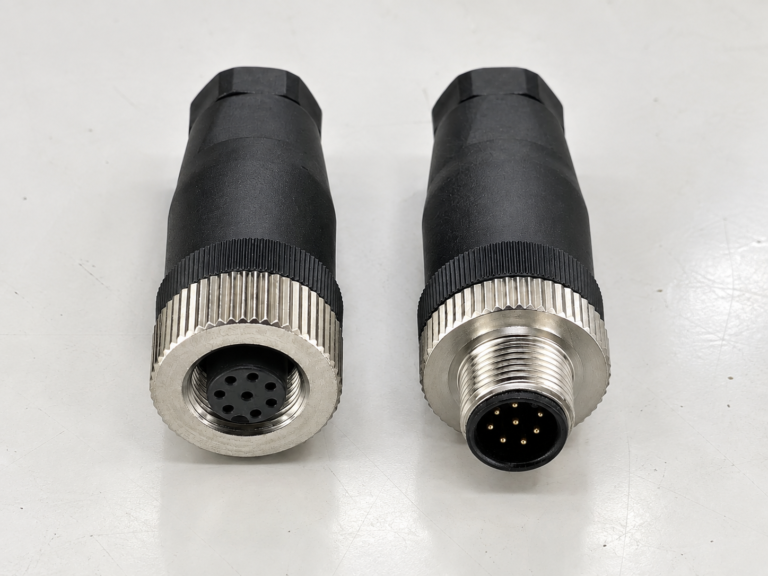
M12 connectors can carry different voltage ratings, so a buyer cannot choose one safely from the connector size…
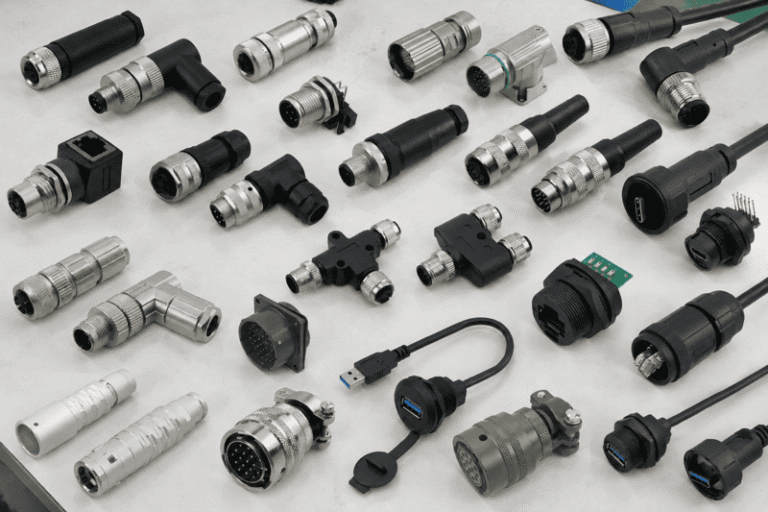
Connector types can look interchangeable in a catalog, but a familiar shape does not tell me whether two…
NITAI manufactures terminal blocks, M8/M12 waterproof connectors and industrial distribution modules for global OEMs, distributors and automation customers.
Leave a Reply