Nov 18, 2026
Is IP68 truly waterproof?
IP68 waterproof connectors are conditionally protected, not immune to water in every situation. When I discuss connector selection…

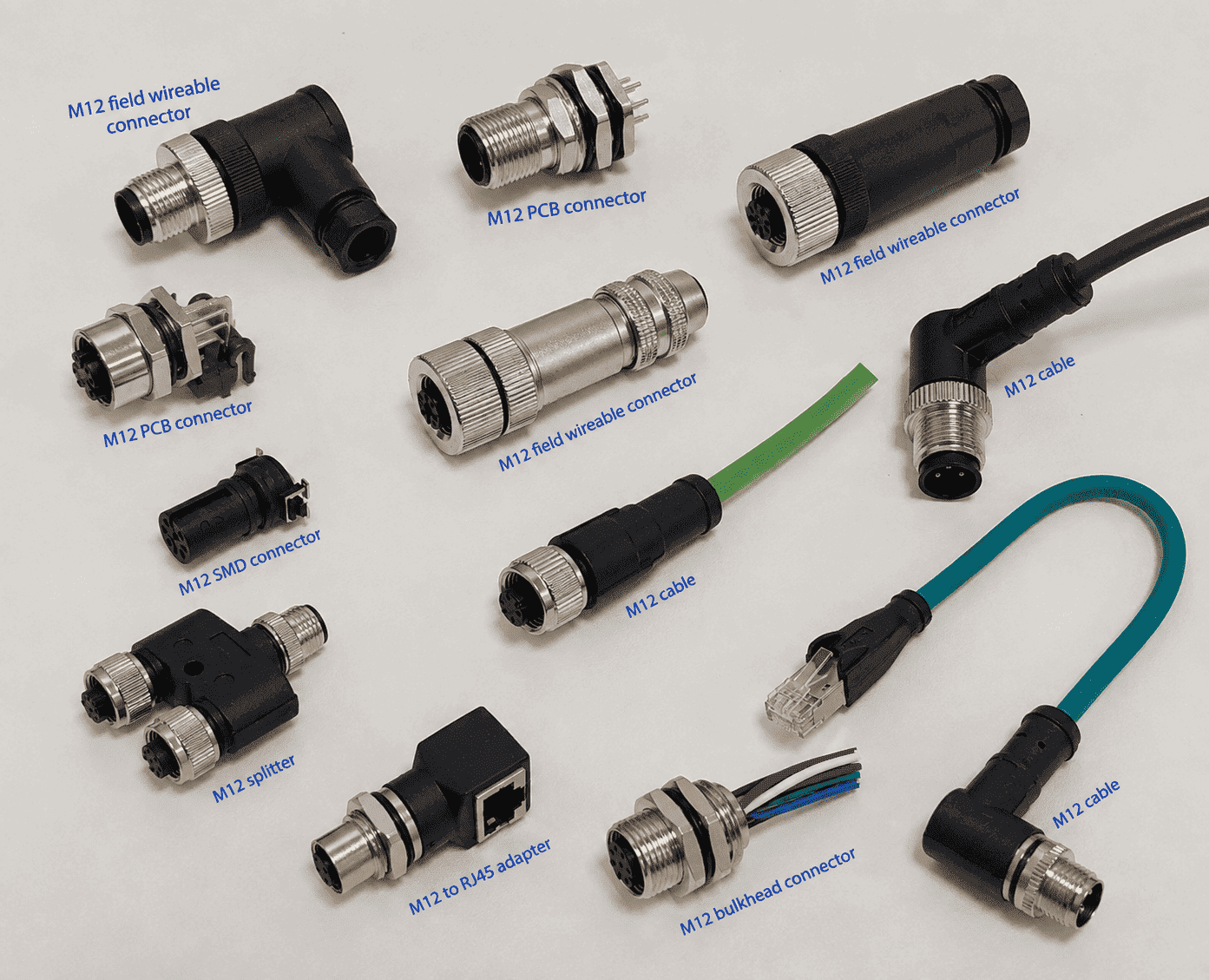
The standard for M12 connectors is a frequent question in the inquiries and orders I handle, and the name alone can make a selection seem simpler than it is. A connector can be described as M12 and still differ in coding, pin configuration, or pin length. I help buyers clarify those details before they specify a part that may not suit their equipment.
M12 refers to a connector family, not one universal configuration.1 To choose the right M12 connector, I recommend confirming that its mating interface, coding, pin count, and other required details match the equipment and application. If a required feature is not available in the standard offering, buyers should specify it before ordering and confirm whether customization is needed.
When customers ask what the M12 standard is, I first clarify what they mean by “standard.” They may be asking about the connector’s general form, or they may want to know whether a particular part will mate with their equipment. Those are different questions. The details below can help engineering teams and purchasers agree on a configuration before they request a quotation or place an order.
The M12 connector standard tells buyers that a connector belongs to a defined connector family, but the M12 name does not identify every feature needed to select a compatible part. Buyers should also confirm the mating interface, coding, number of contacts, and application requirements against the equipment documentation.
I often find that a buyer’s first question is broad: “Do you have standard M12 connectors?” That is a useful starting point, but it does not give me enough information to identify the intended product. I need to understand what the connector must mate with and how the system will use it.
“M12” identifies a connector family, but it is not a complete ordering description. A purchase specification needs to distinguish among the available configurations. A connector that fits the general M12 category may still be unsuitable for a specific device because the interface, coding, or contact arrangement is different.2
For procurement, I treat “M12” as the beginning of a specification, not the end. The equipment’s technical documentation, connector drawings, or an approved bill of materials should guide selection. When those documents leave a detail unclear, I recommend that the engineering team resolve it before purchasing selects a part.
The intended mating interface is a practical first check.3 Buyers can compare the equipment-side connector information with the proposed connector documentation and confirm that the parts are intended to mate. A product description that only says “M12” may omit details needed to make that comparison.
I have handled inquiries where customers assumed that all connectors sharing the M12 name had identical details. In those conversations, the useful next step was to clarify which equipment or existing part the connector needed to match. I do not assume compatibility from the family name alone, and buyers should not treat a general product label as confirmation either.
Before approving an M12 connector for an order, I suggest gathering:
Engineering should compare the information and approve the selected configuration. Purchasing can then use that approved description to request pricing and lead-time information. This process helps prevent an order from being based on a partial description or an assumption carried over from a different product.
The goal is not to make every M12 order complicated. It is to make the part description specific enough that the supplier and buyer are discussing the same connector. A clear specification helps both sides identify whether a standard offering fits the requirement or whether a further technical discussion is needed.
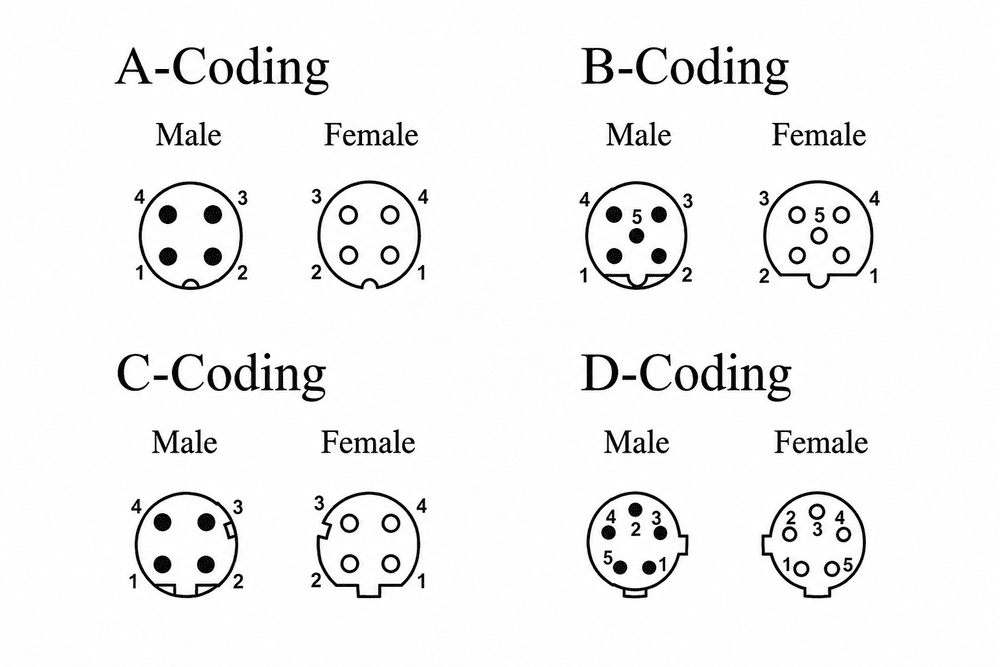
M12 coding and pin count affect which connector configuration is appropriate for an application and whether it matches the equipment. Buyers should confirm both against the equipment’s requirements rather than choosing by the M12 name alone. The intended use matters because different configurations can serve different connection needs.4
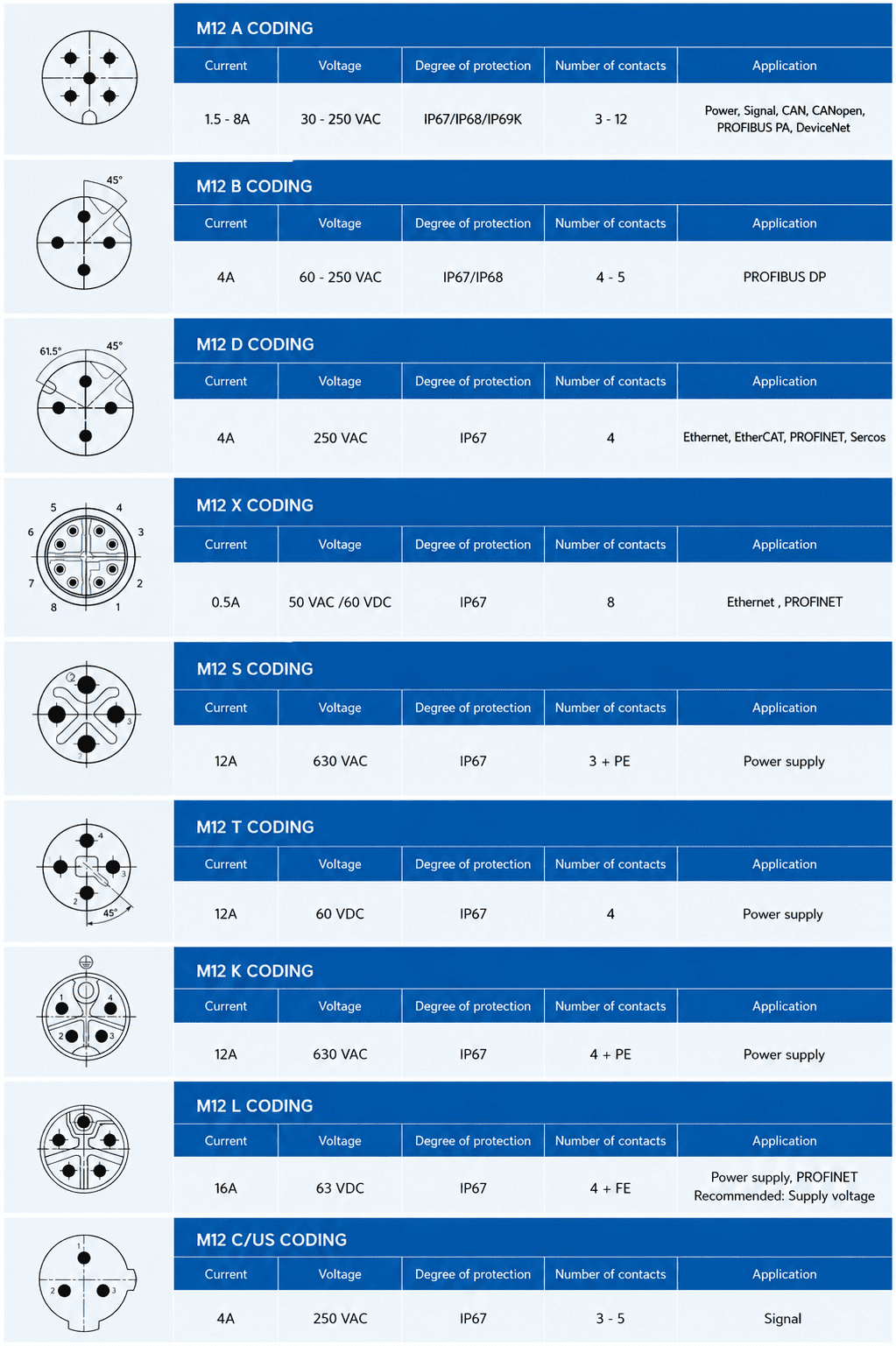
A common point of confusion in customer inquiries is the assumption that “M12” describes both the physical family and the electrical configuration. It does not provide enough information to select a connector on its own. I ask customers to identify the required coding and contact count, then check whether the proposed part matches their equipment documentation.
Coding is one of the details that separates one M12 configuration from another.5 It should be confirmed from the equipment or system specification, not guessed from the connector’s appearance or the name of the product family. If the documentation is unclear, the engineering team should check with the equipment manufacturer or the responsible design engineer.
For an order inquiry, I find it helpful when customers provide the exact coding from a drawing or an existing approved part number. If they do not have that information, I ask what device the connector will connect to and whether an equipment specification is available. These questions help establish what needs to be verified; they do not replace the customer’s engineering approval.
Pin count is another essential selection detail.6 A connector with a different number of contacts may not meet the system’s requirements, even if it belongs to the same M12 family.7 Buyers should also check the contact arrangement and any other configuration information listed in the product documentation.
The following checklist can help teams make the selection review more consistent:
| Selection detail | What the buyer should confirm |
|---|---|
| Mating interface | The proposed connector is intended to mate with the specified equipment interface |
| Coding | The code matches the equipment documentation |
| Pin count | The connector has the required number of contacts |
| Application | The configuration is suitable for the intended connection |
| Product details | The drawing and supplier specification match the approved requirement |
This table is a starting point, not a substitute for a complete application review. Equipment requirements can include other product or installation details. If those affect the selection, the customer’s engineering team should define and approve them before the order is released.
I recommend separating technical selection from commercial ordering. Engineering should determine which configuration the equipment requires and confirm the relevant product details. Purchasing should then send that agreed selection to the supplier, along with the quantity and requested delivery information.
That sequence matters because the purchasing team may see several listings that all use the M12 name. Without an engineering-approved configuration, it is easy to compare products that are not equivalent or request a quotation for a part that does not match the intended use. A shared specification reduces avoidable clarification later.
When a buyer sends an inquiry with coding and pin count identified, the supplier has a clearer basis for checking the request against available products. When those details are missing, I ask questions before treating the request as a standard order. That is a practical boundary: a standard offering may be available, but the customer still needs to confirm it is the right one for the equipment.
M12 pin length can vary, so buyers should not assume that every connector in the family has identical pins.8 If the equipment requires a particular pin length or another nonstandard feature, the buyer should document the requirement and raise it with the supplier before ordering. The supplier can then confirm whether a standard product meets it or customization is needed.
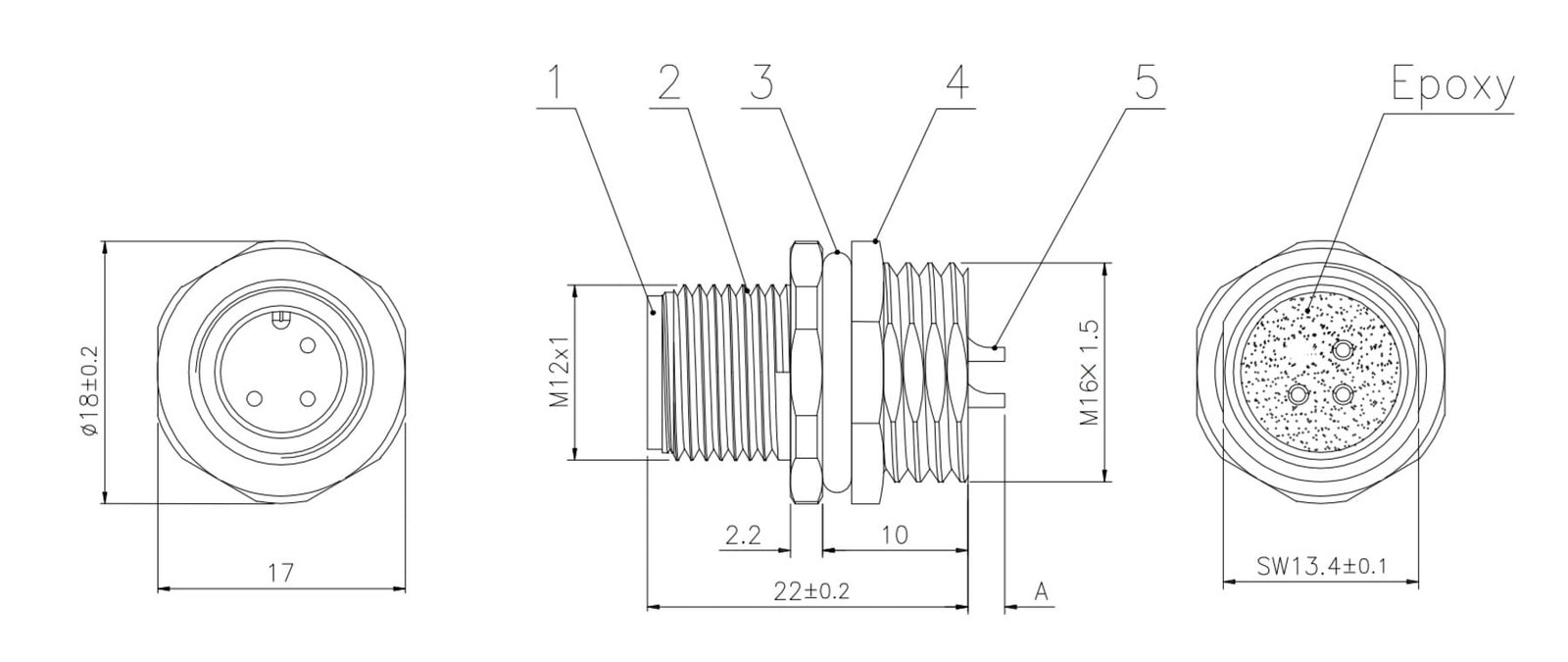
Pin length is a good example of why the word “standard” needs context. In customer conversations, I have encountered assumptions that a detail such as pin length would be identical across all M12 products. I clarify the required feature before treating it as part of an ordinary order. I do not assume that a requested variation is available as a standard stock configuration.
When pin length matters, the buyer should provide a clear reference. That may be an equipment drawing, an approved product specification, or another document that identifies the required configuration. A verbal description can be a useful start, but written confirmation helps the supplier understand what must be reviewed.
Buyers should also ask whether the requirement applies to the product itself, the mating interface, or an installation condition. This distinction can affect how the supplier evaluates the request. A clear description helps avoid a situation where one party interprets “longer pins” differently from another.
Useful information to include in an inquiry can include:
The customer’s engineering team should approve the technical requirement. The supplier can then advise whether an existing product appears to meet the stated need or whether further evaluation is required. A supplier response should not be treated as automatic confirmation of system compatibility unless the customer’s engineering team has reviewed and approved the selection.
A feature that is not part of a supplier’s standard offering should not be treated as an ordinary off-the-shelf request. It may require a custom product review, sample development, revised documentation, or additional discussion about production and delivery.9 The exact process depends on the supplier and the specific requirement.
For an M12 connector inquiry, I make this distinction explicit when the requested feature needs confirmation. If a buyer assumes that a variation is standard, the quotation may not reflect the actual scope of what the supplier needs to provide. It is better to state the requirement clearly and ask the supplier to confirm its status before the order is approved.
This does not mean that every variation will be possible. It means that the buyer should make the requirement visible early enough for the supplier to assess it. If customization is proposed, both sides should review the agreed specifications and any relevant drawings before production. The customer should also check that the final approved description matches the intended application.
Once the configuration has been reviewed, purchasing should use the approved selection in the request for quotation and purchase order. The order description should not rely on a shorthand such as “M12 connector” if the approved part includes additional requirements.
A consistent record can include the product identifier, relevant configuration details, supporting drawing revision, requested quantity, and any confirmed custom features. This helps engineering, purchasing, and the supplier refer to the same agreed product. It also gives the buyer a more reliable basis for reviewing samples or production documentation, where applicable.
No. M12 identifies a connector family, not one universal configuration. Coding, pin count, mating interface, and other product details can differ. Buyers should compare the proposed connector with the equipment documentation and obtain engineering confirmation before ordering.
Provide the equipment or existing part reference, required coding, pin count, and any relevant drawing or specification. Include other application requirements that affect selection. If a feature such as pin length is important, state it clearly and ask the supplier whether it is part of a standard offering or requires customization.
No. Pin count is one selection detail, but it does not confirm the coding, mating interface, or suitability for the intended application. The equipment documentation should guide the full selection, and the customer’s engineering team should approve the configuration before purchasing places an order.
No. Pin length can differ, and a requested variation may not be a standard off-the-shelf configuration. Provide the requirement to the supplier before ordering and ask for confirmation. If customization is needed, review the agreed specification and supporting documents before approving production.
The standard for M12 is not answered by the M12 name alone. I recommend that buyers confirm the mating interface, coding, pin count, and any application-specific details, including pin length where it matters. Engineering should approve the required configuration, and purchasing should pass that agreed selection to the supplier.10 If your team is sourcing industrial connectors, share your equipment requirements and drawings with NITAI so we can review the requested configuration and clarify whether it matches a standard offering or needs further discussion.
"IEC metric screw sized connectors", https://en.wikipedia.org/wiki/IEC_metric_screw_sized_connectors. The cited connector standard defines the scope and specified characteristics of the M12 connector family; the designation alone does not establish every product feature. Evidence role: definition; source type: paper. Supports: A relevant connector standard or technical paper should establish what the M12 designation covers and identify configuration details specified separately.. Scope note: The standard's scope may cover only particular connector types or editions, so its applicability should be checked against the product in question. ↩
"IEC metric screw sized connectors", https://en.wikipedia.org/wiki/IEC_metric_screw_sized_connectors. The cited technical source describes the specified coding and contact arrangements for M12 connectors and their role in identifying compatible mating configurations. Evidence role: mechanism; source type: paper. Supports: A technical source should explain that M12 connector designs include distinct coding and contact configurations and that mating compatibility is configuration-dependent.. Scope note: Configuration differences alone do not establish whether two particular products are incompatible; product drawings and manufacturer specifications remain necessary. ↩
"IEC 60320", https://en.wikipedia.org/wiki/IEC_60320. The cited guidance identifies the connector interface and its specified mating characteristics as relevant to assessing whether components are intended to mate. Evidence role: general_support; source type: institution. Supports: An authoritative connector or engineering reference should support checking the specified mating interface when evaluating connector compatibility.. Scope note: An interface match does not by itself verify electrical, environmental, or application suitability. ↩
"IEC metric screw sized connectors", https://en.wikipedia.org/wiki/IEC_metric_screw_sized_connectors. The cited source describes application-dependent uses of the connector configurations it examines and relates those uses to specified connector characteristics. Evidence role: general_support; source type: research. Supports: A technical or research source should describe how connector configurations and coding relate to different connection functions or applications.. Scope note: Examples of application use do not show that every configuration is restricted to one function or application. ↩
"IEC metric screw sized connectors", https://en.wikipedia.org/wiki/IEC_metric_screw_sized_connectors. The cited technical reference defines the coding system used for the connector types within its scope and identifies the configurations to which those codes apply. Evidence role: definition; source type: paper. Supports: A connector standard or technical paper should define M12 coding and describe how coded designs distinguish connector configurations.. Scope note: Coding conventions vary across connector types and standard editions; the reference should match the product being discussed. ↩
"IEC metric screw sized connectors", https://en.wikipedia.org/wiki/IEC_metric_screw_sized_connectors. The cited reference specifies contact arrangements for the connector types within its scope, establishing contact count as a defined configuration characteristic. Evidence role: general_support; source type: paper. Supports: A technical reference should show that M12 connector specifications distinguish contact arrangements and identify contact count as a product characteristic.. Scope note: Contact count alone does not establish mating compatibility or suitability for a particular application. ↩
"IEC metric screw sized connectors", https://en.wikipedia.org/wiki/IEC_metric_screw_sized_connectors. The cited engineering reference explains that connector contact arrangements must correspond to the connections required by the designed system. Evidence role: mechanism; source type: education. Supports: An engineering source should explain that contact arrangements are selected to meet circuit or system connection requirements and that family designation does not specify the required count.. Scope note: This general design principle does not identify the required contact count for any specific equipment. ↩
"M8 vs M12 Connectors: Size, Pins, Coding, and Selection ...", https://amphenolltw.com/news-events/m8-vs-m12-connectors.html?srsltid=AYCX9vLdTeeNXWxYTguNwzMZyrs2mIk5huirEszSYGK4eo7MxGJERpCg. The cited technical documentation specifies contact dimensions for the products or connector types it covers, allowing comparison of pin-length requirements. Evidence role: general_support; source type: paper. Supports: A technical source should document the relevant dimensional specifications or illustrate that pin dimensions vary among M12 connector products or types.. Scope note: Dimensions are product-specific; examples do not establish that all M12 products have variable pin lengths. ↩
"Preliminary Design Review (PDR) | www.waru.edu", https://www.waru.edu/acquipedia-article/preliminary-design-review-pdr. The cited manufacturing guidance describes technical review and, where needed, prototype or documentation steps used to assess customized product requirements. Evidence role: general_support; source type: education. Supports: A manufacturing or engineering-process source should support that nonstandard product requirements can involve technical review, prototyping, and revised specifications.. Scope note: These steps are contextual examples and are not mandatory for every supplier or connector customization. ↩
"Part 46 - Quality Assurance", https://www.acquisition.gov/far/part-46. The cited guidance describes communicating defined product requirements to suppliers as part of purchasing control. Evidence role: general_support; source type: government. Supports: An authoritative procurement or quality source should support communicating approved technical requirements to suppliers and maintaining consistent purchasing records.. Scope note: General purchasing controls do not validate the connector's technical suitability or mandate the exact department roles described in the article. ↩

IP68 waterproof connectors are conditionally protected, not immune to water in every situation. When I discuss connector selection…

M12 connectors are not universal, although compatible interfaces may mate across brands. When I handle a replacement inquiry,…
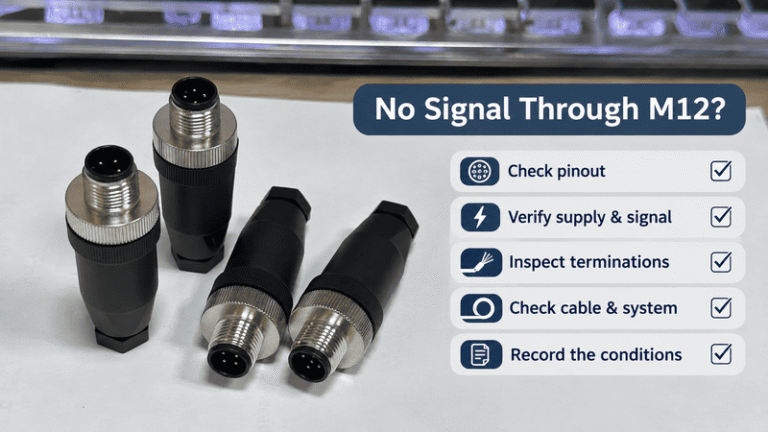
M12 problems can show up as a connector that will not mate, a device with no signal, intermittent…
NITAI manufactures terminal blocks, M8/M12 waterproof connectors and industrial distribution modules for global OEMs, distributors and automation customers.
Leave a Reply