Oct 17, 2026
How Do I Choose the Right M8 8 Pin Female Connector for My Equipment?
An M8 8 pin female connector can look like the right replacement on a purchasing list and still…

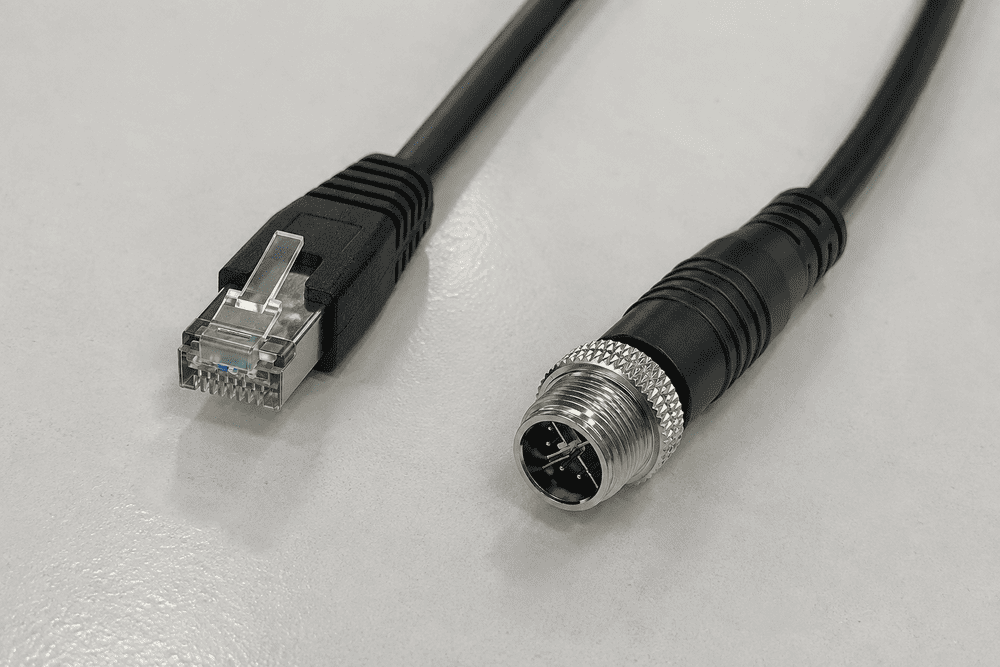
An M12 X-coded connector is often described as a “10 Gigabit M12 connector.” That is directionally correct, but it can also lead to the wrong buying decision: replacing only the connector does not upgrade an entire network link to 10 Gbps.
An M12 X-coded connector is an 8-contact, four-pair circular connector designed for high-speed industrial Ethernet. Its X-shaped internal divider separates the four differential pairs, and a correctly designed Category 6A channel can support data rates up to 10 Gbps.
It is a strong choice for machine vision, industrial computers, high-speed switches, and other data-intensive automation applications—provided that every part of the transmission channel is correctly matched.
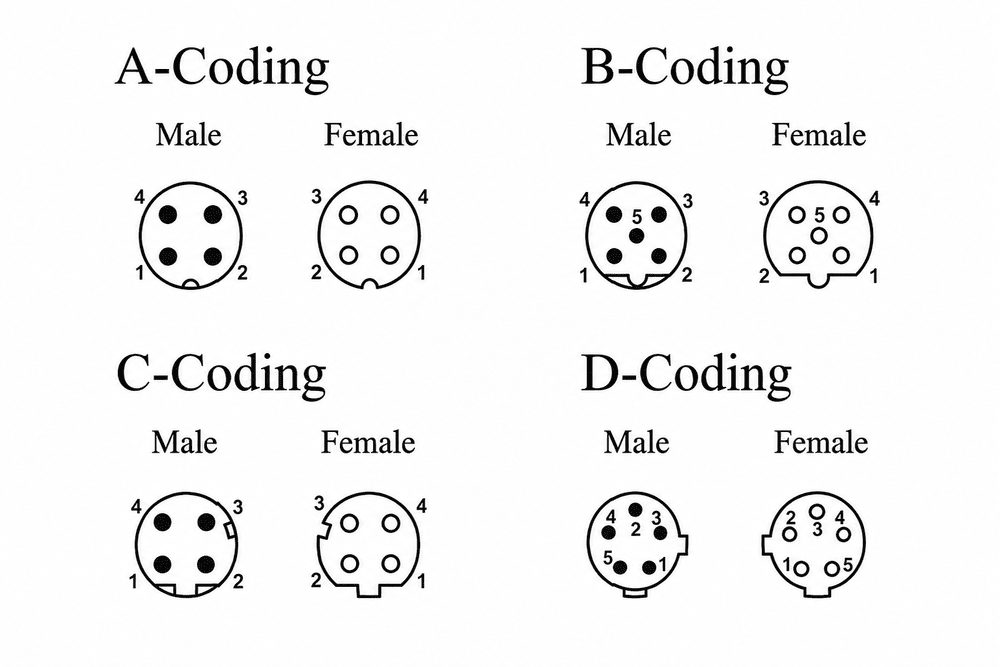
An M12 X-coded connector uses eight contacts arranged as four balanced data pairs, together with an internal X-shaped isolation structure and a shielded connector design.
IEC 61076-2-109 covers M12×1 screw-locking connectors designed for data transmission at frequencies up to 500 MHz.1 In industrial Ethernet systems, the X-coded interface is commonly associated with Category 6A performance and data transmission up to 10 Gbps.2
Its key elements include:
The X-shaped divider is not a decorative feature. At high frequencies, pair separation, impedance control, and crosstalk performance are important parts of signal integrity.
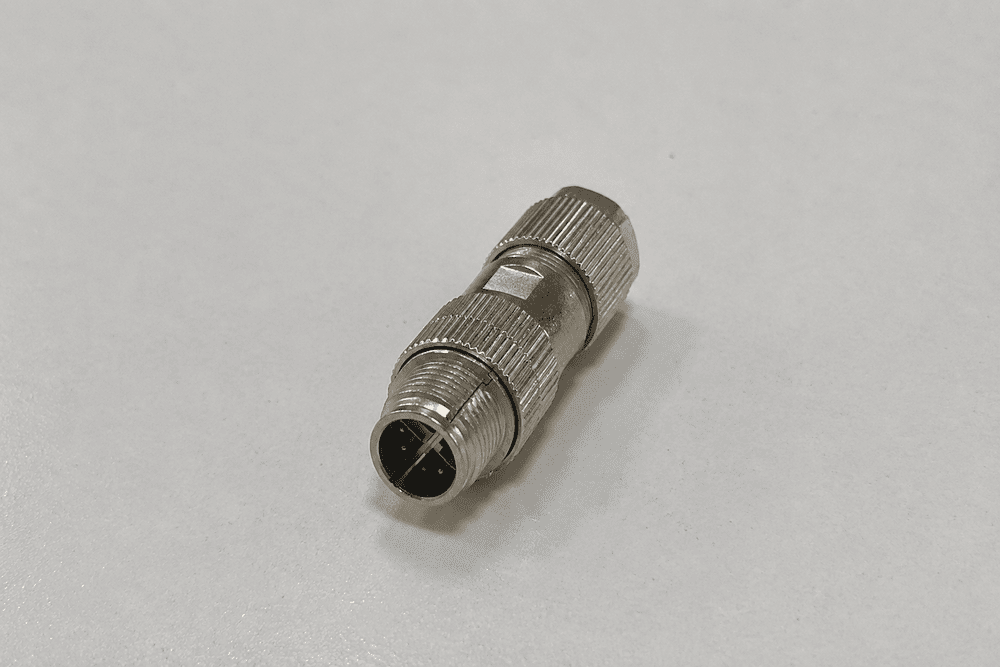
A qualified X-coded Category 6A channel can support 10 Gigabit Ethernet, but “up to 10 Gbps” is a channel capability—not a guarantee created by the connector alone.
The IEEE 10GBASE-T standard supports 10 Gbps operation over balanced twisted-pair cabling up to 100 metres under the applicable channel requirements.3 Industrial cable assemblies may have different practical limits because of cable construction, connector performance, flexible-service requirements, and installation conditions.
| Item | Typical X-coded requirement |
|---|---|
| Contacts | 8 |
| Data pairs | 4 |
| Cabling category | Category 6A system |
| Maximum headline data rate | 10 Gbps |
| Standard interface family | IEC 61076-2-109 |
| Shielding | Normally required for a robust industrial high-speed link |
| Common opposite end | X-coded M12 or RJ45 |
The device ports also determine the negotiated data rate. A 100 Mbps camera connected through an X-coded cable remains a 100 Mbps device.
Conversely, a 10 Gbps port connected through an unsuitable cable may operate at a lower rate, experience transmission errors, or fail to establish a stable connection.
Reliable 10 Gbps performance depends on the connector, cable, pair geometry, shielding, termination, length, and both device ports working together as one transmission channel.
A common purchasing mistake is to assume that changing an existing connector to an X-coded model automatically converts the cable assembly into a 10 Gbps link. Before selecting an X-coded assembly, the rest of the transmission channel must also be checked.
An ordinary eight-core control cable is not automatically a Category 6A data cable.
High-speed Ethernet requires controlled twisted pairs and electrical performance appropriate to the specified category. Category 6A and Class EA cabling are characterized up to 500 MHz and are commonly used to support 10GBASE-T over a 100-metre channel.4
The shield needs a low-impedance path through the cable and connector. A shielded connector shell with a loose drain-wire connection is not equivalent to a properly designed 360-degree shield termination.
PROFINET assembly guidance emphasizes appropriate shield contact and correct connector assembly in industrial Ethernet installations.5 Poor braid preparation, excessive untwisting, or an interrupted shield can reduce the performance of an otherwise suitable cable assembly.
The twisted pairs should remain twisted as close as practicable to the contacts. Long untwisted conductor tails can change pair balance and increase crosstalk.
The connector termination method must also be suitable for the cable conductor size, insulation diameter, pair construction, and shielding design.
Longer links add insertion loss. Tight bends, crushing, repeated flexing, high electromagnetic interference, and routing beside motor cables can further reduce the available transmission margin.
The installation should therefore be checked for:
Both ends of the connection must support the required Ethernet rate.
Check the specifications of the:
One lower-speed device or unsuitable intermediate connection can limit the performance of the complete channel.
Use X-coded M12 connectors where high data volume and industrial mechanical protection are both important.
Common applications include:
HARTING lists eight-pole X-coding under IEC 61076-2-109 and positions it for Ethernet transmission up to 10 Gbps.6 TE Connectivity also describes field-installable X-coded M12 products for Category 6A, 10 Gbps, and IP67 applications.7
A high-resolution camera sends continuous image data to an industrial computer. The equipment ports support Gigabit or 10 Gigabit Ethernet, and the cable is installed near servo drives.
For this type of project, the following items should be considered:
If the same Ethernet link moves continuously on a robot, the cable category is only part of the specification.
The selection must also consider:
A static Category 6A cable may pass an initial bench test but fail prematurely in a dynamic robotic installation.
X-coded may be unnecessary when the installed system and device ports only require a lower data rate that a compatible D-coded system already supports.
An X-coded connector should not be selected only because its maximum data-rate specification is higher. It can increase the cost and complexity of the complete assembly through:
For example, if a PLC and remote I/O network uses 100BASE-TX, the existing equipment has D-coded ports, and the system does not transmit high-volume image data, a D-coded solution may be more economical and fully adequate.
X-coded makes sense when the required bandwidth, equipment interface, and future system plan actually justify it—not as a decorative upgrade.
The complete transmission channel and mechanical environment should be confirmed—not only the words “M12 X-coded.”
Before preparing a quotation, we normally confirm:
For a custom assembly, the quotation should also define the required inspection and testing scope, such as:
Customers can review our M12 connector products or send us their equipment and cable requirements for product-selection support.
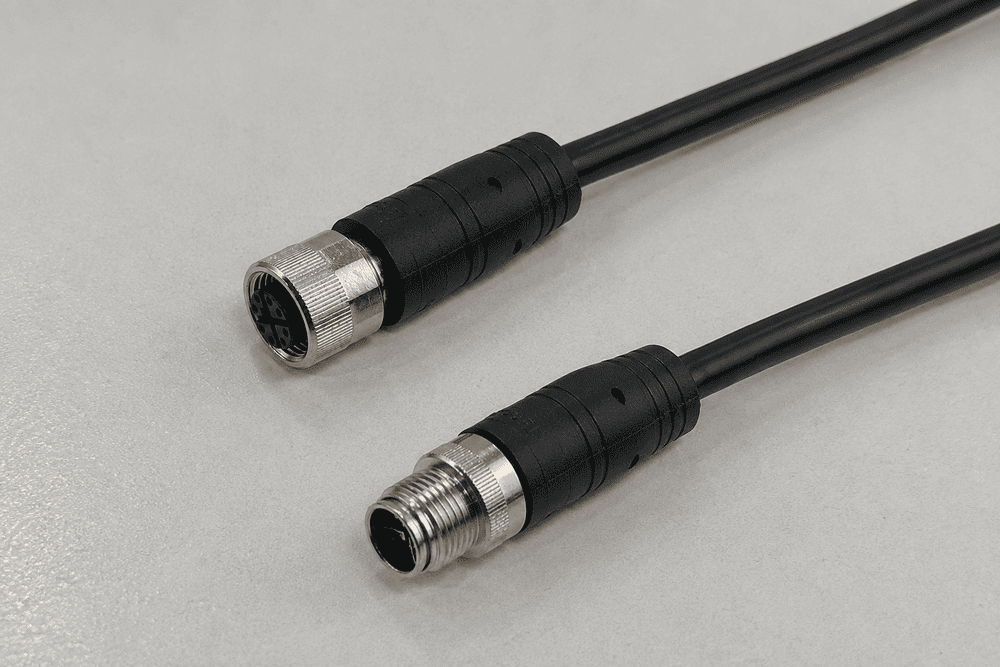
No. A-coded M12 connectors can also have eight contacts. The coding key and internal contact arrangement must also be identified.
No. Their mechanical coding, keying, and contact arrangements are different.
No. The interface is designed for high-speed industrial Ethernet, but the complete connector, cable, termination, shielding, and device channel must meet the required Category 6A and 10GBASE-T performance.
Not when verified high-speed Ethernet performance is required.
Use a cable with the correct category, twisted-pair construction, impedance, shielding, conductor dimensions, and installation rating.
For a dependable 10 Gbps industrial Ethernet link, shielded components and correct shield termination are normally expected. Always follow the equipment manufacturer’s specifications and the applicable network requirements.
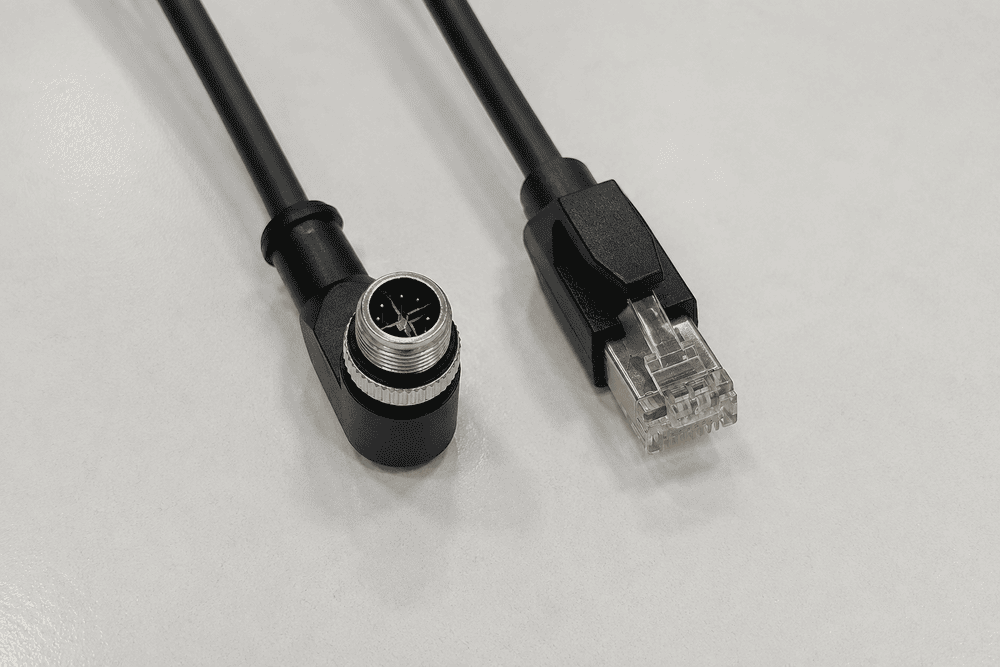
Yes. X-coded M12-to-RJ45 cable assemblies are commonly used when field equipment has an M12 port and the cabinet switch or industrial computer has an RJ45 port.8
It can be, but only when the selected cable is designed for the required dynamic movement.
Specify the minimum bend radius, number of cycles, travel speed, acceleration, flex direction, and torsional requirements before selecting the cable.
M12 X-coded is the high-speed member of the M12 industrial Ethernet family. It uses eight contacts, four data pairs, an X-shaped internal divider, and can support Category 6A and data rates up to 10 Gbps when used as part of a properly designed transmission channel.
The correct buying question is not only:
Do I need an X-coded connector?
It is:
Does the complete channel—from the equipment port to the connector, cable, shielding, termination, length, routing, and opposite port—support the required speed in the actual operating environment?
That distinction helps prevent an expensive connector change from being mistaken for a complete network upgrade.
[IEC 61076-2-109:2014](https://webstore.iec.ch/en/publication/4425) — Defines M12×1 screw-locking connectors for data-transmission frequencies up to 500 MHz. ↩
[Phoenix Contact M12 Ethernet Connectors](https://www.phoenixcontact.com/en-us/cat/m12-ethernet-connectors-1592) — Describes Category 6A and 10 Gbps applications for X-coded M12 Ethernet systems. ↩
[IEEE 802.3an-2006](https://standards.ieee.org/ieee/802.3an/3560/) — Defines 10GBASE-T operation over balanced twisted-pair cabling. ↩
[Fluke Networks: Twisted-Pair Cabling and 10 Gigabit Cabling](https://www.flukenetworks.com/expertise/learn-about/twisted-pair-cabling-and-10-gigabit-cabling) — Explains Category 6A/Class EA performance up to 500 MHz and support for 10GBASE-T over a 100-metre channel. ↩
[PROFINET Assembly Guideline](https://www.profibus.com/fileadmin/media/downloadsection/installation_guide/PROFINET_Assembling_8072_V212_Sept22.pdf) — Provides guidance on pair preparation, shield contact, and industrial Ethernet connector assembly. ↩
[HARTING Circular Connector Coding](https://www.harting.com/en-ES/circular-coding) — Lists X-coded M12 as an eight-pole IEC 61076-2-109 interface for Ethernet transmission up to 10 Gbps. ↩
[TE Connectivity Field-Installable X-Coded M12](https://www.te.com/en/about-te/news-center/te-field-installable-cable-plug.html) — Describes Category 6A, 10 Gbps, and IP67 applications for field-installable X-coded M12 connectors. ↩
[Phoenix Contact M12-to-RJ45 Connecting Cables](https://www.phoenixcontact.com/en-us/cat/m12-to-rj45-connecting-cable-1595) — Shows industrial Ethernet cable assemblies using M12 and RJ45 connections. ↩
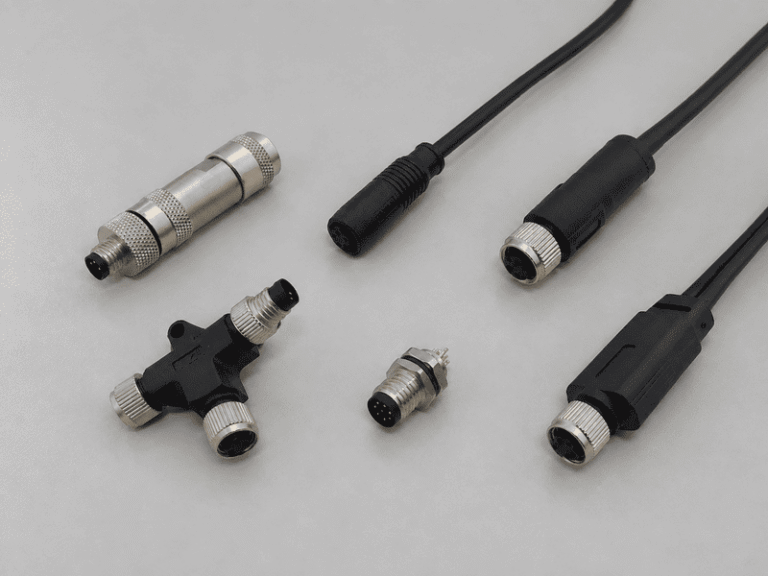
An M8 8 pin female connector can look like the right replacement on a purchasing list and still…

An M12 male connector 5-pin B-coded may look like a straightforward line item, but its name does not…
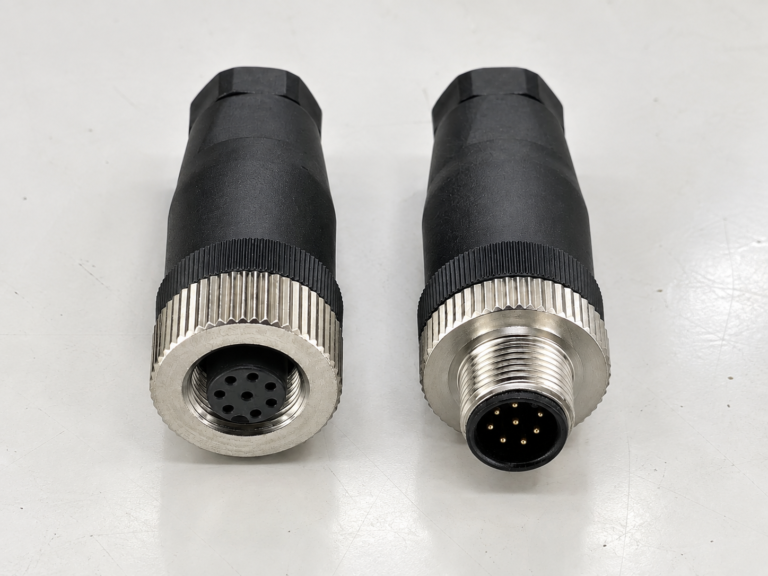
M12 connectors can carry different voltage ratings, so a buyer cannot choose one safely from the connector size…
NITAI manufactures terminal blocks, M8/M12 waterproof connectors and industrial distribution modules for global OEMs, distributors and automation customers.
Leave a Reply