Sep 10, 2026
Top M12 Connector Manufacturers: 10 Global Brands Compared
Choosing an M12 connector manufacturer is not simply a matter of selecting the best-known name. The right supplier…

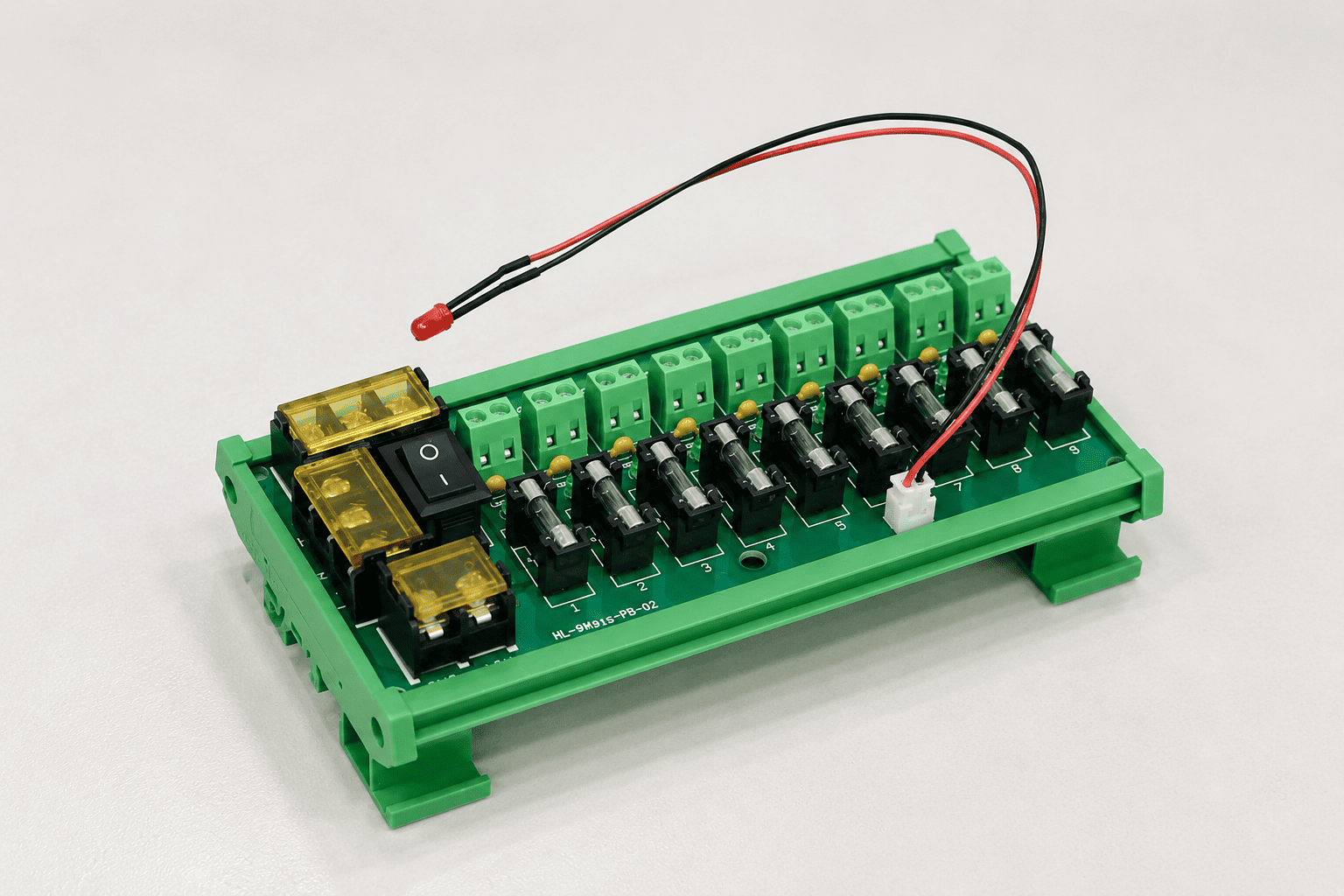
A complete 12V power supply box is not simply a 12V power adapter. It normally combines an AC-to-DC power supply, a DC distribution module, branch protection, terminal connections, indicators, switches, and an enclosure to provide stable 12V DC power to multiple devices from a single AC input.
This article explains what goes into a complete 12V power distribution system, how to calculate the required current, what protection features matter, and how to specify the right configuration for industrial equipment, control panels, and multi-device DC power projects.
| Component | Function | Required in a Complete Box? |
|---|---|---|
| AC input terminal | Connects incoming AC power to the power supply | Yes |
| AC-to-DC switching power supply | Converts 100–240V AC to regulated 12V DC | Yes |
| DC distribution module | Splits one DC input into multiple protected outputs | Yes |
| Branch fuses | Protects each output channel from overcurrent | Recommended |
| ON/OFF switches | Allows individual channel control | Optional |
| LED indicators | Shows power and channel status | Recommended |
| Output terminal blocks | Provides field wiring connections | Yes |
| Grounding connection | Protective earth for safety | Yes |
| Enclosure | Protects internal components and users | Yes |
The table shows the functional blocks. The actual design can be DIN rail mounted, panel mounted, or housed in a standalone enclosure, depending on the project.
A complete 12V power supply box converts AC input power into regulated 12V DC, then distributes that DC power to multiple output channels, with each channel protected and clearly identified.
This is different from a simple 12V adapter, which only provides one output and rarely includes branch protection or a distribution terminal.
We use the term "complete" because the box handles the entire power chain: For a system integrator building a control cabinet, this replaces several separate components with one pre-wired, testable assembly. For an equipment builder, it reduces panel wiring time and makes field maintenance easier.
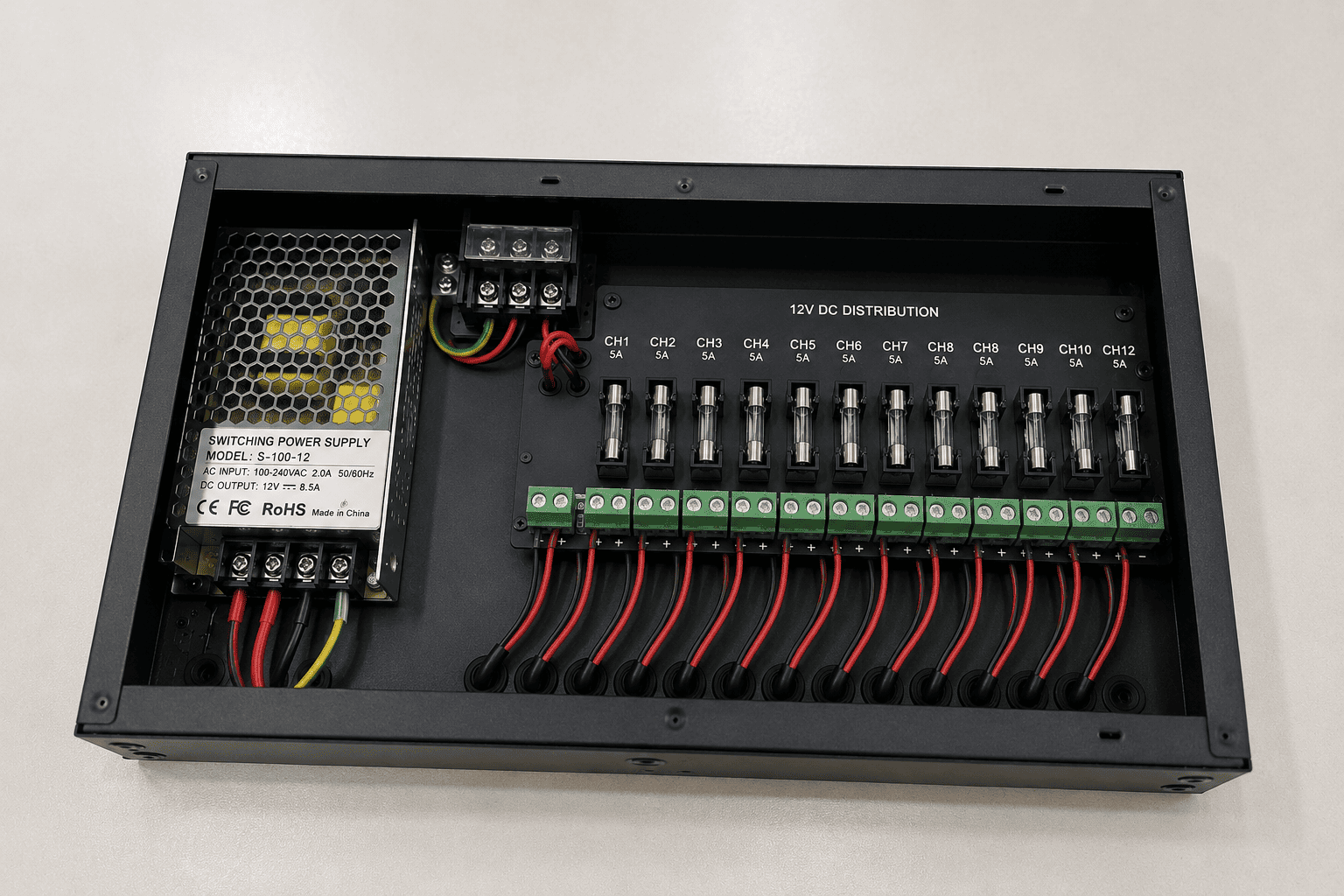
The exact component list depends on the application, but a properly built industrial 12V power supply box normally includes:
One of the most common sources of confusion in DC power projects is the difference between a power supply, a distribution module, and a complete power supply box.
| Product | Main Function | Multiple Outputs | Branch Protection | Enclosure |
|---|---|---|---|---|
| 12V power adapter | Converts AC to 12V DC | Usually no | Usually no | Yes, but limited |
| Switching power supply | Converts AC to regulated DC | Limited | Input protection only | Partial or open-frame |
| DC distribution module | Splits one DC input into several outputs | Yes | Optional fuses | Usually no |
| Complete power supply box | Converts, distributes, and protects power | Yes | Yes | Yes |
This distinction matters because customers sometimes ask for a "power supply box" when they already have a working 12V supply and only need a fused distribution module. In that case, buying a complete box means paying for a second power supply they do not need.
At NITAI, we confirm whether the customer already has a 12V source before recommending a complete box or a standalone distribution module.
The working sequence is straightforward:
The key engineering point is that a fault on one output channel should trip only that channel's fuse, not shut down the entire box. This is what separates a properly designed distribution system from a simple parallel wiring job.
This is the first calculation we do when a customer asks about a 12V distribution project.
The formula is:
For example, if the customer has eight devices and each draws 0.5A:
A 5A supply gives a 25% margin above the nominal load. This margin:
For constant loads such as LED lighting or CCTV cameras, a 1.2 margin is usually sufficient. For loads with motors, relays, or significant inrush current, we recommend a 1.3 to 1.5 margin.
The number of output channels depends on how many devices need individual power connections, and whether some devices can share a fused branch.
Common configurations:
| Configuration | Description | Typical Use |
|---|---|---|
| 1 input to 4 outputs | Compact distribution | Small sensor groups, basic CCTV |
| 1 input to 8 outputs | Standard distribution | Control cabinet device groups, LED lighting |
| 1 input to 16 outputs | High-density distribution | Large sensor arrays, multi-camera systems |
| Multiple independent channels | Fully isolated outputs | Mixed device types requiring separate grounds |
We also ask the customer to confirm:
These details affect the internal wiring design and the terminal layout.
A power supply box used in industrial equipment must include protection at two levels: input-level protection and branch-level protection.
| Protection Feature | What It Does | Why It Matters |
|---|---|---|
| Input fuse or breaker | Protects the power supply from AC-side faults | Prevents damage if the supply itself fails |
| Overcurrent protection | Limits current from the power supply | Protects the supply from overload |
| Short-circuit protection | Detects and isolates shorted output | Prevents a single shorted device from shutting down the whole system |
| Individual branch fuses | Protects each output channel independently | Limits damage to one channel and simplifies troubleshooting |
| Reverse-polarity protection | Protects devices if wiring is accidentally reversed | Common in field-wired installations |
| Overvoltage protection | Protects the load from supply failure | Prevents a failed supply from destroying connected devices |
| Thermal protection | Shuts down the supply if it overheats | Prevents fire and component damage |
| Grounding | Connects the enclosure to protective earth | Provides a safe path for fault current |
| Finger-safe terminals | Prevents accidental contact with live parts | Required for operator safety |
The most common request we receive is for individual replaceable fuses per channel. This allows maintenance staff to replace one fuse without disconnecting the entire panel.
The wiring follows a logical left-to-right or top-to-bottom flow. In a typical DIN rail installation:
We recommend labeling every channel with a device identifier during installation. When a fuse blows or a device fails, the label makes it obvious which channel to check.
For more detail on industrial cable material selection, see our PVC vs PUR cable jacket guide.
The following table summarizes the information we ask for before recommending a configuration:
| Information to Confirm | Example Answer |
|---|---|
| Input voltage | 100–240V AC |
| Output voltage | 12V DC |
| Total load current | 6A |
| Number of output channels | 8 |
| Current per channel | 1A (one channel may carry 2A) |
| Fuse requirement | Individual replaceable fuse per channel |
| Switch requirement | One switch per output |
| LED indicators | Power status and per-channel status |
| Installation | DIN rail mount inside control cabinet |
| Enclosure | Metal, IP20 for indoor use |
| Application | Sensors, CCTV, LED, control equipment |
Once these points are confirmed, we can determine whether a standard configuration matches the requirement or a custom wiring layout is needed.
When a customer asks us about a 12V power distribution solution, we first confirm the input voltage, total load current, number of output channels, current required by each device, fuse arrangement, switch and indicator requirements, mounting method, and enclosure conditions.
From our experience, the three questions that most often change the quotation are:
For DC power distribution projects, see our terminal block product line and our custom wiring module capabilities.
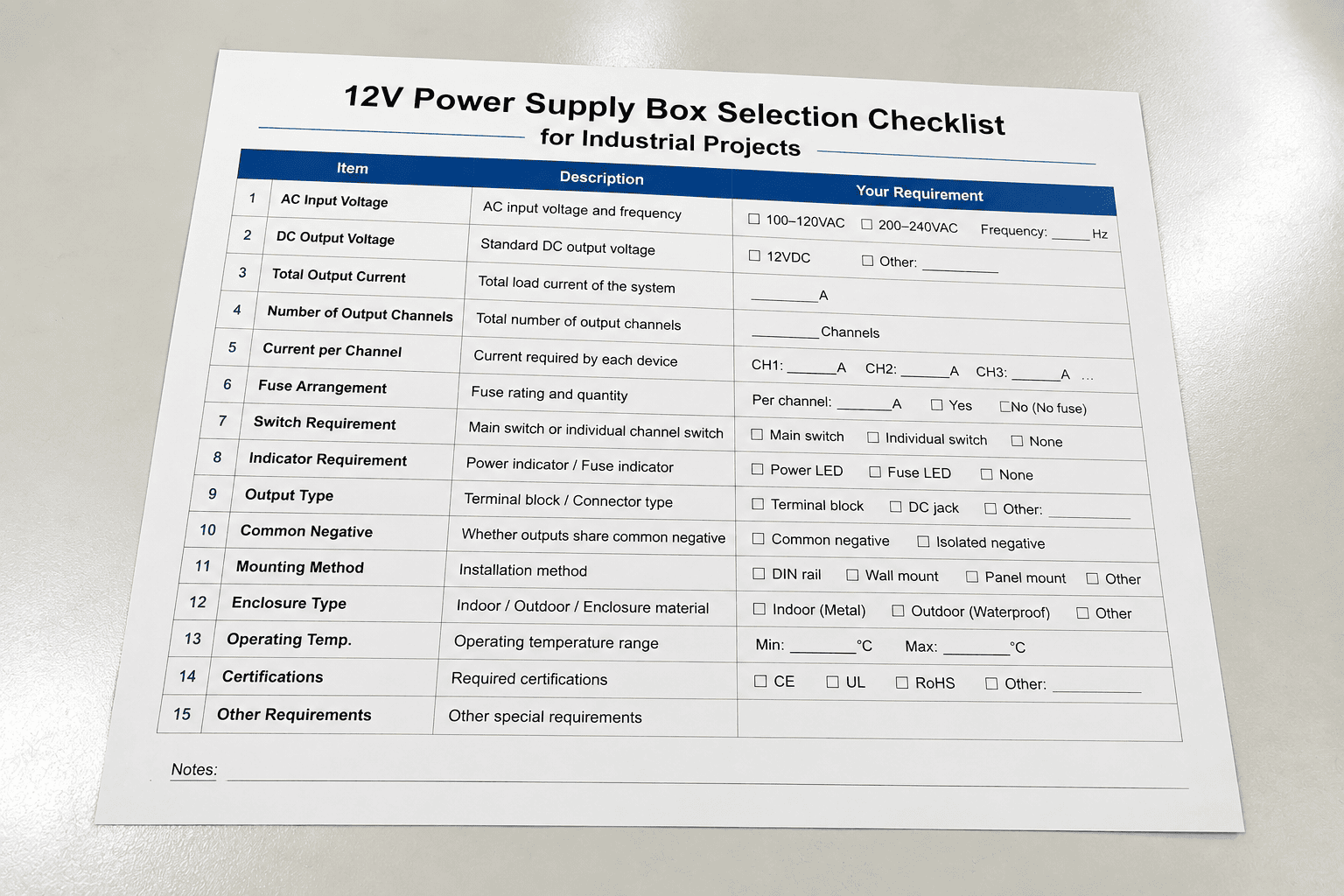
| Application Condition | Recommended Configuration | What to Confirm |
|---|---|---|
| Small sensor group, fixed installation | 1-in/4-out, shared fuse, DIN rail | Total current, common or isolated negative |
| CCTV or LED lighting, constant load | 1-in/8-out, individual fuses, no switches | Current per channel, surge protection |
| Control cabinet with mixed devices | 1-in/8-out or 1-in/16-out, individual fuses | High-current channels, switch requirement |
| Outdoor equipment | Weatherproof enclosure, surge protection | Enclosure IP rating, temperature range |
| Maintenance-intensive application | Individual fuses and per-channel switches | Accessibility, spare fuse storage |
| Existing 12V supply already available | DC distribution module only | Input voltage from existing supply, fuse type |
A 12V power supply converts AC to DC. A complete 12V power supply box includes the power supply, DC distribution, branch protection, terminals, and an enclosure in one integrated assembly.
You can, but it is not recommended without a distribution module and individual branch protection. A fault on one device can affect all the others if they are simply wired in parallel.
The number depends on the total load current and the number of output channels. A 1-in/4-output box can power four devices. A 1-in/16-output box can power sixteen. The key is that the total current stays within the power supply's rated capacity with a proper safety margin.
It means the box has one AC input and eight independent 12V DC output channels. Each channel can be fused, switched, and monitored separately.
Not always. If all devices are identical and a single fuse can protect the whole group, a shared fuse may be acceptable. But for maintenance and fault isolation, individual fuses are strongly recommended.
The main advantages are reduced panel wiring time, pre-tested internal connections, cleaner installation, and simpler maintenance. The box can also be ordered as a repeatable assembly for multiple machines.
A complete 12V power supply box is a system, not a component. It combines AC-to-DC conversion, DC distribution, branch protection, indication, and wiring in one assembly.
When selecting a configuration, start with the total load current and the number of output channels. Then confirm the fuse arrangement, switch and indicator requirements, mounting method, and enclosure conditions.
If you are planning a 12V power distribution project, contact NITAI to discuss your input voltage, output-channel count, fuse and switch requirements, terminal layout, and installation conditions. We can recommend a standard configuration or provide a custom quotation based on your project.
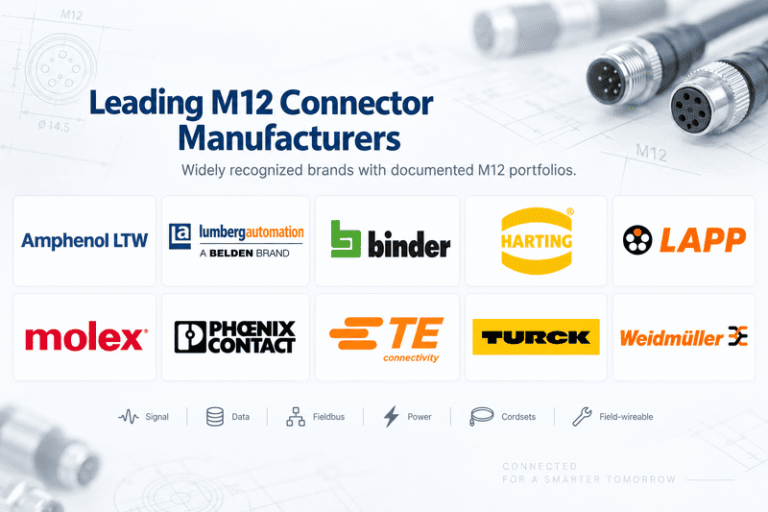
Choosing an M12 connector manufacturer is not simply a matter of selecting the best-known name. The right supplier…
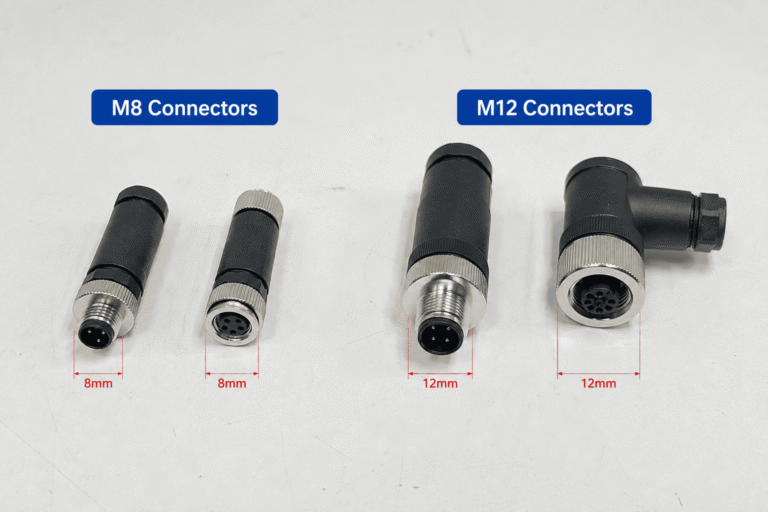
M8 and M12 connectors both appear throughout industrial automation, but they are not interchangeable drop-in options. Choose M8…
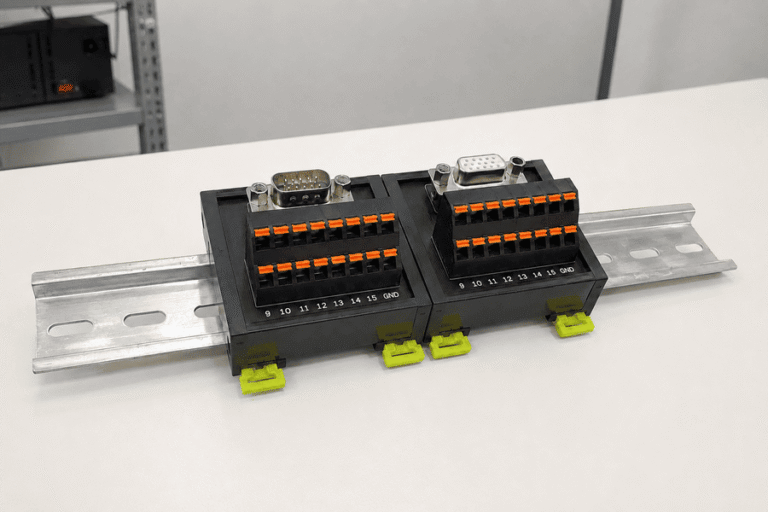
A PLC interface module is typically installed between a PLC I/O card and field wiring to make connections…
NITAI manufactures terminal blocks, M8/M12 waterproof connectors and industrial distribution modules for global OEMs, distributors and automation customers.
Leave a Reply